


 For all latest news, follow the Daily Sun's Google News channel.


The story of Bangladesh and Russia: different realities, common dreams
The people, the progress, and the opportunities ahead

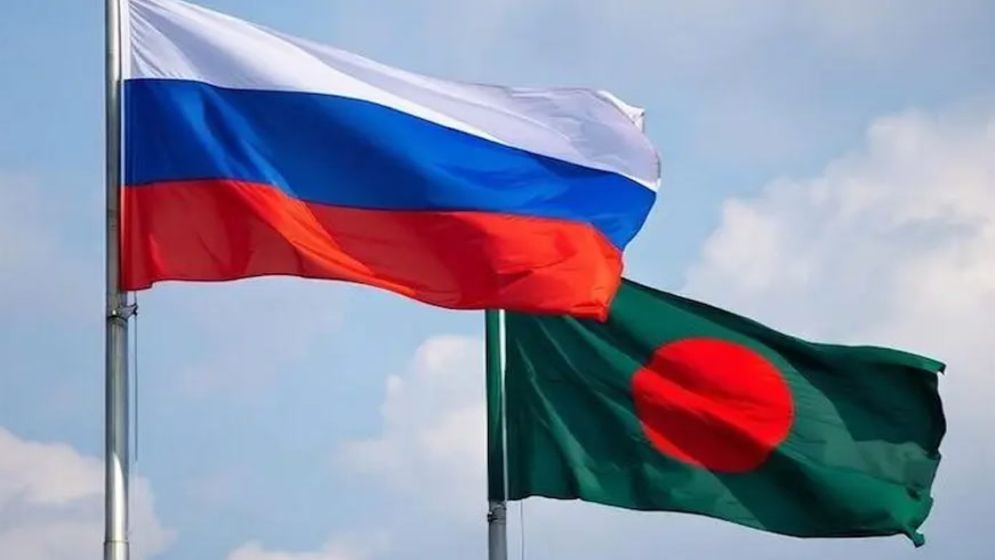
Bangladesh and Russia occupy very different corners of the world map, but a shared dream of education, empowerment and a better life has tied the two nations together.
The countries differ markedly in climate, culture, landscape, language and population. Yet bilateral ties between them have deepened over the decades, particularly in energy, education, food security, technology and human development.
In today’s world, a country’s development depends not solely on economic growth but on human skills, technology, education, employment and international cooperation. Bangladesh and Russia are creating fresh opportunities in these sectors by strengthening their own capabilities through bilateral engagement.
During Bangladesh’s Liberation War in 1971, the Soviet Union played a significant role in supporting the country. When the United States deployed its Seventh Fleet to the Bay of Bengal in support of Pakistan, the Soviet Union responded by sending a counter-fleet and a nuclear submarine.
The Soviet navy and government also carried out a substantial rescue and relief effort, including mine-clearance operations in Chattogram, to help restore the country’s transport and communication infrastructure.
Russia was among the first countries to recognise the newly sovereign Bangladesh in 1971. The Soviet Union’s stance at the United Nations during discussions on the India-Pakistan conflict carried particular significance for Bangladesh’s Liberation War, and the two countries formally established diplomatic relations on 25 January 1972.
Since independence, Bangladesh has maintained a strong relationship with Russia. Left-leaning Bangladeshi politicians, intellectuals and literary figures took the initiative to translate the works of Russian authors such as Leo Tolstoy, Dostoevsky and Turgenev, among others – translations that went on to play a major role in shaping Bangladeshi art and literature.
The economic ties between the two countries are equally strong. Since independence, Russia has extended consistent support to Bangladesh, which imports fertiliser, technology, warships and food items from Russia. Bangladesh’s largest infrastructure undertaking – the nuclear power plant project – is also being executed jointly with Russia, which has provided a substantial loan for the venture.
Since the nation’s inception, Bangladesh has maintained a deep-rooted relationship with Russia across every front: economic, cultural and beyond.
Bangladesh: a nation of hard work, resilience and potential
Bangladesh has undergone significant economic and social transformation over the past few decades. Despite numerous challenges since independence, it is now one of the fastest-growing economies in the world.
Agriculture, the ready-made garments (RMG) sector, information technology, remittances and small and medium enterprises all play an important role in the country’s economy. The RMG sector in particular has transformed millions of lives through employment and introduced Bangladesh to the global market – the country now ranks second in the world’s RMG export market, after China.
Hard work and resilience define professional life across Bangladesh, from farmers in the villages to entrepreneurs in the towns, and from factory workers to technology professionals – all contributing to the country’s economic advancement.
The youth represent the driving force behind Bangladesh’s future development. The growth of information technology, freelancing, online work and start-up culture has opened up new avenues of employment, with many young people carving out their own space in domestic and international markets through individual initiative.
Education: the human bridge between two nations
Education remains the most important pillar of the relationship between Bangladesh and Russia. Every year, a growing number of Bangladeshi students gain admission to Russian universities, particularly in healthcare, engineering, science and technology.
Russian government scholarships available to Bangladeshi students have risen from 65 in 2018 to 200 in 2026, creating far greater opportunities for higher education in Russia. The Russian government also places considerable emphasis on international youth programmes, through which meritorious Bangladeshi students and young professionals gain access to science, education, research, culture and exchange initiatives – including the World Youth Festival and the Eastern Economic Forum.
This year, six Bangladeshi students were selected through a competitive process to take part in the international conference “Children for Peace,” strengthening cross-cultural dialogue and international friendship alongside peers from around the world.
The presence of Bangladeshi students in Russian universities across healthcare, engineering, science and technology has forged new connections between the two countries. For these students, a degree is only part of the experience – they also come away immersed in a new culture, language and way of life, and return home to apply their knowledge and experience while serving, in effect, as cultural envoys between the two nations.
Russia: a nation defined by science, technology and skill
Russia is one of the largest countries in the world, spanning Europe and Asia, with a history, culture and record of scientific achievement recognised globally.
Energy, industry, engineering, science and technology all play a central role in the Russian economy. The country has extensive experience in space research, nuclear technology, military engineering, medical science and advanced technology, and remains one of the world’s foremost powers in science and innovation – leading in space research, nuclear technology and artificial intelligence. Russia launched the world’s first artificial satellite, Sputnik, and Yuri Gagarin became the first human to travel into space.
Russia has also pioneered the use of plasma and electric propulsion in space, and is now developing a new plasma propulsion engine aimed at cutting the travel time to Mars from six months to just 30-60 days.
Rosatom, Russia’s state nuclear corporation, leads the global nuclear industry through its specialisation in nuclear energy and heavy infrastructure development, while the Russian Academy of Sciences (RAS) stands as the country’s foremost scientific institution, producing world-class researchers.
Students and professionals from around the world pursue education and career opportunities in cities such as Moscow, Saint Petersburg and Kazan, where skill, punctuality, technical expertise and research are highly prized in the working culture.
A diversity of culture and heritage
The cultural and historical diversity between Bangladesh and Russia stems from differences in climate, history and outlook on life.
Russia is a vast nation shaped by a cold climate, while Bangladesh is a lush, green land of six seasons. This contrast has given rise to distinct traditions, festivals and folk culture in each country. Bangladeshi life is closely tied to its rivers, agriculture, family and social bonds, with hospitality, festivals and family relationships forming the core of its culture. Russian culture, meanwhile, is renowned worldwide for its rich literature, music, fine arts and historical heritage, with its literary figures holding a lasting place in world literature.
The relationship between Bangladesh and Russia extends beyond diplomacy and economics – it is, at its heart, a bond between peoples. As both countries continue to exchange knowledge, technology and expertise, international collaboration of this kind will remain essential to unlocking even greater opportunities for a peaceful and prosperous future.