


 For all latest news, follow the Daily Sun's Google News channel.


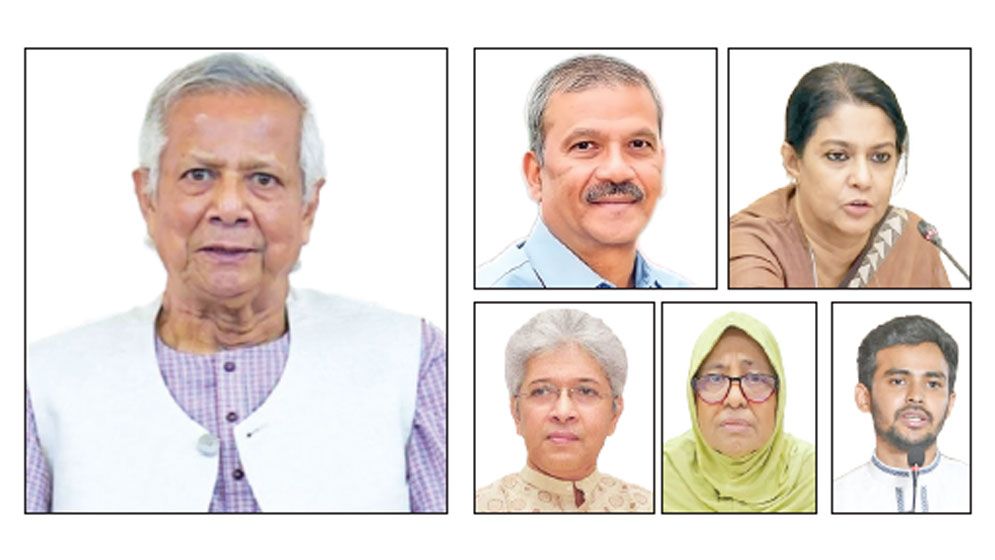
Rashed Khan, political assistant to the prime minister, stated on Tuesday that Prof Muhammad Yunus had a plan to remove the Bangladesh Nationalist Party (BNP) from the political landscape. Speaking at a discussion titled “Unity, Not Division, to Build a Just and Discrimination-Free Society” held at the National Press Club in the capital, Rashed Khan claimed that Prof Yunus intended to remain in power without holding elections. According to him, following the political dissolution of the Awami League, the plan was to eliminate the BNP from politics as well and bring Jamaat and the NCP into power.
Earlier in June, during his budget speech in the National Parliament, Home Minister Salauddin Ahmed remarked that alongside the institutional corruption, money laundering, and banking sector irregularities of the Awami League administration, the 18-month activities of the interim government also require an investigation through the Anti-Corruption Commission (ACC). Calling upon the Prime Minister to assign the ACC the task of neutrally investigating allegations of corruption during the interim rule, he noted that the current government believes in transparency and accountability, and therefore, all actions taken during the interim period should be brought under scrutiny just as past administrations were.
When policy-makers of the government raise such allegations regarding the interim government led by Prof Yunus, it becomes reasonably imperative to conduct a neutral and objective investigation into its eighteen-month tenure. One of the key political commitments of the BNP government led by Tarique Rahman is transparency and accountability. To establish this accountability, the allegations of corruption and irregularities during the Yunus administration must be thoroughly examined.
Over the course of its eighteen-month governance, the scars of misrule and wrongdoings under Prof Yunus’s leadership are visible everywhere. From politics to the economy, foreign policy to national defense strategies, judiciary, education, healthcare, culture, and sports—where has the dark shadow of this misrule not reached? A deep analysis of the Yunus administration reveals that Yunus and his associates engaged in a chaotic spree of devastation, akin to a band of looters setting fire to a village before plundering it.
Where did this interim government not engage in corruption? Over the past eighteen months, rampant corruption occurred in everything from judicial appointments to administrative placements. From children’s measles vaccines to police uniform scandals, the picture of corruption within the Yunus government is glaringly obvious. These instances of corruption, irregularities, and arbitrariness appear to have introduced a dynamic definition of statecraft: that gaining power is synonymous with obtaining a license for corruption—to rule, corrupt, sell off national interests, launder money abroad, and then lecture the public as the conscience of the nation. This poses a direct challenge to the democratic framework and the rule of law. The Yunus government did not merely engage in unrestrained corruption and plunder; it undermined the state apparatus itself, showing blatant disregard for the laws, rules, and established norms of governance. It is precisely for these reasons that a neutral investigation into the eighteen months of Yunus’s rule is necessary.
A foundational principle of establishing the rule of law is ensuring that every offense is judged. The sole identity of a criminal or a corrupt individual is that they are an offender. The fundamental rights section of the Constitution of Bangladesh explicitly guarantees that all citizens are equal before the law. This principle of legal equality can only truly take effect when white-collar criminals, such as Prof Yunus and his advisors, are brought under the purview of the law.
Regardless of how a government assumes power, it remains accountable to the people, as the citizens are the ultimate owners of the republic. Elected governments have specific mechanisms for accountability and responsibility; in a parliamentary system, the government is formed by elected representatives, making Parliament the arena for accountability where opposition parties and an independent media monitor state actions. When a government acts against public interest, opposition parties highlight it inside and outside Parliament, and the media easily points out flaws. This is how transparency is ensured in an elected administration.
In contrast, non-elected governments lack inherent mechanisms for accountability. During non-elected regimes, Parliament either does not exist or features a virtually nonexistent opposition; opposition voices outside Parliament are suppressed, and media freedom is curtailed. However, the interim government led by Prof Yunus was of a different nature altogether. While it was not an elected government, having come to power through a mass uprising, it was not a usurper regime that seized power by force. Instead, it assumed authority in line with the will of the people—a direct product of public aspirations. Therefore, unlike typical non-elected regimes that disregard or resist accountability, this administration faced a moral obligation to account for its actions directly to the people who placed it in power.
Yet, over these eighteen months, numerous activities, contracts, and decisions of the interim government sparked intense controversy. Serious allegations of corruption and abuse of power emerged against several advisors. Questions were repeatedly raised regarding government actions, but the administration failed to address them, offering no accountability throughout its tenure. Despite originating from a popular movement, the media harbored fear of speaking out against the Yunus government, as criticism met with various obstacles. While criticism proliferated most on social media, the interim administration offered no response. Civil society began criticizing various policies and decisions after the first year, but a peculiar characteristic of this interim government was its complete disregard for feedback, feeling no need to respond to civil society’s concerns.
Consequently, it is vital in the public interest to verify which of the numerous allegations against the eighteen-month interim government are true and which are unfounded. These officials drew salaries and benefits from taxpayers’ money, making an evaluation of their performance necessary for the public good. Serious allegations persist regarding the Chief Advisor and multiple advisors using their power for illegal benefits. A comprehensive list of tax exemptions and other privileges granted to Prof Yunus and his affiliated institutions should be published. Furthermore, corruption charges against several advisors and their staff have surfaced, with the Anti-Corruption Commission reportedly investigating at least six individuals, including three former personal officers to advisors. These investigations currently remain stalled and must be concluded swiftly in the interest of the public, as the fight against corruption cannot be won while leaving such matters unresolved.
Additionally, allegations against several former advisors continue to circulate on social media, including claims that one advisor oversaw and assisted in liquidating assets belonging to an influential minister of the fallen Awami League government. A neutral investigation into these claims is essential for transparency, particularly to ensure that public perception of these individuals—who represent prominent figures in society—and civil society as a whole remains objective.
During its tenure, the interim government executed several major international agreements that remain subjects of intense debate. Prof Debapriya Bhattacharya, Distinguished Fellow at the Centre for Policy Dialogue (CPD), noted that known and unknown foreign agreements signed by the outgoing interim government must be thoroughly scrutinized to assess whether they align with the current government’s plans, recommending that they be annulled if necessary. Many observers have characterized several of these contracts as contrary to national interests, raising the question of whether the interim administration even possessed the mandate to execute such agreements.
These investigations are not intended to assassinate the character of Prof Yunus or his civil society advisors, but are necessary for the greater good of the country. It is important to remember that the apex court of Bangladesh has restored the non-party neutral caretaker government system, meaning the upcoming 14th National Parliamentary Election will be conducted under a caretaker administration. Because the interim government was structured similarly to a caretaker government, examining its scope, authority, errors, and oversights can help formulate a robust framework for future caretaker governments. Analyzing where the Yunus administration stumbled or exceeded its boundaries will ensure those issues are effectively addressed in future setups.
With a caretaker government expected to take charge every five years moving forward, an objective post-mortem of the Yunus administration’s tenure is essential. This is not merely a matter of holding the outgoing administration accountable, but a critical exercise in defining the precise operational boundaries of future caretaker governments to prevent overreach and corruption among future advisors. Establishing a inquiry commission on the Yunus government to draft this framework, while investigating its eighteen months of activity, will ultimately serve to confirm the transparency and accountability of Prof Yunus and his advisory panel.
______________________________________________
Audite Karim is a writer and playwright. Email: [email protected]
Read More