


 For all latest news, follow the Daily Sun's Google News channel.


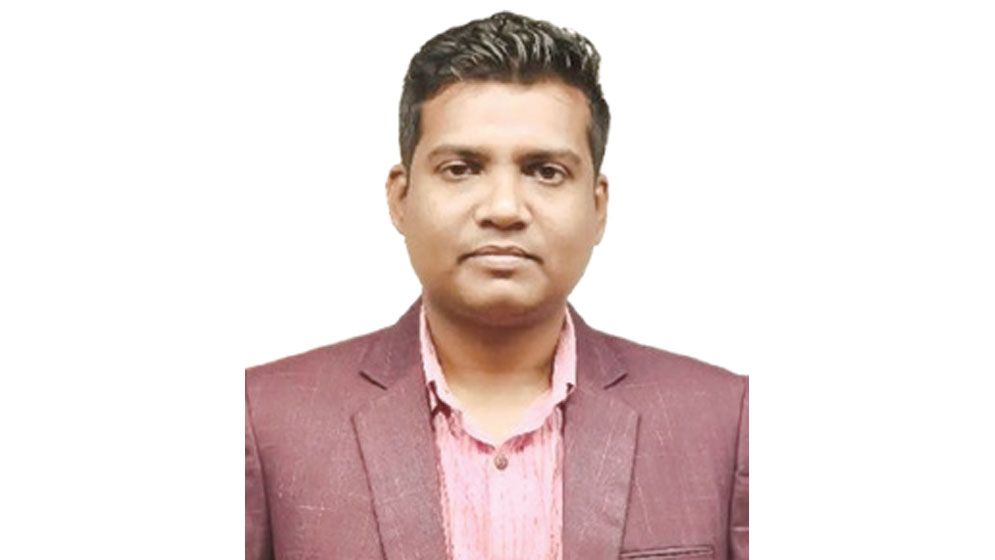
Following the resignation of Mohammed Shahabuddin as President of Bangladesh, political parties like the National Citizen Party (NCP) have demanded his arrest and trial for complicity with crimes committed by Sheikh Hasina, the former prime minister of the country who fled to India following the July Uprising in 2024. Until his departure from the government’s highest office, Shahabuddin acted as the last guardian of a fallen regime, mirroring a past stained with blood and tears. But a curious case for the laws of the land is to what extent can a person be held accountable for just being a part of a violent administration without actively participating in its atrocities?
There is no proven account that Shahabuddin was involved in the lethal decisions executed by Hasina during the uprising. As the media reports indicate, Shahabuddin kept mum at that time: he neither endorsed Hasina’s decisions nor publicly sided with the protesters and refrained from issuing any executive orders. Right after Hasina’s escape and the fall of the Awami League government, Shahabuddin performed his constitutional duties accordingly by administering the oath to the interim government headed by Muhammad Yunus and thus avoided any constitutional vacuum. Because Parliament had been dissolved, there was no legal mechanism to vote him out of office. Moreover, his immediate resignation at that juncture would have plunged the country lacking both a parliament and a head of state into institutional chaos, making the interim government invalid and risking a civil war. The interim government knew it well, and this was one reason they did not take steps to remove the president at that time.
As Bangladesh now has an elected government and a well-functioning parliament, the removal or departure of the president will not cause any constitutional crisis, as there is the speaker who can now act as acting president after the president’s resignation, and the parliament can now elect a new president constitutionally. So, Shahabuddin’s belated resignation has followed due process, saving the country from long days of unrest and political instability.
If we take demands for Shahabuddin’s trial into consideration, we need to look into the constitution to see what the law says about a president’s indemnity from acts committed during his time in the office. Article 51 of the Bangladesh Constitution states that there can be no criminal proceedings against the president for any decision taken by him during his tenure in office, and he is not answerable to any court for any decision taken by him while in office. Although the law does not say if actions can be taken against a president for his past decisions after he leaves office, there is no precedent that any former president has been charged for any of his decisions taken while he was in office. So legally, there is no way to take steps against Shahabuddin for any of his decisions as president.
If anyone wants to take a step against Shahabuddin, he has to look beyond his presidency. Prior to becoming president, Shahabuddin served as a commissioner for the Anti-Corruption Commission and as a director of Islami Bank. As an ACC commissioner, there is no proven track record of him doing anything controversial; the records identify him performing routine duties only. However, a Bangladesh Financial Intelligence Unit (BFIU) report submitted to the High Court has brought allegations of share manipulation and suspicious loan disbursement through JMC Builders, a company owned by Shahabuddin, which he represented as a shareholder director of the Islami Bank. If legal proceedings are initiated against him, they must rely on the findings of this BFIU report, which requires thorough judicial examination. The fact is that Shahabuddin left Islami Bank as director in February 2023 and became president in April that year, but BFIU submitted its report in October 2025, almost two and a half years after Shahabuddin left the bank. It can be understood that as no actions could be taken against a sitting president as per the constitution, this forced BFIU to prolong its report submission deadline. So, should the court proceed with this investigation now, immunity arguments will no longer apply, as actions taken as a private corporate director fall outside the scope of presidential immunity.
What is most important is that Shahabuddin’s complicity in crimes is not political or financial; rather, it’s utterly moral. He is a person who has spent his entire life serving a party and a leader who will go down in history as the most brutal and corrupt regime that Bangladesh has ever seen. Sheikh Hasina’s hands are stained with the blood of thousands of those who lost their lives during the July Uprising or were killed extrajudicially and fell victim to enforced disappearances under her command. Being an active member of Hasina’s party and later becoming head of the state chosen by her government, Shahabuddin will never be able to get rid of the moral indignity that he has earned as an Awami League member at first and the constitutional head of the country under the Awami League government led by Hasina later.
The biggest mistake for Shahabuddin was not committed during his presidency or as an ACC commissioner or as a director of the Islami Bank. It was done at the beginning of his political career, when he sided with the Awami League for life. That is what he should ultimately be held accountable for.
_____________________________________
The writer is a Sub Editor at Daily Sun. He can be reached at: [email protected]