


 For all latest news, follow the Daily Sun's Google News channel.


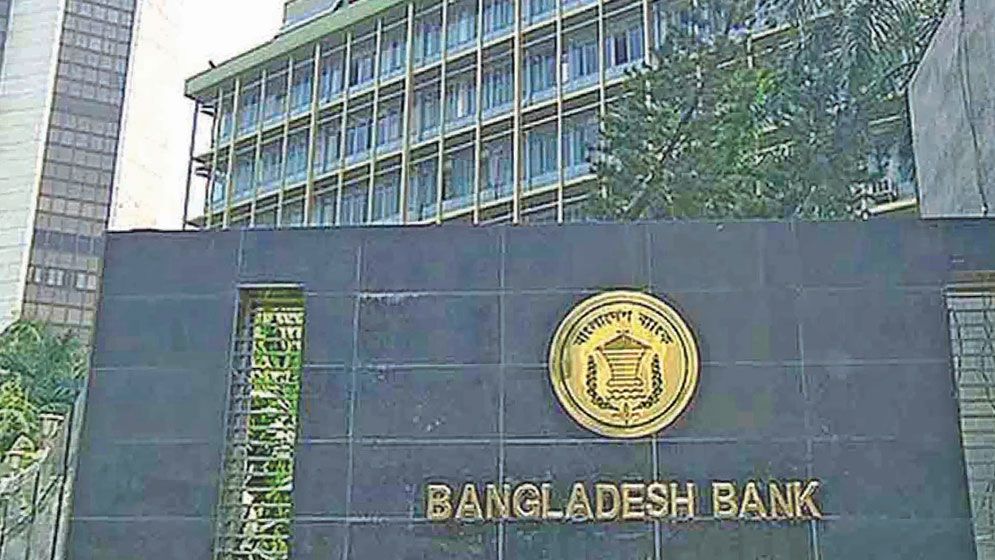
The Bangladesh Bank has issued a master circular consolidating guidelines for the Export Development Fund (EDF), tightening eligibility criteria and streamlining refinancing procedures to enforce discipline in foreign currency financing.
The central bank’s updated operational framework aims to support export-oriented manufacturers importing raw materials while curbing misuse.
Under the revised rules, Bangladesh Bank will refinance Authorised Dealer (AD) banks at the six-month Secured Overnight Financing Rate (SOFR) plus 0.50 percentage points.
AD banks can then lend to exporters at six-month SOFR plus 1.50 percentage points.
Loan tenures remain capped at 180 days, with extensions up to 270 days subject to prior central bank approval.
The framework restricts EDF access strictly to imports under back-to-back letters of credit (LCs), inland back-to-back LCs, and essential raw materials for export production.
Exporters with overdue export proceeds, defaulted EDF liabilities, or debt forced into funded facilities will be disqualified from fresh financing.
Banks that fail to settle EDF loans on time will also lose access to the facility.
Such exporters may regain eligibility after overdue export proceeds are repatriated or if an exemption is granted by the Bangladesh Bank’s Discount Committee.
Sector-wise financing limits retained
The central bank has retained existing sector-wise financing limits for EDF facilities under back-to-back LCs, with ceilings set according to export sectors.
Under the revised guidelines, Bangladesh Garment Manufacturers and Exporters Association (BGMEA) members can avail EDF financing of up to US$20 million, while Bangladesh Knitwear Manufacturers and Exporters Association (BKMEA) and Footwear, Leather Goods and Accessories Exporters Association (FLAXA) members are eligible for up to $15 million.
Members of the Bangladesh Bicycle and Parts Manufacturers and Exporters Association (BBPMEA) and Bangladesh Furniture Exporters Association (BFEA) can receive up to $10 million, while Bangladesh Frozen Foods Exporters Association (BFFEA) members are eligible for up to $5 million.
Exporters from other sectors may access financing of up to $10 million.
For bulk imports under inland back-to-back LCs, the existing limits have also been retained. Bangladesh Textile Mills Association (BTMA) members can receive up to $20 million, while Bangladesh Dyed Yarn Exporters Association members can obtain up to $10 million.
Members of the Bangladesh Packaging and Accessories Manufacturers and Exporters Association (BPAMEA) are eligible for up to $2 million, while Bangladesh Plastic Goods Manufacturers and Exporters Association (BPGMEA) and Bangladesh Ceramic Manufacturers and Exporters Association (BCMEA) members can receive up to $1 million.
In addition to the existing ceilings, the circular introduces a new EDF refinancing facility of up to $500,000 for eligible bulk imports regardless of sector.
It also stipulates that exporters using both bulk import and back-to-back LC facilities will be allowed financing under the limit applicable to only one trade association.
Loan extension procedures outlined
The circular sets detailed procedures for extending EDF loan tenures.
Banks seeking an extension must submit applications to Bangladesh Bank at least 10 days before the scheduled repayment date.
The application must be signed by the Deputy Managing Director (DMD) or a higher-ranking official and include the relevant bill of entry and supporting documents explaining the reasons for seeking the extension.
The master circular also outlines operational requirements covering EDF applications, disbursement, repayment, monitoring and reporting procedures for participating banks.
Bangladesh Bank said the new framework aims to make foreign currency financing for exporters’ raw material imports more transparent, accountable and effective while ensuring greater discipline in the utilisation of EDF funds.