


 For all latest news, follow the Daily Sun's Google News channel.


The statesmanship of the Leader of the House
Parliament emerges as the symbol of the people’s hopes and aspirations
Special Correspondent
Published: 19 Jul 2026, 12:00 AM
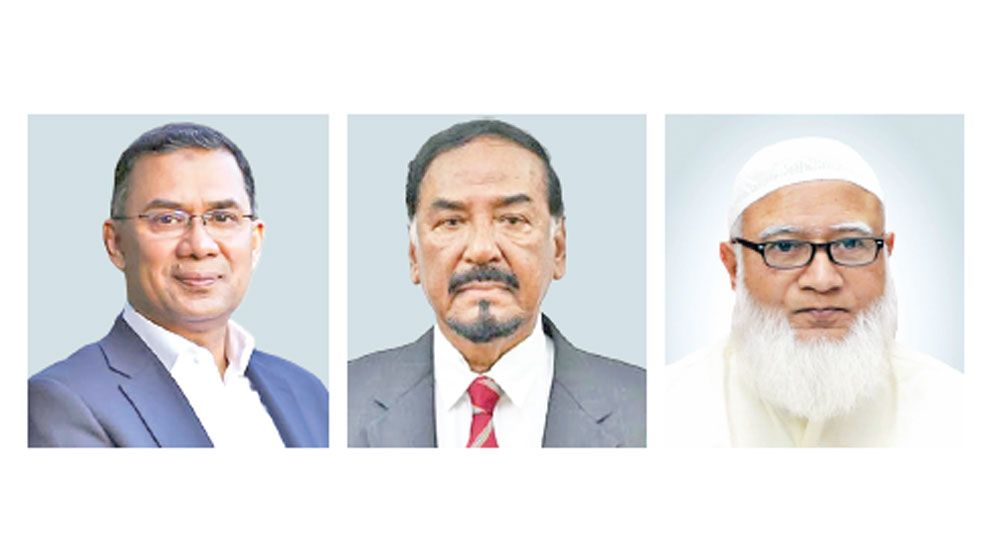
The budget session of the national parliament concluded on 15 July. It was the second session of the 13th National Parliament. Spanning 26 working days, the session has marked a new chapter in the history of parliamentary democracy in Bangladesh. A vibrant parliament, responsible conduct by both the government and the opposition, and debates on all major national issues have generated significant public interest in the current parliament. Formed following the election on 12 February, it has quickly emerged as the focal point of the country's politics.
Bitter experiences of the past
Throughout Bangladesh's 55-year history, democracy has repeatedly faltered. One of the principal reasons has been the absence of an effective parliament. The first parliament after independence had no opposition. Yet it was in that very parliament that the path to multi-party democracy was blocked in favour of a one-party system.
Following the events of 1975, Bangladesh adopted a presidential system of government. After the victory of the mass uprising in the 1990s, BNP Chairperson Begum Khaleda Zia restored parliamentary democracy in line with the aspirations of the people.
However, the second phase of parliamentary democracy was far from smooth. Repeated attempts to render parliament ineffective, the use of obscene and offensive language against political opponents, and the tendency to bypass parliament on crucial national issues prevented it from meeting public expectations. In 1991, the simultaneous resignation of opposition members prevented parliament from completing its full term.
In 1996, Bangladesh held two parliamentary elections. The first, held on 15 February to fulfil constitutional requirements, was boycotted by the Awami League and Jamaat-e-Islami. Following that election, parliament was dissolved immediately after passing legislation introducing a non-party caretaker government. The parliament elected later that year became notorious for abusive exchanges. Instead of focusing on issues affecting the public, it drew widespread criticism for constant mudslinging between the government and the opposition.
This trend became even more pronounced during the parliament elected in 2001. The opposition chose street agitation over resolving disputes inside parliament, rendering the House increasingly ineffective. Exploiting this political instability, anti-democratic forces assumed power in 2007, triggering the "One-Eleven" episode. For two years, the country was governed by an unelected administration led by Moin U Ahmed and Fakhruddin Ahmed, backed by the military and sections of civil society.
Following the 2008 election, there was renewed hope that democracy would finally become institutionalised. However, after securing an overwhelming majority, the Awami League abolished the caretaker government system. Parliament subsequently became little more than a rubber stamp for the ruling party. Constitutional amendments were made to serve partisan interests, while the opposition was denied adequate opportunities to speak. Democracy was gradually hollowed out. The voterless election of 2014, the night-time voting of 2018 and the so-called "dummy" election of 2024 drove the final nails into the coffin of parliamentary democracy, reducing parliament to little more than a political spectacle.
Against this backdrop came the mass uprising of 2024, driven largely by demands for voting rights and the restoration of public empowerment. It is therefore natural that citizens have placed high expectations on the present parliament. They want to see a legislature that is both effective and meaningful.
The positive journey of the 13th National Parliament
The public expects parliament to serve as the forum where their concerns and grievances are debated. The first two sessions of the current parliament have, to a large extent, lived up to those expectations. The Leader of the House and Prime Minister Tarique Rahman has played the central role in this process. Alongside him, the constructive approach adopted by the Leader of the Opposition has also earned public appreciation. Having reflected on the shortcomings of the previous 12 parliaments, the Leader of the House took several important initiatives from the outset to ensure that parliament remained both effective and meaningful.
Parliamentary attendance
In the past, one of the biggest weaknesses of parliament was the poor attendance of Treasury Bench members. Ministers often devoted more time to their ministries than to parliamentary proceedings. Their absence discouraged opposition members from attending regularly, while sittings were frequently delayed due to a lack of quorum. Poor attendance undermined both the dignity and effectiveness of parliament.
The current Leader of the House closely observed these shortcomings. From the very first session, he made attendance a priority. Setting a personal example, Tarique Rahman has consistently arrived before proceedings begin despite the heavy responsibilities of the Prime Minister's office. After ensuring his own presence, he instructed ruling party MPs to attend sessions punctually.
A notable example came during an official visit to Sylhet, when the prime minister spotted several MPs at the airport and instructed them to attend parliament instead. The incident sent a clear message to all lawmakers about the importance of parliamentary attendance. As the Leader of the House maintained regular attendance, ministers followed suit.
The Leader of the Opposition also deserves credit in this regard. Like the Leader of the House, he led by example, arriving before other opposition members on virtually every sitting day. His commitment encouraged fellow opposition MPs to attend regularly, contributing to a more vibrant and active parliament.
Constructive debates
Constructive debate has long been a rarity in Bangladesh's parliament. Traditionally, the opposition saw its role as criticising the government regardless of its policies, rarely acknowledging positive initiatives. At the other extreme, the parliaments of 1988, 2014 and 2018 witnessed what many described as a "domesticated" opposition whose primary function was to endorse government decisions unconditionally, reducing parliament to a mere formality. In those periods, the ruling party often used its overwhelming majority to silence opposition voices. Parliamentary debates frequently descended into personal attacks, with even deceased individuals becoming targets of offensive and distasteful remarks.
A healthy parliament should maintain a proper balance. The government must allow the opposition sufficient opportunity to speak rather than relying solely on the strength of its majority. Equally, the opposition should not oppose every government initiative indiscriminately. It should acknowledge positive measures, identify shortcomings and offer constructive criticism where necessary. For the past 55 years, such a parliament remained an aspiration rather than a reality. However, the performance of the current parliament during its first two sessions—particularly the recently concluded budget session—suggests that Bangladesh may finally be moving closer to that ideal.
The commendable role of the opposition
The Leader of the House has ensured that the opposition is treated with respect and given equal opportunities to participate in parliamentary affairs. Despite commanding an absolute majority, Prime Minister Tarique Rahman has set a notable precedent in Bangladesh's parliamentary history by including equal numbers of government and opposition members on several parliamentary committees. By fostering cordial relations with the opposition, he has ushered in a new political culture. During the budget session, for instance, the Leader of the House was seen exchanging pleasantries with the Leader of the Opposition during breaks in proceedings. Though a small gesture, it represents a refreshing departure from the confrontational politics that has long characterised Bangladesh's parliament.
The Speaker and the Deputy Speaker have also played commendable roles. They have provided opposition members with ample opportunities to participate in debates while conducting proceedings in a fair and responsible manner, helping to maintain the vitality of the House.
Healthy debates in the House
Another notable feature of the current parliament has been the marked decline in offensive and distasteful exchanges. Although a handful of younger MPs occasionally consumed valuable parliamentary time by raising issues of questionable relevance, and there were instances of allegations being made against individuals who were not present to respond, such incidents remained isolated and did not define the overall proceedings of the House.
It is hoped that the younger generation of lawmakers will quickly become familiar with parliamentary conventions and etiquette, ensuring that they do not undermine the healthy environment that the Leader of the House has sought to establish.
Discussions on issues of public importance
Another significant feature of the current parliament is the active discussion of pressing national issues. Matters such as the recent floods, child deaths caused by measles, allegations of corruption involving the Yunus government, money laundering, and the difficulties faced by HSC candidates due to persistent rainfall have all featured prominently in parliamentary debates.
The ruling party has allowed the opposition to raise and debate issues of its choosing, enabling parliament to emerge as a genuine forum for addressing matters of public concern. This has strengthened public confidence in the institution and reinforced its role as the voice of the people.
Directives from the Leader of the House
The Prime Minister and Leader of the House has not only set a benchmark for parliamentary attendance but has also used parliament to outline the government's vision for the country's future. During the weekly question-and-answer sessions, he provided policy guidance on a range of national issues.
By highlighting priorities such as reopening closed factories, recovering laundered money from abroad and addressing the industrial gas shortage through greater use of household LPG cylinders, he has kept both parliament and the public informed about the government's policy direction. Such openness reflects the true spirit of accountability that lies at the heart of parliamentary democracy.
The prime minister also used parliament to outline his vision of Bangladesh's state philosophy. He reaffirmed that the country's independence, achieved through the sacrifices of millions of martyrs, remains paramount and that there can be no compromise on the spirit of the Liberation War. Through these remarks, he sought to reaffirm what he described as the authentic historical foundation of Bangladesh.
In a parliamentary democracy, parliament is the highest expression of the people's sovereignty. For many years, however, it was often reduced to little more than an instrument for legitimising the decisions of the ruling party. Breaking with that tradition, the Leader of the House has sought to open a new chapter in Bangladesh's parliamentary democracy. If the current political culture continues to develop in the same spirit, parliament may once again become the institution that truly reflects the hopes and aspirations of the people.