


 For all latest news, follow the Daily Sun's Google News channel.


"Mom, if I become a martyr, my university ID card is in my pocket. Identify my body through that card." These were among the last words 20-year-old Sajjad Hossain Shojol spoke to his mother before he was killed during the July mass uprising.
Shojol, a second-semester Computer Science and Engineering (CSE) student at City University and the only son of his parents, left home around 11 am on 5 August 2024. His mother, who was on duty at a hospital's emergency department, repeatedly called him and asked him to return home. Instead of returning, he told her, "Don't you think the other boys and girls are also your children? If one son dies, thousands of sons will stand beside you."
Shojol never returned home. His mother alleged that he was shot and his body was later burned by police. She said the family identified him through the university ID card found in his pocket.
Shojol's story was not an isolated one. Many private university students sacrificed their lives while others were injured in the resistance. Despite their contribution, many such students and their families still wait for proper recognition for their sacrifices.
According to the Private University Network of Bangladesh (PUNAB), 26 students from private universities were killed during the July mass uprising.
Their deaths underscore the sacrifices made by thousands of private university students who joined the movement at a crucial turning point, with many describing 18 July as the day their resistance gave new momentum to the movement.
A movement finds new momentum
Until 17 July, the movement was largely led by public university students. After police operations and attacks by Awami League, whose activities are currently banned, and the now-banned Chhatra League around Dhaka University that day, many residential halls were evacuated, raising fears that the protests might lose momentum.
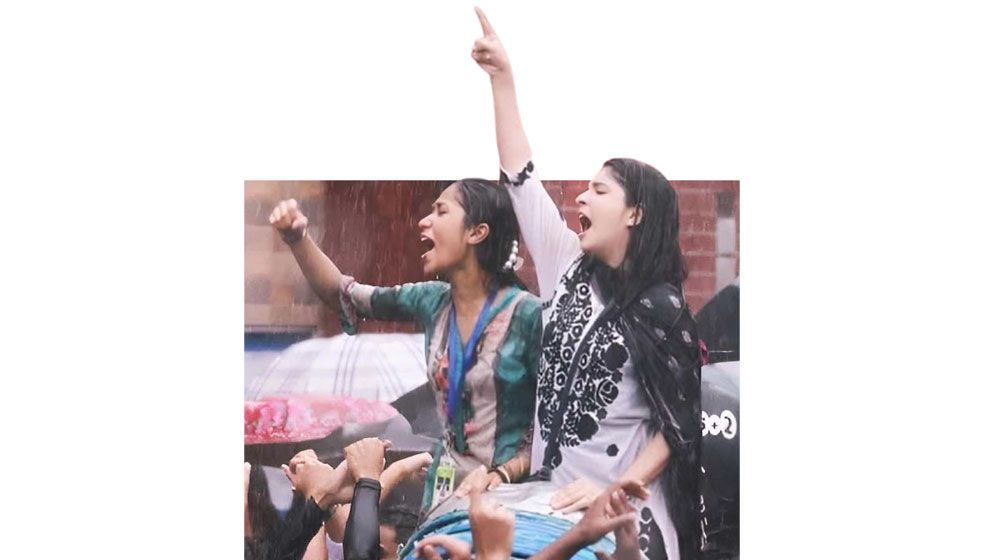
However, on 18 July, private university students joined the "Complete Shutdown" programme across Dhaka despite a heavy law enforcement presence and armed ruling party activists.
Students from Uttara, Badda, Rampura, Mirpur, Dhanmondi, Mohakhali, Tejgaon and other areas took to the streets, making the day a turning point that many now observe as Private University Resistance Day.
Recognition after the uprising
Despite their crucial role in the movement, several private university students say they have not received equal recognition after the uprising.
Munim Mubasshir, a North South University student, student coordinator and frontline protester during the July uprising, and a former member of the Anti-Corruption Commission Reform Commission, said that the issue reflects a broader pattern in Bangladesh's politics, where groups unite during movements but often become divided after success.
"During movements, everyone fights shoulder to shoulder. But when the time comes for decision-making, space gradually becomes limited," he said.
According to Mubasshir, public universities entered the post-uprising period with established political networks and leadership structures, while private universities lacked a unified platform to represent them.
"As a result, even though private university students demanded representation, there was no single body to represent everyone, making it easier to overlook them," he added.
He said the resistance built by private university students on 18 July changed the movement's momentum and the uprising might not have succeeded without their contribution.
However, he said private university students were invited to post-uprising programmes, but participation did not translate into representation.
He also said that political differences after the uprising were natural, but mutual respect among universities should have remained. "Unfortunately, today we often see competition over who gets credit for the movement," he said.
Voices from the frontline
Shaila Akter Shoshi, a fourth-year English student at BRAC University who actively participated in the July uprising, told the Daily Sun that many private university students feel sidelined despite their role in the movement.
She said private university students stepped forward after many public university coordinators were arrested and helped sustain the protests. However, she believes they received little space in politics or national affairs afterward.
"Private university students generally stay away from politics. We joined the movement without expecting anything in return," she said, adding that many students who wanted to contribute after the uprising were given little opportunity.
"People forgot what private university students had done. Some even refuse to acknowledge that the movement might not have reached this stage without our participation," she said.
She added that many private university students have since become less interested in politics, saying, "We joined the movement, and once it was over, we simply returned to our lives."
Sudeepto Salam, a journalist, teacher and author who covered the movement from the field, said private university students were not properly recognised after playing a role in the uprising.
"Private university students were not evaluated, and there was no intention to evaluate them either," he said.
According to Sudeepto, after 5 August, a group of people tried to take control of the success of the movement for their own interests instead of working towards the vision of a new Bangladesh.
He said the students who took to the streets with the goal of building an equal society had very different intentions from those who later sought to benefit from the movement.
He added, "Those who wanted to gain personal or group benefits understood that they had to take control of the movement. If it remained in the hands of ordinary students, it would have been difficult to serve their own interests."
For many private university students, 18 July remains a symbol of their role in the July uprising. Yet nearly two years later, many question whether their contribution has received adequate recognition.
For Shojol's mother, however, those debates matter little. She remembers only the final phone call from her only son, a private university student who left home with hope and conviction, carrying his university ID card that later helped his family identify him.
___________________________________________
The reporter can be reached at [email protected]