


 For all latest news, follow the Daily Sun's Google News channel.


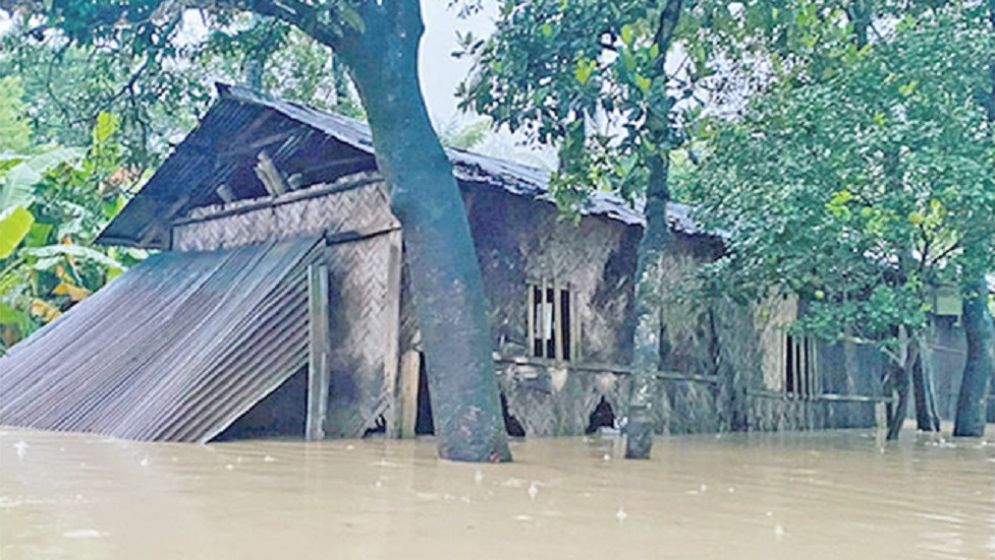
A general view of the impact from recent short-term floods in the country's south- and north-east. File Photo: Collected
Allah is the only creator of everything, and He alone is the ultimate controller of everything. Allah says, “Allah is the creator of all things, and He is over all things, the disposer of affairs.” (Sura Zumar: 62). Rain, drought, weather, excessive rainfall, lack of rain or natural disaster – nothing is outside the absolute control of Allah. He, the almighty, brings these challenges upon us sometimes as a test of our faith (Iman) and resilience or, at other times, as a divine warning and punishment. Allah says, “And We will surely test you with something of fear and hunger and a loss of wealth and lives and fruits, but give good tidings to the patient.” (Surah Al-Baqarah: 155). On the other hand, these are warnings for those who are sinners and who cross their limits. Allah says, “And whatever of misfortune befalls you, it is because of what your hands have earned. And He pardons much.” (Sura Shura: 30).
Bangladesh has recently faced many natural disasters one after another, including devastating flash floods, severe heatwaves and cyclones. These disasters regularly force millions of people to leave their homes, destroy farming livelihoods and ruin helpless communities. Over the past few days, non-stop heavy rain and water coming from upstream have caused devastating flash floods across the country. Large areas, especially in Chattogram, Cox’s Bazar, Bandarban, Rangamati, Khagrachhari, Moulvibazar, Habiganj and Sylhet, are already submerged. In just a few days, families in these flooded areas have lost their homes, sources of clean water and farming lands along with crops. So, those of us who are safe have a significant and necessary duty to help millions who are trapped and struggling to keep themselves afloat. In Islam, being safe does not mean we can ignore others. In fact, staying safe is a test from Allah to see our kindness, gratitude and willingness to help those in need.
Standing beside disaster-affected people is not a matter of voluntary (Nafl) philanthropy or casual charity; it is a binding communal obligation (Fard al-Kifayah). Getting the necessary support from us is the right of disaster victims, and it is our binding duty to stand beside them. Allah declares, “And from their properties was [given] the right of the needy and the deprived.” (Surah Jariyat: 19). Providing food, clean water, medical supplies and shelter to the disaster-affected people is such an important duty that if we do not fulfil it, we will be held directly accountable by Allah on the Day of Judgement. According to a Hadith, if the safe people fulfil their duty towards disaster victims, they do not just perform a casual act of charity. It is as if they do that service directly for Allah, and He, the Almighty, will personally repay them with His divine mercy, protection and Paradise on the Day of Judgement. Abu Huraira (RA) narrated that Allah’s messenger (SAW) said, "Verily, Allah, the Exalted and Glorious, would say on the Day of Resurrection, ‘O son of Adam, I was sick, but you did not visit Me.' He would reply, ‘O my Lord, how could I visit Thee whereas Thou art the Lord of the worlds?’ Thereupon the Almighty would say, ‘Didn't you know that such and such servant of Mine was sick, but you did not visit him? And were you not aware of this, that if you had visited him, you would have found Me by him?’ ‘O son of Adam, I asked for food from you, but you did not feed Me.’ He would reply, ‘My Lord, how could I feed Thee whereas Thou art the Lord of the worlds?’ Allah would say, ‘Did not you know that such and such servant of Mine asked food from you, but you did not feed him, and were you not aware that if you had fed him, you would have found him by My side?’ (The Lord would again say) ‘O son of Adam, I asked for water from you, but you did not provide it Me. He would reply, ‘My Lord, how could I provide Thee whereas Thou art the Lord of the worlds?’ Thereupon He would say, ‘Such and such servant of Mine asked you for a drink, but you did not provide him, and had you provided him drink you would have found him near Me.’” (Sahih Muslim: 2569).
According to a Hadith, resolving that hardship is the primary way to secure Allah’s mercy when we face our own ultimate crisis. Abu Huraira (RA) narrated that The Messenger of Allah (SAW) said, “Whoever relieves a Muslim of a burden from the burdens of the world, Allah will relieve him of a burden from the burdens on the Day of Judgement. And whoever helps ease a difficulty in the world, Allah will grant him ease from a difficulty in the world and in the Hereafter.” (Jame Tirmizi: 1930). Whoever supplies them food and clothes, Allah will give back these on the Day of Judgement. Narrated Abu Sayeed Khudri (RA) reported that the Prophet (SAW) said, “If any Muslim clothes a Muslim when he is naked, Allah will clothe him with some green garments of Paradise; if any Muslim feeds a Muslim when he is hungry, Allah will feed him with some of the fruits of Paradise; and if any Muslim gives a Muslim drink when he is thirsty, Allah will give him some of the pure wine which is sealed to drink.” (Abu Dawod: 1682).
The writer is Khatib of Baitush Shafiq Mosque and principal of Baitul Hikmah Academy, Gazipur