



 For all latest news, follow the Daily Sun's Google News channel.


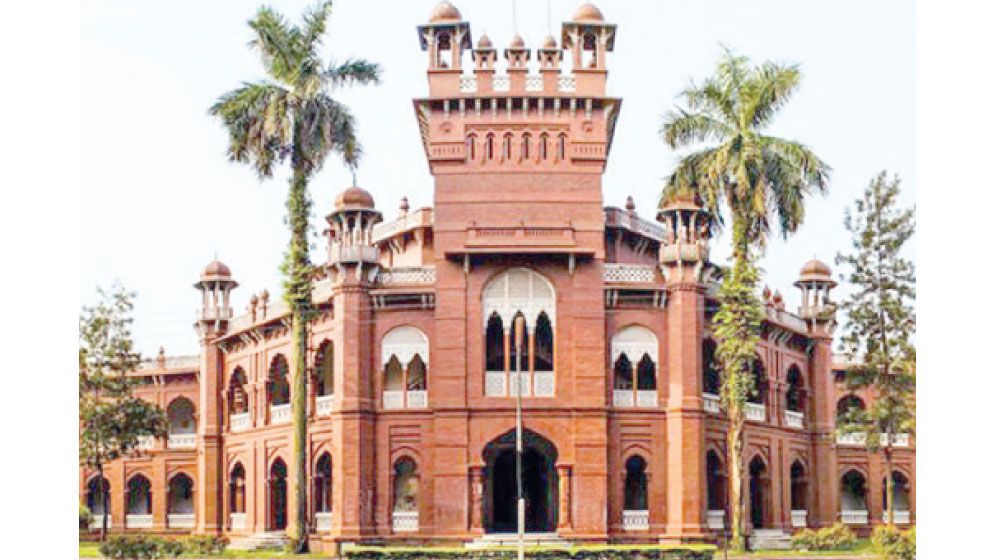
As Dhaka University enters its 106th year, the country's premier institution is pursuing an ambitious vision of becoming a research-driven, globally competitive university.
Yet decades-old problems – from shrinking land holdings and weak research output to flawed faculty recruitment, inadequate student accommodation and poor mental health support – continue to cast a long shadow over its aspirations.
Founded on 1 July 1921 on 650 acres of land, the university now occupies just 274 acres.
Portions of its original estate are occupied by outside institutions, including the Atomic Energy Centre, Nilkhet High School, the Asiatic Society and police facilities.
The university has also failed to utilise or secure several of its own properties.
These include one acre of land purchased in Cox's Bazar in 2014 for a research centre, a plot in Dhanmondi donated by GC Deb, and 52 acres allocated by RAJUK in Purbachal in 2018, which it has yet to take possession of.
Research – widely regarded as the backbone of any world-class university – remains one of DU's weakest areas. Although the administration frequently cites funding shortages, official figures suggest a chronic inability to spend the money already allocated.
In the 2024-25 fiscal year, the university spent Tk12.61 crore of its Tk20.07 crore research budget, leaving nearly 37% unused. Over the past five years, Tk13.36 crore of the total Tk70.07 crore research allocation remained unspent.
The picture is even bleaker across the university's 61 research centres, where more than 60% of the Tk38.25 crore allocated over the past five years went unused.
A senior researcher, speaking anonymously, said the modest grants discourage quality researchers from applying, leaving many centres inactive or limited to holding routine seminars.
Merit-based faculty recruitment also remains a longstanding concern.
Political considerations often outweigh academic credentials, a practice recently criticised by Prime Minister Tarique Rahman during a discussion at the university.
He said prioritising political affiliation over merit and the absence of quality research publications had weakened the university's academic standing, urging the authorities to make academic excellence the sole criterion for appointments and promotions.
Meanwhile, a student-led online teacher evaluation system approved by the university syndicate in October 2022 remains unimplemented.
Newly appointed lecturers also begin teaching without mandatory pedagogical training.
Students continue to grapple with mounting psychological pressure stemming from accommodation shortages, political influence and sexual harassment.
According to an Anchal Foundation survey conducted last August, 41.9% of students nationwide reported facing discrimination, while nearly 90 per cent said they had experienced mental health problems.
The housing crisis is particularly acute for women. University admission data over the past 12 years show that 57% of female students are forced to live off campus, compared with 34% of male students.
The university's five women's halls are operating at roughly twice their intended capacity.
Despite these challenges, the university has recorded notable gains internationally. It climbed to the 401-600 band in the “Times Higher Education Impact Rankings 2026” from the previous 1001-1500 band, retained its place among the top 600 universities in the “QS World University Rankings” for a third consecutive year, ranked 132nd in the “QS Asia Rankings 2026” – the highest in Bangladesh – and saw 35 faculty members included in the Stanford University-Elsevier list of the world's top 2% scientists in 2025.
A Tk2,841 crore infrastructure project is also under way, involving 31 multi-storey buildings, the reconstruction and modernisation of 10 residential halls, renovation of the Central Library and construction of an Ottoman-style central mosque.
Looking ahead, the university has unveiled the Dhaka University Academic Plan (2026-2046) with the goal of securing a place among the world's top 200 universities by its 125th anniversary.
Vice-Chancellor Prof ABM Obaidul Islam said the roadmap prioritises research excellence, innovation, educational modernisation and digital transformation.
"The administration is working to make the university a more capable and competitive institution to face future challenges," he said, adding that plans include a modern medical bioscience campus, an international-standard hospital, advanced laboratories in Purbachal and two Tk2,000 crore endowment funds for research and student welfare with alumni support.
Echoing that commitment, Pro-Vice-Chancellor (Administration) Prof Almojaddidi Alfesani said the university was determined to modernise its administrative systems, strengthen industry-academia collaboration, update curricula, address the housing shortage and establish a Tk1,000 crore fund to support research and student welfare.
The reporter can be reached at: [email protected]