


 For all latest news, follow the Daily Sun's Google News channel.


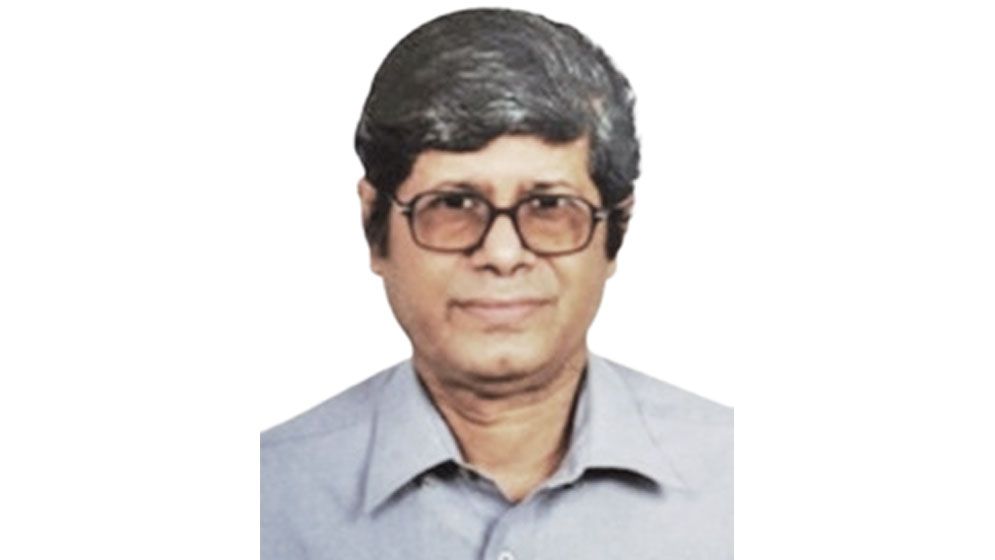
 The veteran poet Al Mujahidi is no more. He passed away on 19 June at the age of 83 years while undergoing treatment at a Dhaka hospital. Mujahidi was at the same time a poet, journalist, translator, researcher, and literary editor, and was considered to be a principal figure in the realm of Bangladeshi poetry during the tumultuous decade of 1960s.
Born in the village Naruchi of Gopalpur thana under Tangail district on 1 January 1941, his full name was Hisham Al Mujahidi. His father Abdul Halim Jamaly was a playwright cum politico-cultural organizer, who was imprisoned several times due to his participation in the independence movement against British rule. His mother Sakhina Khan was a song-writer and social worker. Mujahidi passed the matriculation examination (1958) from Victoria High School of Sirajganj, intermediate examination (1960) from the Karotia Sadaat College of Tangail, and then obtained bachelor’s degree (1964) from Dhaka Jagannath College. After that, he obtained two master’s degrees – one in sociology (1966) and the other in Bangla language and literature (1967) – from the University of Dhaka.
Mujahidi was jailed several times due to his involvement in student politics during the anti-Ayub mass movement of 1960s, and later participated in the Independence War of 1971. He amalgamated modern poetry with the rural folk heritage of Bangladesh starting from the 1960s. The linkages between man, nature, and the national ethos remained the core ingredients of his poetic outputs all along. As he had a good grasp of sociology and history, he could easily combine mythological and archaeological elements with folk life in his poems. Alongside poetry, he wrote numerous stories, novels, plays, and essays during his long literary career, and his published volumes exceeded one hundred.
Al Mujahidi’s books of poetry included: ‘Hemlocker Peyala’, ‘Dhrupad O Terracotta’, ‘Dur Parabat’, ‘Mrittika Oti-Mrittika’, ‘Kando Hiroshima Kando Nagasaki’, ‘Samudra Meghla’, ‘Karagarer Kobita’, ‘Juddha Nasti’, ‘Shahasra Dibash Shahasra Rajani’, ‘Prachya Prithibi’, ‘Prithibir Dhulo’, ‘Soura Jonaki’, ‘Eve-er Hamlet’, ‘Oedipus-er Hamlet’, ‘Academus-er Bagan’, ‘Albatross’, ‘Sandhyar Brishti’, ‘Daedalus O Labyrinth’, ‘Silhouette’, ‘Prison Van’, ‘Kaler Bonditye’, ‘Vita Nuova’, ‘Eka Anontey’, ‘Bhongur Golap’, ‘Pakhir Prithibi’, and ‘Palki Chaley Dulki Taley’.
His novels included: ‘Manab Basati’, ‘Milur Et O Sonnata’, ‘Prothom Prem’, ‘Chand O Chirkut’, ‘Rupoli Roddur’, ‘Khokar Akash’, ‘Khokar Juddha’, and ‘Lalbatir Horin’; books of stories included: ‘Prapancher Pakhi’, ‘Batabaran’, and ‘Bhara Katal Mara Kataler Chand’. His compilations of essays were: ‘Samaj O Samajtatta’, ‘Kalantarer Jatri’, ‘Raj Karoti’ and ‘Meru Moitry’; and the books of translation were: ‘Kaifi Azmir Kobita’, ‘Prithibir Kobita’, ‘Ahmad Farazer Kobita’, ‘Urdu Kobita’, ‘Hindi Kobita’, and ‘Heinrich Heiner Kobita’. He also wrote children’s books (‘Halum Hulum’, ‘Shekol Katey Khanchar Pakhi’, ‘Sonar Mati Rupor Mati’, ‘Ishtishaney Whistle’, and ‘Tal Patar Sepai’), and juvenile fiction (‘Chhutir Chhuti’, ‘Alor Pakhita’, ‘Rupali Roudrey’, and ‘Laurel Patar Rajmukut’).
He served as the literary editor of the daily ‘Ittefaq’ for over three decades. Later, he joined the daily ‘Jaijaidin’ in the same role in 2012. Lastly, he used to edit the literary journal ‘Notun Ek Matra’, which was published on a semi-annual basis. He also served as Deputy Press Secretary to Shaheed President Ziaur Rahman during the late-1970s and early-1980s.
The Government of Bangladesh awarded Mujahidi the ‘Ekushey Padak’ in 2003 for his outstanding contributions to Bangla language and literature. Besides, he also received the Poet Jibanananda Das Academy Prize, Poet Jasimuddin Academy Award, Sher-e-Bangla Sangsad Puraskar, and the Michael Madhusudan Academy Prize for his literary achievements.
Mujahidi strove to relate the Greek mythologies and Western classics with the folk and rural heritage of Bangladesh. This gave him a distinct identity among his contemporaries. Not only as a poet, he left his indelible mark as a guardianlike inspirational figure in the literary arena. He groomed numerous young and upcoming poets and writers while serving as the literary editor of Ittefaq, where his editorial role was not confined to mere sorting and selection. His love for children’s literature was also apparent in many of his volumes, which were presented in very simple and easily understandable language. Besides, his translations demonstrated his mastery over Urdu, Hindi, and English languages.
Mujahidi could weave and transform the ancient myths, annals of reality, and profound love for the soil into luminous threads of magic. History, heritage, culture, tradition, and contemporary socio-political milieu found adequate reflection in many of his works. Like many others, he has also proved that a poet may die, but his creations thrive by spreading roots deep inside the soil.
The following is a poem of Al Mujahidi rendered into English by this writer.
My Flag Your Passion
“I celebrate myself, and sing myself,
And what I assume you shall assume,
For every atom belonging to me as good belongs to you.
I loaf and invite my soul,
I lean and loaf at my ease observing a spear of summer grass.”
I never went out of orbit. Rather I orbited the sun again and again...
I see dreams of ages – pictures of the deluge remain afloat.
I see dreams of an unfolding world;
How can one dream without loving this earth?
I see dreams of verdant wind and window –
The soul vibrates in the veranda. You please tell me
How far is the bedchamber of longitude? In space two birds of my dream
Afloat on their wings utter, ‘On earth
Love, soil, and crimson blood flow in the same current.’
This earthly abode is but a gale of breaking waves.
Some naked swans brush their feathers in the lake of my dreams
I make this lake swell by touching the swans’ wings like a sailor.
The soil, water, sky, and space are picking up my offerings now;
And you say with your protruding lips, ‘It is our dreams
That offered the gift of our fuller lives.’
I always believe diamonds lie inside the fire of ignited stoves.
The flag of your fondness now flies in my hand. I am
Now a proud, humble citizen of this world.
Our love is now more coherent, cordial and close;
You also got entangled in the heart of Bangla like a shy creeper.
My verdant love, I caressed with my hands your shrub-covered face –
You are the classical, the eternal.
_________________________________________
The writer is former Editor of Bangladesh Quarterly. He can be reached [email protected]