


 For all latest news, follow the Daily Sun's Google News channel.


Health budget crosses 1% of GDP for first time
Daily Sun Report, Dhaka
Published: 12 Jun 2026, 12:00 AM
The government has proposed a record Tk69,409 crore allocation for the health sector in FY2026-27, nearly doubling the revised allocation of Tk35,477 crore in FY2025-26 and pushing health spending above 1% of GDP for the first time.
Presenting the budget in parliament on Thursday, Finance Minister Amir Khosru Mahmud Chowdhury said the allocation represents 1.02% of GDP, compared with 0.58% in the current fiscal year.
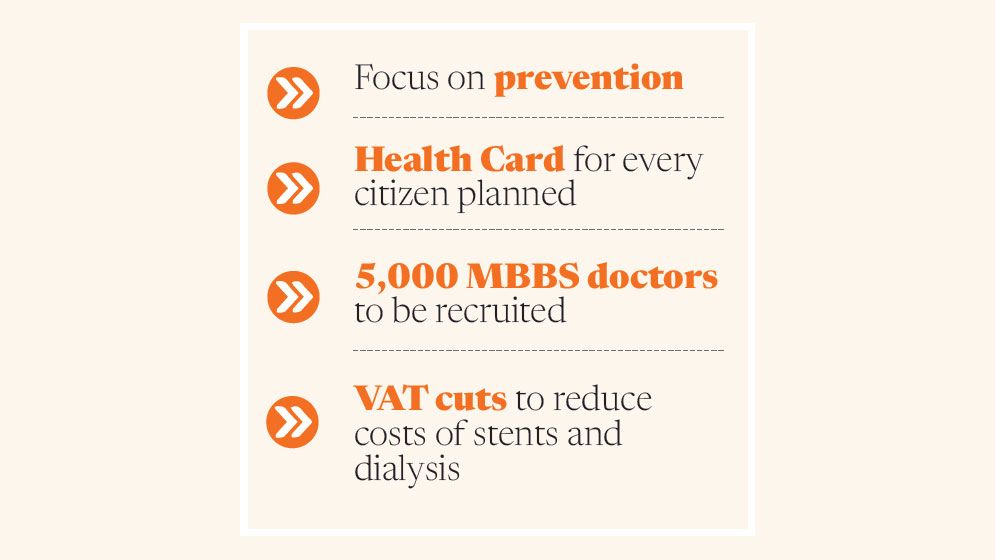
“The government's objective is not merely to build more hospitals, but to transform Bangladesh's healthcare system from a treatment-centred model to a prevention-centred one,” he said.
The government aims to raise health spending to 5% of GDP within five years. Plans include establishing a modern primary healthcare unit in every union and urban ward, supported by three community-level health service centres staffed by trained health workers.
Under a universal health coverage programme, every citizen will receive a modern Health Card linked to an Integrated Patient Management System and an Integrated Patient Referral System to improve accountability and efficiency. District hospitals and associated upazila health complexes will be developed as integrated secondary healthcare units, with specialised treatment concentrated at district headquarters.
The government also plans to establish a National Ambulance Pool and Emergency Services Network and expand treatment for costly diseases through public-private partnerships. To tackle child malnutrition, a comprehensive national programme targeting stunting among children under five will be introduced. The government is also finalising an updated National Essential Medicines List and a modern drug policy to ensure access to safe, effective and affordable medicines.
Support for the pharmaceutical industry will continue through infrastructure, research, investment and policy assistance, including the Active Pharmaceutical Ingredient (API) Industrial Park. Export-oriented pharmaceutical companies will receive additional fiscal and tax incentives.
The minister said reforms would be introduced to medical education, with a competency-based MBBS curriculum targeted by 2030. BDS and allied health curricula will also be updated, while student loan facilities will be introduced for medical and dental students, including special loan schemes for higher studies abroad.
A total of 192 unused properties under the Local Government Division have already been transferred to the Health Ministry for establishing primary healthcare units. The government has also initiated the recruitment of 5,000 MBBS doctors to fill long-standing vacancies and plans to recruit an additional 100,000 health workers. Around 60,000 primary-level health, population and nutrition service providers will receive training.
In a major relief for patients, the proposed budget withdraws the 10% VAT on cardiac stents at the supply stage, which is expected to reduce the price of each stent by around Tk20,000.
For kidney patients, the government has withdrawn the 15% VAT and 5% Advance Tax on dialysis filters, reducing the cost of a regular dialysis session by approximately Tk800. The existing 7.5% Advance Tax on haemodialysis blood tubing sets has also been removed.
The budget further proposes a Tk2,000 crore Health Risk Mitigation Fund as part of a broader package of special funds supporting social protection, healthcare, entrepreneurship, climate resilience, the blue economy, renewable energy and the creative economy.