




 For all latest news, follow the Daily Sun's Google News channel.


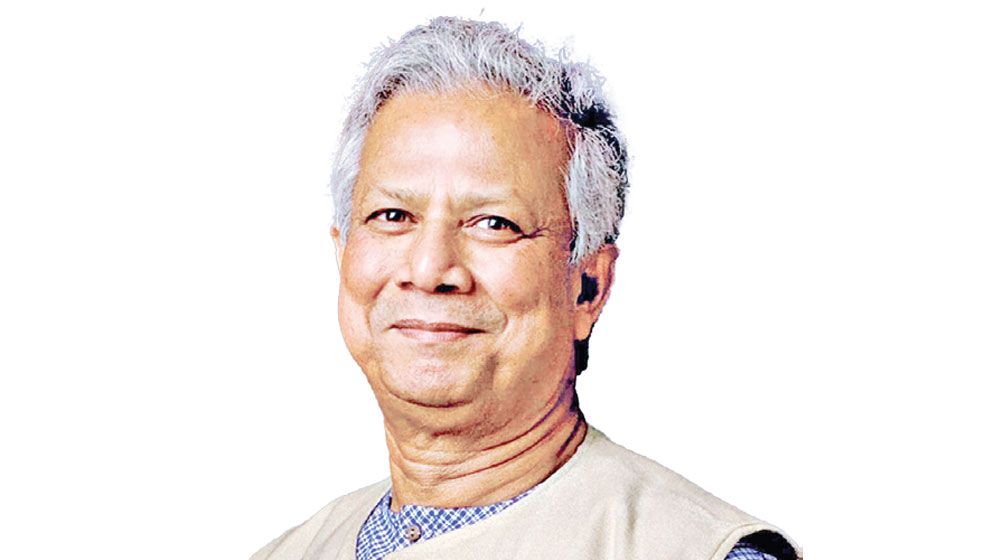
The term “kitchen cabinet” originated in the United States around the 1830s. The then US President Andrew Jackson valued the advice of his personal friends more than that of his official cabinet. Since they used to enter through the back door or the “kitchen” of the White House and hold discussions in an informal setting, critics mockingly began calling it the “kitchen cabinet.” However, Jackson’s kitchen cabinet concept later gained popularity in Western democracies. Whether it has formal recognition or not, kitchen cabinets exist in modern times across all countries and under all forms of government.
For instance, US President Donald Trump has his own core team, who are now the primary architects behind all kinds of decisions in the United States. According to a CNN report, Trump is run by a special five-member team, which also includes a member of his family. From the new tariff policy to the nuclear deal with Iran, these five members of the core committee are Trump’s primary advisors.
UK Prime Minister Keir Starmer also has a small, trusted group with whom he constantly consults. Last month, Prime Minister Keir Starmer came under pressure following the ruling Labour Party’s debacle in the UK local government elections. A few members of his own Labour Party demanded his resignation. The prime minister himself was considering stepping down. However, Keir Starmer’s close associates advised him not to resign.
Just as there is a nucleus at the center of power in developed democracies, so too are there a handful of policymakers who actually run the state in extreme autocracies like North Korea. The existence of a kitchen cabinet can also be found in a one-party state like China.
A kitchen cabinet refers to a very trusted and close group of informal advisors to a head of state or government (such as a prime minister or president). It is not a constitutional or formal part of the government; rather, it is a small circle of the leader’s personally preferred people who influence important decision-making from behind the scenes. The state is essentially run by their decisions. It is a shadow cabinet of sorts that controls the main keys to power, yet they are not directly accountable to the public or the parliament. In fact, the public is often completely unaware that key state decisions are originating from this kitchen cabinet.
While an actual cabinet is composed of individuals heading specific ministries or departments, a kitchen cabinet is entirely informal. There are no obligations of official rank here. This circle may include family members, close friends, long-time personal assistants, or highly loyal intellectuals of the leader.
In Bangladesh, too, every government in the past had its own circle of advisors to the head of state or government. However, it was never a matter of controversy. Everyone knew who was close to and influential with the head of government. But in the past, whatever decisions these influential figures made were subsequently discussed in the cabinet or the parliament.
However, the kitchen cabinet became a topic of debate in Bangladesh during the tenure of the Yunus government. Two months after the departure of the interim government led by Yunus, several advisors of that government began uncovering the mystery of the kitchen cabinet. This controversy was initiated by the former foreign adviser Touhid Hossain.
On 25 May, former Foreign Adviser Md Touhid Hossain claimed in an interview that a secret, unelected seven-member kitchen cabinet controlled the country’s crucial executive decisions, bypassing the collective decision-making process of the previous interim government’s advisory council. According to Md Touhid Hossain, this informal kitchen cabinet would meet every Tuesday at the state guest house, Jamuna, and key state policy decisions were taken from there. He mentioned that at one point, he too had to participate in one of the kitchen cabinet meetings.
Following Touhid Hossain’s statement, several advisers began speaking out one by one. Former student adviser Asif Mahmud Shojib Bhuyain admitted that the interim government did have a kitchen cabinet. However, he was not a member of it. Brigadier General (Retd) Sakhawat Hossain made a similar statement.
Furthermore, the interim government’s food and land adviser Ali Imam Majumder, said, “The members of the kitchen cabinet used to sit every Tuesday. They held informal discussions here. However, who would attend was predefined.”
It is clear from the statements of multiple advisors that there was another government within the interim government led by Dr Muhammad Yunus. It was that government that actually ran the country. All important decisions of the state were made in this kitchen cabinet. This means that a section of the advisory council of the interim government was merely nominal. They enjoyed various privileges with taxpayers’ money under the identity of advisors, but did no work. They drove around in expensive cars, went on unnecessary foreign trips, and engaged in lobbying and soliciting favours using their advisor status. This is a form of crime. If they could not perform their constitutional duties as advisers, why didn’t they resign? Out of what greed did they cling to their positions despite being humiliated? Brigadier General Sakhawat Hossain and Touhid Hossain claimed they wanted to resign. Such statements are nothing but a strategy to evade responsibility. After feeding on ghee and butter to their hearts’ content for a year and a half, are they now saying they didn’t want to eat? Since these advisers failed to perform their designated duties, they should return the salaries, allowances, and other benefits they drew from the public exchequer over the last year and a half. Because, as evident from their own statements, the advisory council had no real function—they were merely ornaments. The country was run by a seven-member kitchen cabinet.
Now let’s look at who was in the kitchen cabinet. Undoubtedly, Dr Yunus and those close to him were in this policymaking circle. We learn from the advisers’ interviews that this kitchen cabinet consisted of seven members. It shouldn’t be difficult for anyone to guess who was in this kitchen cabinet. Anyone can say with their eyes closed that Asif Nazrul, Adilur Rahman Khan, and Syeda Rizwana Hasan were part of this core committee. Although Asif Nazrul has claimed that he was not in any such kitchen cabinet, people no longer believe his words. His continuous fabrications—ranging from claiming that 2.6 million Indians are working illegally in Bangladesh to the issue of Bangladesh not playing in the Cricket World Cup—have established him as a modern-day “shepherd boy who cried wolf.” There can be discussions and debates about who else might have been in the kitchen cabinet. Needless to say, those who praised all of Yunus’s misdeeds over the past year and a half and served as his constant shadows were the ones in this kitchen cabinet.
These sophisticated civil society members were the arbiters of our fate for the last year and a half during the previous interim government. They did whatever they pleased. Leaving aside public opinion, the question must be explored whether Yunus had the constitutional right to run the country with his close aides in this manner, keeping a constitutionally formed government in the dark. From trade agreements with the United States to port leases, all these decisions were made in the kitchen cabinet. Therefore, bypassing the advisory council, a few members cannot become the masters of the country. Making state decisions in this manner is completely unconstitutional.
In other countries, a kitchen cabinet provides advice and makes proposals, which are then finalised in the cabinet or other constitutionally valid decision-making platforms. But Yunus ran the country through the kitchen cabinet. This is unethical and illegal. Therefore, an assessment should be conducted immediately on how all the important decisions of the Yunus government were made. Otherwise, the current elected government may face major constitutional questions in the future.
_________________________________________
Audite Karim is a writer and playwright. Email: [email protected]