


 For all latest news, follow the Daily Sun's Google News channel.


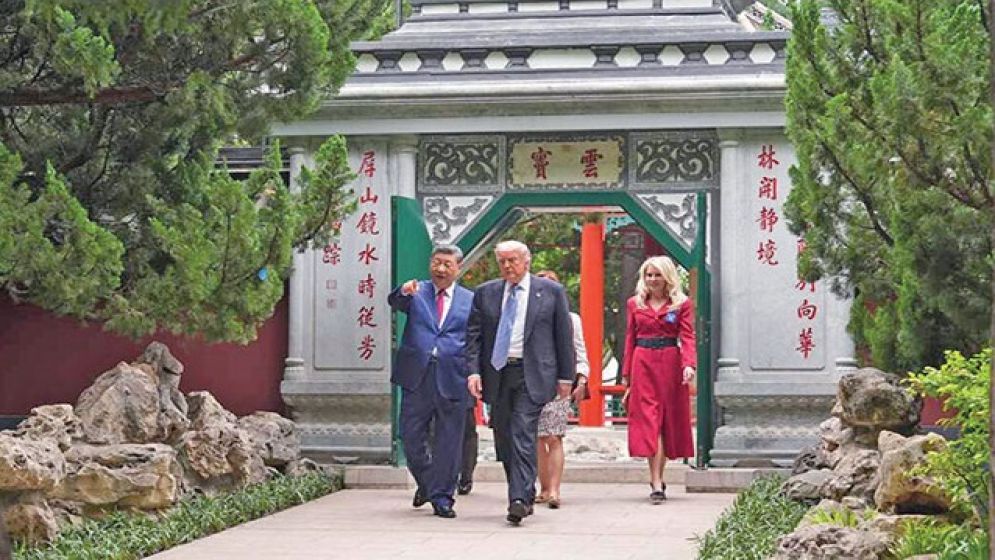
Photo: Collected
At the invitation of Chinese President Xi Jinping, US President Donald J. Trump paid a state visit to China from 13 to 15 May. During the visit, President Xi Jinping and President Donald Trump had sustained communication in a way that was candid, in-depth, constructive and strategic, and reached a series of important common understandings. The China-US summit was a historic meeting. It provided strategic guidance for the development of China-US relations and injected valuable stability into a world of turbulence and transformation.
A Historic Meeting: Charting a New Course for China-US Relations
This meeting was an important one as both countries have entered a crucial stage in their respective development. This year marks the start of China’s 15th Five-Year Plan for Economic and Social Development, and China is advancing Chinese modernisation on all fronts through high-quality development. This year is also the 250th anniversary of American independence. In this crucial year, the two presidents met in Beijing for in-depth exchanges on national governance, China-US relations, and international and regional hot spots. This sent an important message to the world: Achieving the great rejuvenation of the Chinese nation and making America great again can go hand in hand, and the two countries can help each other succeed and advance the well-being of the whole world.
This meeting was also an important one as China-US relations have reached a new historical starting point. This is the first face-to-face engagement between President Xi and President Trump since their Busan meeting last October, and also the first visit to China by a US president in nine years. It is a continuation and strengthening of the good momentum in the interactions between the two presidents. As transformation not seen in a century accelerates across the globe, the world has reached a new crossroads. President Xi emphasised some important questions: Can China and the United States overcome the Thucydides Trap and create a new paradigm of major-country relations? Can we meet global challenges together and provide greater stability for the world? Can we build a bright future together for bilateral relations in the interest of the well-being of the two peoples and the future of humanity?
These questions are vital to history, to the world, and to the people. They are the questions of our times that Chinese and American leaders need to answer together. When the two presidents set the course and steer the giant ship of China-US relations, they will have a significant and far-reaching impact on the evolving international landscape and the development of human society.
This meeting was also an important one in which the two presidents had in-depth communication and produced fruitful outcomes. The visit included not only official talks and a welcoming banquet, but also private exchanges and a cultural visit. Throughout the nearly nine hours the two presidents spent with each other, they showed mutual respect, a commitment to peace and a shared interest in pursuing cooperation. The most important political understanding they reached was the agreement to build “a constructive China-US relationship of strategic stability”. They also agreed for the two sides to pursue more exchanges on foreign policy, military-to-military relations, economy and trade, public health, agriculture, tourism, people-to-people ties and law enforcement. This will provide a powerful boost to China-US interactions.

A New Strategic Positioning: Understanding the Meaning of “a Constructive China-US Relationship of Strategic Stability”
During the meeting, President Xi and President Trump agreed on a new vision of building a constructive China-US relationship of strategic stability as the new positioning of bilateral relations, providing strategic guidance for bilateral relations over the next three years and beyond. The new vision they articulated has been well received by the people of both countries and the broader international community. This is how China understands it.
It should be positive stability where cooperation is the mainstay and the relationship gets more resilient through exchanges and cooperation. As the world’s top two economies, China and the United States share deep ties. Neither can cut the other out, or prosper without the other. Both sides will gain from cooperation and lose from confrontation. While a confrontational relationship will be disastrous for both countries and the world, China-US cooperation will get many great things done to the benefit of both and all.
It should be healthy stability where competition is kept within proper limits and is not turned into a zero-sum game. Major-country competition is nothing new, but China-US relations should not be defined by competition. When competition does happen, it must be a healthy one where we learn from each other, pursue excellence together and compete fairly in compliance with rules. The purpose of competition should be to outdo oneself, so that both sides become better.
It should be constant stability where differences are manageable and the relationship should not be like a roller coaster. Both sides should maintain policy continuity and stability. It is very important for both sides to honour their commitments and move in the same direction. A positive outlook of China-US cooperation will provide more certainty for both countries’ development and for the international situation.
It should be lasting stability where peace is expectable and conflicts and wars are not acceptable. Peaceful coexistence is the biggest common denominator of China and the United States. Conflict and confrontation will produce consequences that no one can bear. The bottom line is that both sides must abide by the three China-US joint communiqués, respect each other’s social systems and development paths, respect each other’s core interests and major concerns, and respect each other’s right to development.
In short, building a constructive China-US relationship of strategic stability is not a slogan. It should be a goal both sides uphold and entail concerted actions. The two sides should follow the direction set by the two presidents, continue to enrich the substance of this new positioning, translate it into concrete policies and practical measures, and jointly open a new chapter in China-US relations.
Common Understandings and Responsibilities: China-US Cooperation Benefits the World
The meeting produced important common understandings on advancing interactions between China and the United States at the leadership and other levels. The two presidents agreed to keep in close touch through meetings, phone calls and letters. At the invitation of President Trump, President Xi will pay a state visit to the United States this fall. With the authorisation of the two presidents, the political and diplomatic channel has stayed active. The two countries’ foreign policy officials and diplomats have properly handled differences, solved practical problems and increased mutual understanding, contributing to stronger bilateral ties. As instructed by the two presidents, the two economic and trade teams have held multiple consultations, stabilising the economic and trade ties and market expectations. The two sides agreed to establish a board of trade and a board of investment, addressing each other’s concerns regarding market access for agricultural products, and expanding two-way trade within the framework of reciprocal tariff reduction.
On people-to-people exchanges, both presidents spoke about the importance of promoting people-to-people exchanges. President Xi announced an important initiative to invite 50,000 young Americans to China on exchange and study programmes over a period of five years, and welcomed more young Americans to visit and study in China. President Trump has also said multiple times that he welcomes Chinese students to the United States. This kind of two-way exchange will broaden the horizons of young people and better shape the future of China-US relations. The two presidents toured the Temple of Heaven together. This special arrangement showed that the two great countries, China and the US, should deepen mutual understanding and foster people-to-people friendship.
On the Taiwan question, China’s position is very clear. The Taiwan question is China’s internal affair. Realising complete national reunification is an aspiration shared by all sons and daughters of the Chinese nation. It is also the unwavering, historic mission of the Communist Party of China. The Taiwan question is the most important issue in China-US relations, one that affects the entire relationship. If it is handled properly, the overall relationship will remain stable, and the two sides will be able to devote more energy to mutually beneficial cooperation. Otherwise, the two countries will have clashes and even conflicts, and the entire relationship will be in great jeopardy. Safeguarding cross-Strait peace and stability is the biggest common denominator of the two sides. To ensure this, one must never indulge or support “Taiwan independence”, because “Taiwan independence” and cross-Strait peace are as irreconcilable as fire and water. Our impression coming out of the summit is that the US side understands China’s position, takes China’s concerns seriously, and, like the rest of the international community, does not agree with or accept Taiwan’s moving towards independence.
On the Middle East situation, President Xi set forth China’s consistent position. He emphasised that the use of force cannot solve problems, and dialogue is the only right choice. China encourages the US and Iran to continue settling their differences and disputes, including those over the nuclear issue, through negotiation. China calls for reopening the Strait of Hormuz as soon as possible on the basis of continued ceasefire, and believes the fundamental solution to the stalemate in the Strait lies in achieving a permanent and comprehensive ceasefire. On the Ukraine crisis, both China and the US want to see an early end to the conflict, and are ready to maintain communication and play a constructive role in the political settlement of the crisis.
China-US relations concern the well-being of the over 1.7 billion people of both countries, and affect the interests of the over eight billion people of the world. The constructive and stable development of China-US relations will help inject more certainty into the international environment, create a predictable and favourable atmosphere for global trade and investment, and enable countries around the world, including Bangladesh, to focus their efforts on advancing their own development agendas. China is ready to work with the US to follow through on the important common understandings reached at the summit. With a view to building a constructive relationship of strategic stability, China is ready to work with the US to approach and handle their relations with a broader and longer-term perspective, and seek the right way for major countries to get along in the new era. This effort will bring more benefits to the two peoples and make greater contributions to world peace and development.
The writer is Ambassador of China to Bangladesh