



 For all latest news, follow the Daily Sun's Google News channel.


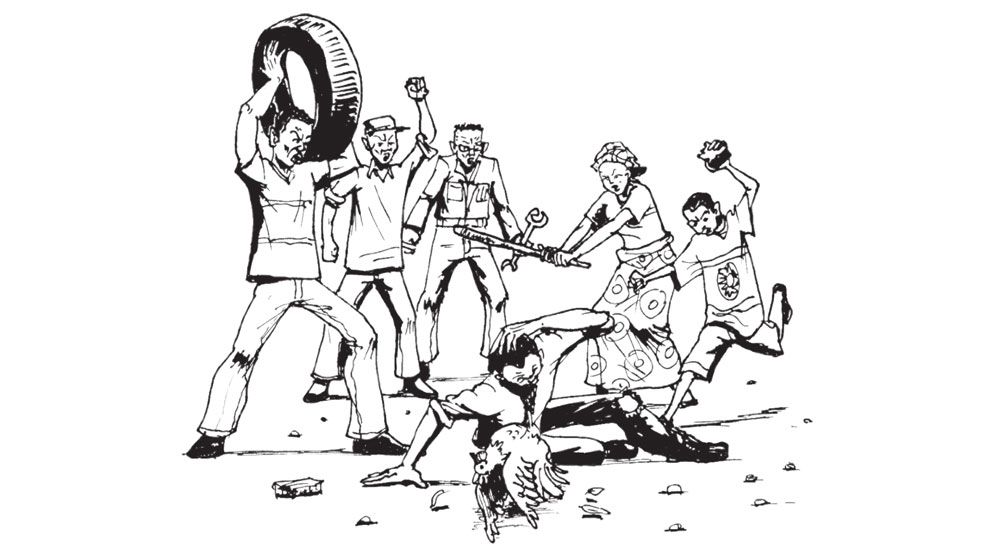
In recent years, Bangladesh has witnessed several disturbing incidents where allegations of blasphemy have led to mob violence and societal disorder. A single Facebook post or an unverified allegation has, at times, been enough to spark outrage, gather crowds, and even cost lives. At the same time, deliberately offensive or provocative expressions targeting religious beliefs also exist. Certain individuals or groups are out there to incite religious hatred deliberately by falsely attributing blame to other faith groups for disrupting communal harmony. Sometimes such situations are highlighted to create obstacles for the government and to destroy social order.
The rapid expansion of digital platforms has complicated the situation. For example, objects like hate speech, misinformation, and provocative content spread quickly online, where users frequently fail to verify the truth before they react. Rumours spread faster than truth, especially when they touch something as sensitive as religion. In the recent killing of Dipu Chandra Das in Valuka, Mymensingh, allegations were reportedly made just based on some hearsay, not the proven truth. Yet, a mob took the law into its own hands, which resulted in brutal violence. Such incidents reflect not only the emotional sensitivity surrounding religion but also a dangerous breakdown of trust in legal processes.
Blasphemy is a criminal offence. Bangladesh does not have any specific laws except the Penal Code 1860 in this regard. Chapter 15, sections 295 to 298 of the Penal Code provide relevant provisions for offences relating to religion. According to sections 295 and 295(A), whoever destroys, damages or defiles any place of worship with the intention of insulting the religion or outrages the religious feelings of any class of citizen by words (either spoken or written) with deliberate and malicious intention shall be punished with imprisonment for a term that may extend to two years or with a fine or with both. Whoever utters any word or makes any sound or any gesture or places any object in front of any person with the intention of deliberately wounding the religious feeling shall be punished with imprisonment for a term that may extend to one year.
There is a criticism regarding blasphemy laws in relation to freedom of speech. But Article 39 of the Constitution of Bangladesh guaranteed the freedom of speech, thought, conscience and press with reasonable restrictions. Which means freedom of speech cannot be exercised in a way that will harm social order, morality or the rights and religious feelings of any community. Though freedom of speech is a fundamental right, it is not an absolute licence to say anything without consequence. Besides, Article 41 provides freedom of religion. Which gives rights to every citizen to profess, practise or propagate their religion. The establishment of cyber tribunals in 2013 and the enactment of cyber laws such as the ICT Act 2006, Digital Security Act 2018 (repealed), Cyber Security Ordinance 2025 and now Cyber Security Act 2026 indicate an effort to address online offences, including those relating to religious insults.
But the concern is why do people resort to mob justice when law exists? The answer is a lack of actual enforcement of law. Not just in Bangladesh, but across the world, whenever there is a perception that there will be no justice or delayed access to justice, people may attempt to enforce their own sense of justice to gain immediate gratification. But those actions contradict the rule of law and create social disorder.
In the meantime, it is mentionable here that several Muslim countries have adopted strict blasphemy laws. For example, Pakistan adopted several penalties, including the death penalty, for certain blasphemy offences. In reference to other Islamic countries, the demand for blasphemy laws has emerged in Bangladesh from Islamist groups. They have demanded severe punishment, including the death penalty, for this crime. But from the perspective of Bangladesh, such a law is widely viewed as contradictory to the constitution according to Article 12. Even some Bangladeshi Islamic scholars argue that under Islamic principles, the death penalty for blasphemy is not justified in the context of Bangladesh. Though strict laws are necessary to protect religious sanctity, there is a high chance of the abuse of such laws and wrongful accusations.
So, rather than introducing extreme punishment, a better-balanced approach may lie in strengthening existing laws. Swift investigations, fair trials and ensuring accountability may rebuild public confidence in the legal system. Simultaneously, immediate actions need to be taken against whoever incites violence or propagates unverified allegations. Public awareness is equally important. Citizens must be aware of the dangers of misinformation and the importance of verifying facts before they react.
It is true that respect for religion cannot be compromised. But it must be balanced with constitutional rights and the principle of justice. The core challenge of our legal system lies in preventing the misuse of such allegations, enhancing the application of laws and eradicating the culture of mob justice. It is essential to maintain the rights of individual freedom and protect societal and religious values. And most importantly, ensuring firm control over mob actions is essential to preserve law and justice and safeguard both religious faith and constitutional freedom.
The writer is a student at Department of Law, Bangladesh University of Professionals