


 For all latest news, follow the Daily Sun's Google News channel.


Is politics becoming detached from people?
Special Correspondent
Published: 15 May 2026, 12:00 AM
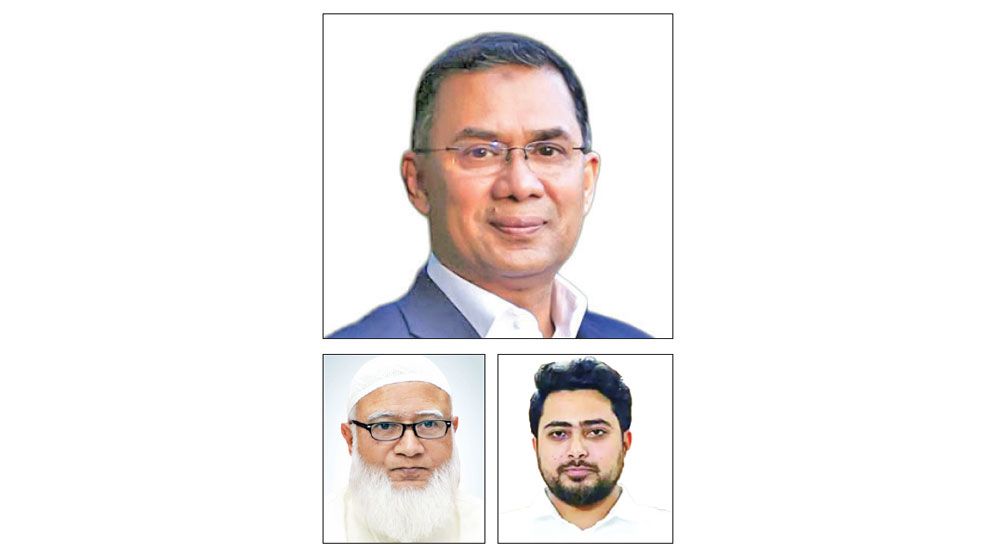
Politics is for the people. It is the driving force of a state. If a country is compared to a vehicle, politics is the driver's seat. In a democracy, the person seated in that driving seat is the one to whom the people have entrusted the responsibility of governing through their votes. Our lives and futures depend on how they steer that vehicle. If the driver is unskilled, the lives of the passengers are put at risk; similarly, if a government is inefficient, the country falls into disaster. For instance, under the incompetent and unskilled management of Dr. Yunus, the country is now on the brink of collapse. The primary duty of the party in the driving seat is to govern according to the will of the people. Just as a driver’s responsibility is to reach the destination safely, an elected government’s duty is to move the country forward according to the people's aspirations.
The question now is: what do the people want? Broadly speaking, the citizens of a state want guarantees for five fundamental rights.
First: The right to survive. This is the foremost fundamental right. A person should be able to move freely, leave home for work, and return safely. They should be able to travel legally within the country or abroad based on their status. But how effective is this right in Bangladesh? Even today, there is no guarantee of a "natural death." Corpses are seen hanging; the public is held hostage by the "mob justice" culture that began during the Yunus era. No one can say who might attack whom at any moment. The Home Minister claimed the days of mob violence were over, but in reality, the "springtime" of mob terror continues. Salahuddin Ahmed made that statement on February 18. Within two months, a mob was incited in the capital's Shahbagh to attack a group of men and women labeled as "homosexuals" and "transgender." A day later, a murder occurred via mob violence in Kushtia.
In the Daulatpur Upazila of Kushtia, a local Peer (spiritual leader) named Shamim Reza alias Jahangir was hacked to death inside his shrine. The attack was carried out by bringing up an old video and accusing him of insulting religion. The Kushtia incident has brought the issue of mob violence back to the forefront. Experts say these incidents recur because previous cases went unpunished. If strict measures are not taken now, such violence will only increase. The government should investigate previous mob attacks, publish a white paper, and take action. However, even after three months, the people have not been reassured regarding mob terror.
People remain anxious about their right to life, yet there is no discussion about this among political parties. They are too busy planning how to undermine each other. People cannot move freely. Defying fundamental constitutional rights, many are being barred from going abroad. Recently, a senior journalist was turned back from the airport. What was his crime? No one has answered—not the government, nor the opposition. It wasn't just journalists; the Yunus government had imposed travel bans on many. Even after the BNP government came to power, the situation hasn't improved. Neither the government nor the opposition is talking about the people's right to a normal, fearless life. It is the government's duty to publish a list of those banned from traveling along with the reasons. Everyone has a right to know.
Second: The rule of law and justice. The foundation of a democratic state is the rule of law. It is the mandatory duty of any democratic government to ensure justice. Our constitution states that all citizens are equal in the eyes of the law. But is that the reality? Not at all. Law in this country now functions differently for different people. For the same act, some remain in jail for months while others roam free. Currently, over 50,000 people are imprisoned without trial. The new government has taken no initiative for their release, and the opposition is silent on the matter. During the Yunus administration, a mockery was made in the name of murder cases. Making anyone they pleased an accused in a murder case was a part of the Yunus government's "malicious culture." By accusing professionals—businessmen, teachers, and journalists—in bizarre murder cases, Yunus and his law advisor, Asif Nazrul, established a reign of farce in the name of justice. It has been three months since the BNP government took power, yet not a single false case has been withdrawn, despite the government's initial promise to do so. Political leaders talk about establishing the rule of law, but no party has demanded the withdrawal of these cases.
Bail is a right of the accused. But during the Yunus era, that right was snatched away. When a country's law advisor publicly opposes bail, it is easy to understand the darkness surrounding judicial independence. Even after an elected government took charge, similar allegations regarding bail continue. Many are being entangled in new cases immediately after receiving bail. There is no discussion or demand regarding this in the political arena.
Third: The right to work. Every citizen has a constitutional right to employment. However, a record number of people in Bangladesh are now unemployed. Since the Yunus government took power, thousands of factories have closed, leaving millions jobless. The new government promised to reopen closed factories, but not a single one has been reopened in three months. During the Yunus administration, various conspiracies were hatched to destroy the private sector. The investment climate was hindered by freezing bank accounts of businessmen and industrialists and bringing money laundering charges without evidence. The new government has yet to create an investment-friendly environment.
Fourth: The rights to health and education. Health and education are basic rights. These were usurped during the Yunus era. The entire health system has collapsed. The procession of child deaths due to measles is growing longer. The government is merely shifting blame. There is no political discussion regarding measles-related deaths. Politicians are not standing by the helpless parents. There is no political dialogue regarding the improvement of the overall healthcare system.
Students in this country are treated like guinea pigs. Every new government experiments with education, leaving students in crisis. This time, students and parents are devastated by new experiments. The educational environment was ruined during the Yunus era, and political parties show no interest in restoring normalcy to campuses.
Fifth: A normal civic life. People want to live independently and in peace. However, even after the arrival of a new government, people haven't regained a normal life. Ordinary citizens are harassed by extortion, drugs, price hikes, and inflation. Extortion continues just as before. Under the umbrella of the ruling party, the dominance of extortionists persists. In Bhanga, Faridpur, after two youths were detained on extortion charges, Upazila BNP General Secretary Ayub Molla forcibly released them from the police station, identifying them as "local boys." The picture is more or less the same across the country. Government assurances have not materialized. The opposition is only trying to gain political mileage from the issue of extortion.
The cries of people regarding the rising prices of daily essentials do not reach the political field. People are helpless. Politics is for the welfare of the people. But political leaders are not by the side of the families whose children died of measles. There is no discussion about jobs for the unemployed. Political parties are not standing by those harassed by extortion. No politician is coming forward to wipe the tears of the farmers.
The people of the country are losing the battle of life every day while political parties are entangled in the strategic maneuvers of "reforms" and "constitutional amendments" to see who wins. Politics is becoming increasingly detached from the people. People are losing faith; they no longer view political leaders as their own. This is a matter of grave concern because when people's trust in politics diminishes, undemocratic forces find an opportunity. Therefore, politicians must listen to the cries of the people and stand by them. The primary task of politics is to build a safe and peaceful country for everyone.