


 For all latest news, follow the Daily Sun's Google News channel.


In March 2023, Chinese President Xi Jinping proposed the Global Civilization Initiative (GCI) at the CPC in Dialogue with World Political Parties High-level Meeting. Centred on four propositions — advocating respect for the diversity of civilisations, promoting the common values of humanity, emphasising the inheritance and innovation of civilisations, and strengthening people-to-people exchanges and cooperation across the world, the initiative answered the pressing question of our times: how should different civilisations coexist, and where is human civilisation headed? Over the past three years, the initiative has evolved from a vision into concrete practice, and from a Chinese proposal into a broad international consensus that is taking root and bearing fruit across the world.
I. Advancing a Shared Vision and Building Consensus on Shared Values
The four pillars of the Global Civilization Initiative are closely interconnected and mutually reinforcing. Respect for the diversity of civilisations is the prerequisite for inclusiveness, coexistence, exchanges and mutual learning among civilisations. Promoting the common values of humanity provides the fundamental guidance for all. Emphasising the inheritance and innovation of civilisations serves as the driving force for progress and development. Strengthening people-to-people exchanges and cooperation across the world creates pathways for civilisations to encounter, understand and appreciate one another.
Since its inception, this initiative, underpinned by a coherent and systematic vision, has rapidly gained international recognition. In June 2024, the 78th session of the United Nations General Assembly adopted by consensus the resolution proposed by China and 83 other countries include Bangladesh, to designate 10 June as the International Day for Dialogue among Civilizations. According to the Global Public Opinion Survey Bluebook on “Our Vision of Civilization” released in July 2025, the Global Civilization Initiative has received broad endorsement worldwide. Among respondents, 90.8 per cent agreed that “respect for diversity should be a fundamental principle observed by the international community”, while 91.8 per cent believed that “relations among different cultures should be characterised primarily by cooperation rather than confrontation.” Core concepts such as civilisational diversity, equal-footed dialogue, and win-win cooperation have increasingly become widely shared international consensus.
II. Building Platforms for Dialogue and Pooling Collective Action
The vitality of the Global Civilization Initiative lies in its ability to establish accessible dialogue platforms and sustainable cooperation mechanisms, enabling exchanges among civilisations to move from discussion to action.
In July 2025, the Global Civilizations Dialogue Ministerial Meeting was held in Beijing, bringing together more than 600 representatives from over 140 countries and regions, including Bangladesh. Participants engaged in in-depth discussions and reached broad consensus under the theme “Safeguarding Diversity of Human Civilizations for World Peace and Development”. The meeting adopted the Beijing Declaration of the Global Civilizations Dialogue Ministerial Meeting, which for the first time proposed exploring the establishment of a global network for dialogue and cooperation among civilisations, outlining a roadmap for institutionalised and regularised exchanges in the future.
Meanwhile, multi-tiered platforms for civilisational dialogue continue to flourish. In July 2025, the 11th Nishan Forum on World Civilizations, themed “Beauty in Diversity: Nurturing Understanding Among Civilizations for Global Modernization”, attracted around 300 international guests from more than 70 countries. In October of the same year, the Third Liangzhu Forum was convened in Hangzhou, where the International Alliance of Museums of the Silk Road issued the Hangzhou Declaration. The Alliance has since expanded to 180 member institutions across five continents. The Global Civilization Initiative has also been incorporated into numerous joint statements and declarations between China and other countries, as well as regional mechanisms including China-Central Asia, China-Arab States and Lancang-Mekong cooperation frameworks, steadily transforming from a Chinese proposal into a global endeavour.
III. Fostering Closer People-to-People Bonds and Cultivating the Soil of Friendship
Bangladesh, the first country in South Asia to join the Belt and Road cooperation, stands as a vivid example of exchanges and mutual learning among civilisations. Chinese monks Faxian during the Eastern Jin Dynasty (317-420) and Xuanzang during the Tang Dynasty (618-907) both visited the Bengal region. In the 11th century, the eminent Bangladeshi Buddhist master Atisha journeyed across the Himalayas to China to spread Buddhist teachings. This civilisational dialogue spanning over a millennium continues to thrive in the present day.
In May 2025, the China Book Centre was inaugurated at the National Library of Bangladesh, with the donation of more than 1,200 books, including Xi Jinping: The Governance of China, creating a new platform for young people from the two countries to connect through reading. From August to September that year, the Lingjiatan Culture Photo Exhibition was held at the Bangladesh National Museum. It marked the first overseas exhibition of the Lingjiatan archaeological site and the first Chinese historical relics photo exhibition hosted in Bangladesh in recent years, attracting over 12,000 visitors. The Second “Dhaka-China Day” in 2025, themed “Hello, China!”, drew more than 20,000 university teachers and students through cultural exhibitions, film screenings and other activities. Chinese films such as Ne Zha introduced Bangladeshi youth to the rich diversity and vitality of Chinese culture. In March 2026, the calligraphy event “LANTING Chinese Calligraphy Culture Event” was held at the University of Dhaka, featuring masterpieces in five major calligraphic styles, alongside performances combining Chinese calligraphy and guzheng music. Young Bangladeshi participants practiced writing Chinese characters with brush and ink. Through these warm and friendly exchanges among civilisations, the emotional bonds between the peoples of China and Bangladesh have grown ever stronger.
Looking ahead, a greater picture of China-Bangladesh civilisational exchanges is steadily unfolding. China stands ready to work with Bangladesh to deepen youth exchanges and educational cooperation and encourage more Bangladeshi students to pursue studies in China. The two sides can further expand dialogue platforms in areas such as cultural heritage preservation, mutual translation of classical works, and joint art exhibitions. We should also promote dialogue among civilisations beyond the governmental level and into communities and campuses, so that the peoples of our two countries may grow closer through the fragrance of tea and ink, the beauty of songs and melodies, and ensure that China-Bangladesh friendship continues to flourish along the shores of the Bay of Bengal for generations to come.
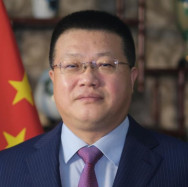
The writer is the Ambassador of China to Bangladesh