



 For all latest news, follow the Daily Sun's Google News channel.


Analysts in Dhaka say the outcome of the 2026 West Bengal assembly elections is unlikely to bring about any significant shift in Bangladesh-India relations, citing little optimism over unresolved bilateral issues.
Moreover, following the landslide victory of the Bharatiya Janata Party (BJP), ending Trinamool Congress (TMC) and Mamata Banerjee’s 15-year dominance in the state, they fear that the “push-in” issue might complicate the already strain relations between the two neighbouring countries in the days to come.
“Some may argue that a BJP government in West Bengal will offer an opportunity for Dhaka to negotiate better with Delhi as the Central and state has governments formed by the same party. And now the Mamata’s disagreement will not matter in signing deals. But you have to remember that they have a common ‘nationalistic approach’ in certain issues,” author, researcher and political analyst, Altaf Parvez, told the Daily Sun.
“Besides, Mamata will surely not change her position and continue exerting pressure on the state government if it agrees to sign any water-sharing agreement with Bangladesh,” he added.
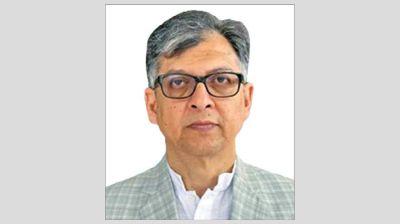
Former Ambassador Mahfuzur Rahman struck a similarly cautious note, observing that relations between Dhaka and Delhi have yet to return to any semblance of normality.
“Things have improved a bit after the new government assumed office in Bangladesh. But the Dhaka-Delhi ties are yet to be restored to normalcy. If issuing Indian visas to Bangladeshis could be resumed, we could see hope. Right now, the first priority should be rebuilding trust,” he said.
On the water-sharing front, Rahman noted that while expert-level discussions on the Ganges Water Treaty had begun – with technical panels from both countries currently at work – any resumption of Teesta talks remained contingent on a broader improvement in bilateral relations.
“If we want to resume talks for the Teesta Water Treaty, we have to improve our relations further,” he said.
Mahfuzur Rahman does not expect the change of guard in West Bengal to alter India’s fundamental policy towards Bangladesh, though he acknowledged it might at least allow Dhaka to present fresh arguments for water-sharing agreements.
The “push-in” question
Both analysts expressed concern that the “push-in” issue – the forcible return of individuals across the border – could resurface and escalate tensions.
Arafat Parvez pointed to the approximately nine million people reportedly excluded from the West Bengal electoral rolls as a potential flashpoint.
“Certainly the figure is huge. This will help them reinforce their old claims, and the process of push-ins may resume, making things difficult for Bangladesh,” he said.
Mahfuzur Rahman echoed the worry. “BJP leaders have been claiming that around 1.15 to 1.5 crore undocumented Bangladeshis are residing in India, having crossed the border illegally. If they remain firm in this belief, incidents of push-ins may resurface. It will not happen immediately – but if Dhaka-Delhi relations deteriorate, we may see this,” he cautioned.
Assam, the RSS and the spectre of right-wing politics
Parvez warned that the BJP’s retention of power in Assam would have its own ripple effects on the bilateral relationship.
“BJP’s victory in Assam will further fuel right-wing politics on the opposite side of the border. Assam’s Chief Minister Himanta Biswa Sarma casts himself in the mould of Uttar Pradesh’s Yogi Adityanath. Both Himanta and Suvendu Adhikari – the probable chief minister of West Bengal – will focus on consolidating their positions within the party, with rhetoric that does little to ease tensions,” he said.
Parvez also noted the ideological undercurrents at play, observing that the Rashtriya Swayamsevak Sangh (RSS) – the BJP’s parent organisation, founded in 1925 – has historically regarded communists, Christians and Muslims as adversarial forces, and that this outlook would increasingly define the political character of both West Bengal and Assam.
Mahfuzur Rahman, however, observed that right-wing sentiment has been growing on both sides of the border, and that election results of this kind only embolden such forces further.
“Politicians and the media in both countries have spread hatred and cultivated an anti-neighbour sentiment. They need to step back from this so that the two countries can discuss unresolved issues and seek solutions at the negotiation table,” he said. Recommended Stories