


 For all latest news, follow the Daily Sun's Google News channel.


As May approaches, the world bursts into full vitality, brimming with life and renewal. On the upcoming 4th of May, China will celebrate its Youth Day. This day traces its origins to 1919, when a generation of Chinese youth, driven by deep devotion to their homeland and people, rose with courage for national rejuvenation. Over the past century, the May Fourth spirit – encapsulated in the ideals of patriotism, progress, democracy and science – has been carried forward like a torch, inspiring generations of Chinese youth to align their personal goals with national development and human advancement. Today, a new generation of Chinese youth is making contributions to the building of a community with a shared future for humanity, through concrete actions in scientific and technological innovation, rural revitalisation, international volunteer services and so forth.
Innovation for the Nation: Youth Powering Tomorrow
Technology underpins national strength, and innovation is the soul of national progress. In China, individuals under the age of 39 account for more than 70 per cent of the nation’s total human resources in science and technology, making young people the backbone of the research workforce. By 2025, the scale of China’s core AI industry had surpassed RMB 1.2 trillion yuan (over 19 trillion taka), with more than 6,200 related enterprises. China holds about 60 per cent of the world’s AI patents and roughly two‑thirds of global robotics patents. In frontier fields such as AI and quantum communication, young scientific and technological talent undertake over 60 per cent of key tasks, and Generation Z entrepreneurs and researchers have emerged as major contributors to technological breakthroughs. As Chinese President Xi Jinping noted, “Artificial intelligence is a nascent undertaking, and an undertaking for young people.” The young people are transforming China from a technological follower into a contributor, injecting youthful energy into global scientific and technological progress.
Rooted in the Soil: Youth Painting Rural Revitalisation
Technological innovation reflects the lofty aspirations of Chinese youth, while their commitment to rural revitalisation embodies a down‑to‑earth sense of purpose. In the battle against poverty and the broader drive for rural revitalisation, countless young Chinese have devoted their youth to the countryside. Since 2013, more than three million officials have been dispatched to villages for the mission of rural revitalisation, roughly half of them young cadres. Rooted in local communities, they leverage their strengths to advance rural industries in ways that suit local conditions. In Rongjiang, Guizhou Province, young village officials harnessed a grassroots football craze to develop distinctive local businesses. In Yichuan, Shaanxi Province, youth cadres built a “digital village” platform for their community. In Zigong, Sichuan Province, a young official sold over 50,000 kilograms of farm produce through livestreaming. They let their youth blossom where the nation needs it most, and in doing so, they offer Chinese wisdom to the global effort against poverty.
Volunteering across Lands and Seas: Youth Building a Shared Future
Upholding the May Fourth spirit of progress, openness and inclusiveness, Chinese youth are bridging distances through volunteer service and demonstrating their sense of duty in building a community with a shared future for humanity. Through the Chinese Youth Volunteer Overseas Service Program, 182 outstanding young individuals have been selected to serve in UN offices and agencies in nearly 40 countries. The “Dream Building on the Silk Road” Youth Development Program has implemented 62 youth projects across 34 countries on five continents among partner countries of the Belt and Road Initiative. In December 2025, the first batch of volunteers for Bangladesh under the China (Chongqing) Youth Volunteer Overseas Service Program officially set off. The volunteers travelled to Bangladesh to provide Chinese language teaching services, serving as a bridge for people-to-people connectivity and promoting mutual learning among civilisations.
Equally heartening is that, across the vibrant lands of South Asia, Bangladeshi youth are also writing their own chapter of the times with vitality. Recent years have seen increasingly close youth exchanges between China and Bangladesh. The 2025 “Dhaka China Day” set up a youth forum, creating a platform for intellectual exchange between young people of both nations. A delegation of young Bangladeshi leaders visited China to deepen mutual understanding and renew friendship. China’s Yunnan University participated in the China-Bangladesh Year of People-to-People Exchanges, inaugurating a China-Bangladesh Human Resources Development Cooperation Base and a China-Bangladesh Cultural Experience Center. To date, over 20,000 Bangladeshi students have pursued further studies in China. Three Confucius Institutes and one Confucius Classroom are also serving as vital windows for language and cultural exchange. From Dhaka to Beijing, the youth of China and Bangladesh are jointly painting a youthful portrait of a shared future.
Youth is the future of a nation and a vital force for human progress. As Chairman Mao Zedong once remarked, “The world is yours, as well as ours. But in the last analysis, it is yours. You young people, full of vigour and vitality, are in the bloom of life, like the sun at eight or nine in the morning. Our hope is placed on you.” These words transcend time and continue to inspire young people worldwide to embrace the mission of our era. May the youth of China and Bangladesh stand shoulder to shoulder, contributing their youthful energy to building a community with a shared future for humanity and shaping a more prosperous and beautiful tomorrow for all.
_____________________________________
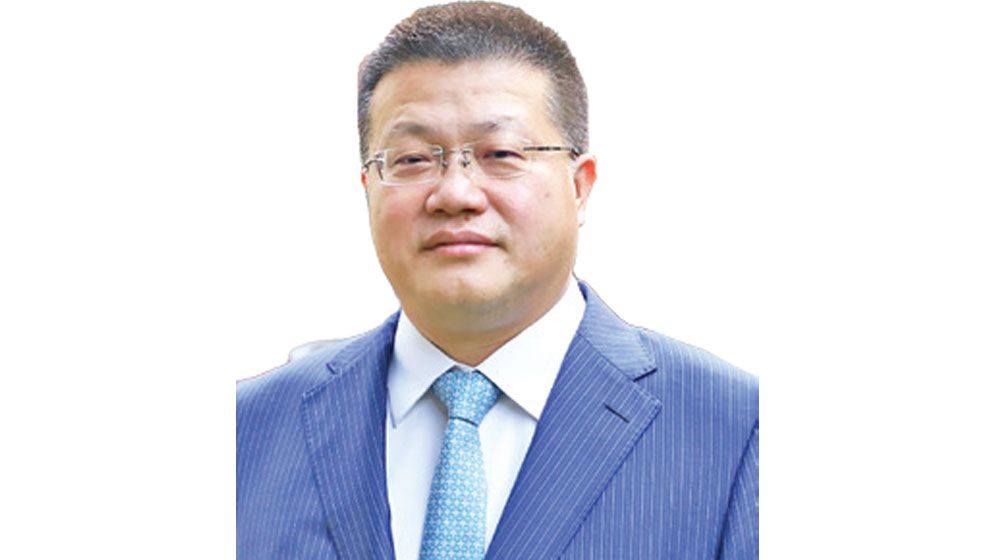
The writer is Ambassador of China to Bangladesh