


 For all latest news, follow the Daily Sun's Google News channel.


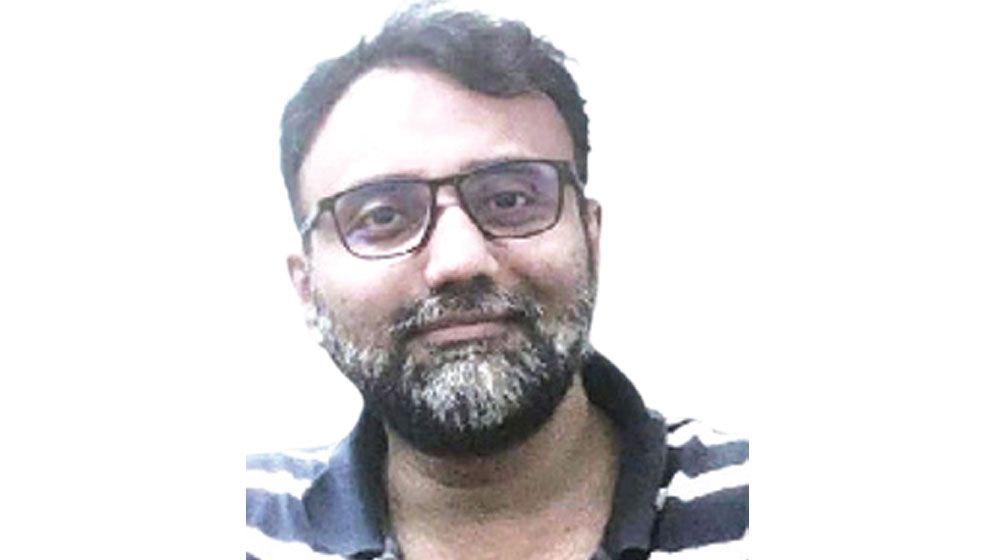
In April 2026, India named veteran politician Dinesh Trivedi – a former West Bengal railways minister and ex-Trinamool Congress leader now in the BJP – as high commissioner to Dhaka; diplomats immediately took note. Trivedi's appointment breaks with the norm of career diplomats, signalling that New Delhi is treating Dhaka as a top strategic priority. Analysts point out that India is "sending heavyweights" to the neighbourhood, ending an "era of ambassadors for good times", and using Trivedi's deep Bengal roots to focus on regional stability and security. Experts framed Trivedi's posting as a signal to both India's bureaucracy and Bangladesh that New Delhi is fully engaged. This high-level political appointment underscores Dhaka's importance to India's foreign-policy calculus.
India and Bangladesh have long shared bonds that go beyond mere diplomacy. These deep ties make it in both countries' interests to maintain positive relations.
Strategically, Bangladesh sits at a crossroads of South and Southeast Asia. It serves as India's gateway to the Northeastern states, offering critical transit routes and regional connectivity. India's "Neighbourhood First" and "Act East" policies depend on friendly ties with Bangladesh, which links India by land to Myanmar and the Bay of Bengal. For Bangladesh, India is its giant neighbour: a vast market, a source of investment and development aid, and a partner on shared security and environmental challenges. Economically, the two are interdependent. Bangladesh is one of India's largest trading partners in the region, and Indian companies have invested heavily in Bangladeshi telecom, textiles, power, and infrastructure.
The economic ties bind India and Bangladesh more tightly over time. Bilateral trade has grown steadily but is heavily imbalanced. Dhaka has long pressed New Delhi to ease access for its key industries – apparel, jute, food, and processed goods – to Indian markets. Recent talks in Delhi by Bangladesh's foreign minister explicitly sought the removal of India's restrictions on Bangladeshi exports through land ports (such as garments and jute) that were imposed in 2025. There is also the fact that about ten thousand Indian students study in Bangladesh, resulting in tuition fee earnings, which is also an oft-overlooked fact and a lucrative opportunity for Bangladesh.
Energy and infrastructure illustrate the stakes of cooperation. India has begun supplying fuel and power to Bangladesh: for example, the recently completed 130-kilometre India-Bangladesh Pipeline has already, according to some reports, delivered more than 20,000 tonnes of diesel to Bangladeshi ports to ease shortages. Beyond bilateral supplies, Bangladesh is integrating into wider South Asian networks. Notably, under a trilateral accord, Bangladesh started importing 40 megawatts of hydroelectric power from Nepal via India's grid in June 2025. Similarly, in late 2023, Bhutan conducted its first trial cargo shipment via Bangladeshi roadways and seaports. These developments underscore that connectivity through Bangladesh is critical for landlocked neighbours and for building a South Asian commons. Every major project points to Bangladesh's role as a hub and to India's role as an enabler of subregional development.
Security is another pillar of the relationship. Dhaka actively dismantled anti-India insurgent networks and extradited their leaders, winning strong praise from India. New Delhi perceived the 2024 ouster of Hasina as ending that productive security cooperation. Bangladesh relies on India's support to stabilise the broader region. Both governments now face the challenge of managing transboundary threats: Rohingya refugee flows from Myanmar affect Bangladesh's social fabric and India's security calculations alike. The April 2026 visit of FM Rahman included frank talks on border management, illegal migration, and extremism, with Dhaka reaffirming its "zero-tolerance" stance on cross-border militancy and India likely emphasising intelligence cooperation.
That said, Dhaka's new parliament includes parties (BNP and Jamaat-e-Islami) whose records prompt Indian caution. Indian analysts note with alarm Jamaat's unprecedented electoral surge. Most Jamaat victories came from districts abutting India's North-East. India's security planners will thus be vigilant; as one expert put it, political representation in border areas "shapes India's security calculus". At the same time, Bangladesh's new leaders publicly promise not to harbour militants, and India cannot fairly judge them by their predecessors. In the years ahead, mutual security will require continued dialogue and confidence-building – a challenge made easier by the fact that insurgent threats and trafficking affect both sides.
Despite these interests, there have been real sources of friction that fuelled public mistrust, especially on the Bangladeshi side. Over the last decade, many Bangladeshis came to see New Delhi's open support for Sheikh Hasina's Awami League as biased. The interim government and many citizens have blamed India for assisting the Awami League – a view that helped fuel the 2024 uprising. Matters came to a head when Hasina took refuge in India after resigning; to Dhaka, this was a double-edged gesture.
Some of the grievances are concrete and long-standing. Border issues remain painful. Water sharing is another chronic sore point. Trade and immigration disputes also fuel criticism. Added to this is unease over India's domestic politics. The rise of Hindu nationalist rhetoric in India alarms many Bangladeshi Muslims. Senior BJP leaders have propagated the idea that millions of Bangladeshi Muslims live in India illegally – a claim widely seen as baseless and Islamophobic. These are viewed in Dhaka as both an injustice to innocents and an offloading of India's own sectarian tensions onto Bangladesh's doorstep.
Such issues fuelled widespread anti-India sentiment by late 2024. Many cautioned that this was largely an emotional reaction to perceived slights, even though Modi was among the first to congratulate the interim government on its formation. Indeed, Bangladesh's interim leadership sometimes played to the crowd. In hindsight, even domestic observers criticise Yunus's government for "issuing hostile statements" on ties, warning it was counterproductive. From Bangladesh's side, a sober review would note that its leaders – confronting a powerful neighbour – could have handled diplomacy with more restraint. Yet it's also clear that many of the complaints stem from legitimate concerns.
On the Indian side, there has also been a shift in approach. Historically, New Delhi's policy was shaped by career diplomats in the Foreign Service. Since 2014, however, Prime Minister Modi's inner circle – including himself and senior BJP politicians – has taken a more direct role in framing relations with Bangladesh. The appointment of Trivedi is a telling example: as the first high-ranking political appointee in Dhaka in decades, it signals that the government wants "sensitive engagements" to be handled at the highest levels. Critics warn that this politicisation can make foreign policy swings more ideological, while others underscore it as the prioritisation of Dhaka for Delhi. Still, it also means Dhaka will have direct access to Indian leadership when needed. From now on, it will be up to diplomats and politicians on both sides to ensure that this politicisation doesn't derail pragmatic cooperation.
With Bangladesh's return to a democratically elected government in early 2026, both capitals have signalled an interest in resetting the relationship.
Both countries also share large interests that beckon for cooperation. For Bangladesh, India is a huge source of potential growth. The Indian market absorbs key Bangladeshi exports (garments, leather, jute goods), and India is a vital partner in energy and digital connectivity.
Looking ahead, Asia's future will likely require even greater regional collaboration to address challenges such as climate change and pandemic response. A friendly India-Bangladesh relationship will be an asset, not a liability. Neither country wants to see large-scale unrest on its doorstep or escalation of border tensions. Moreover, both capitals share aspirations: Bangladesh aims to become a $1 trillion economy by 2041, and India aims to be a major global power. Achieving these goals depends on peace in South Asia and on open trade corridors.
The calculus is straightforward. A stable, friendly neighbour is a strategic asset for India; for Bangladesh, a peaceful, large neighbour is a source of trade, investment, and security. By channelling energy into joint projects rather than public acrimony, Dhaka and Delhi can unlock growth for both peoples. The recent overtures are a promising first step. With patience and goodwill, the two countries can write a new chapter of cooperation and shared progress – turning a relationship at a crossroads into a partnership of the future.
_____________________________________
The writer is a political and international affairs analyst