



 For all latest news, follow the Daily Sun's Google News channel.


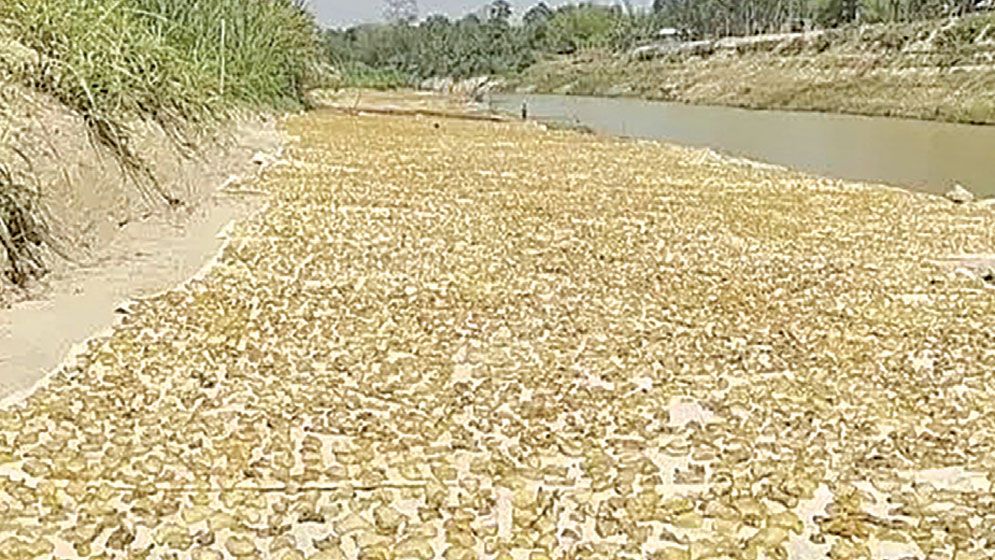
Shrikristapur village in Akkelpur upazila of Joypurhat, once an ordinary rural settlement, is now widely known across the country as the “village of potato chips”, where a seasonal cottage industry is transforming livelihoods and placing women at the centre of economic activity.
With the arrival of the production season, the entire village turns into a hub of relentless work. From early morning until late at night, women lead the process of boiling, slicing and sun-drying potatoes. Courtyards, roadsides, pond banks and even the banks of the Tulshiganga River are filled with rows of drying potato slices, giving the impression of a vast open-air factory.
Field visits reveal groups of women working together to prepare chips, bearing the primary responsibility for production, while male family members assist in supporting roles. According to local sources, around 400 families in Shrikristapur and nearby areas are involved in this activity, with nearly 85% of residents directly or indirectly dependent on potato chips production and marketing. For many households, it is the main source of income throughout the year.
The seasonal operation runs from February to April. Each day, between 1,500 and 2,000 maunds of potatoes are boiled, mainly of the ‘Cardinal’ variety. On average, one maund of potatoes yields about 9 kilograms of chips. The chips are sold locally at Tk100–125 per kilogram, while wholesale prices range between Tk3,500 and Tk5,500 per maund. After meeting local demand, the products are supplied to major cities including Dhaka, Chattogram, Rajshahi and Sylhet. Their handmade quality and taste have helped maintain strong market demand.
Women engaged in the industry say they work both with their own produce and potatoes supplied by traders. They earn around Tk350 per maund of chips produced. Despite the labour-intensive nature of the work, the income plays a crucial role in improving household finances. Many women are now actively involved not only in production but also in storage, packaging and marketing, contributing significantly to family income, children’s education and overall living standards.
Local resident Ashraf Hossain said that thousands of maunds of chips are produced during the season, providing income for the rest of the year. “This has been our family profession for generations,” he said. Abu Jafar echoed similar views, noting that most villagers depend on the trade.
There are also success stories among entrepreneurs. Mukul Hossain, for instance, purchased 128 maunds of potatoes and has made a good profit by processing them into chips. He said the production cost per maund is around Tk2,000, while the selling price reaches about Tk3,500. If fried and sold at retail level, profits can rise to Tk4,000–5,000 per maund. The business has significantly improved his family’s financial condition and enabled him to support his children’s education.
However, challenges remain. Local entrepreneur Harunur Rashid said limited access to loans on easy terms is hindering business expansion, while the pressure of weekly instalments from NGOs is difficult for many. Chip producer Helal Uddin also stressed the need for low-interest financing.
The seasonal industry is also affecting education. Sushanta Kumar Ghosh, acting head teacher of Shrikristapur Government Primary School, said student attendance drops during peak production periods as family members, including children, become involved in the work.
Akkelpur upazila agriculture officer Imran Hossain said the village has long been recognised for its potato chips industry, involving around 400 families. He noted that diversification of potato use is creating additional market demand and helping farmers secure better prices. However, he emphasised the need for modern technology, hygienic processing, improved storage and better marketing support to ensure sustainability.
Local representatives also highlighted the sector’s importance. Former panel mayor of Akkelpur municipality, Rafiqul Islam, said the initiative is strengthening the rural economy while expanding the use of potatoes as a food product. He added that with government support, particularly in the form of accessible credit, the industry could expand further and contribute more significantly to the national economy.