The nation is celebrating Pahela Baishakh, the first day of the Bangla New Year 1433, today with widespread festivities, cultural programmes and traditional enthusiasm across Bangladesh.
Across the country, people from all walks of life are taking part in colourful processions, music events, fairs, and wearing traditional Bangla attire as part of the celebrations. The government and various cultural organisations have arranged extensive programmes to mark the occasion.
The government has undertaken elaborate arrangements for the day, while national newspapers are publishing special supplements. State-run broadcasters, including Bangladesh Betar and Bangladesh Television, alongside private channels, are airing special programmes dedicated to the Bangla New Year.
In separate messages, the President and the prime minister greeted the nation. President Mohammed Shahabuddin called on citizens to set aside differences andThe government has undertaken elaborate arrangements for the day, while national newspapers are publishing special supplements.
State-run broadcasters, including Bangladesh Betar and Bangladesh Television, alongside private channels, are airing special programmes dedicated to the Bangla New Year.
In separate messages, the President and the Prime Minister greeted the nation. President Mohammed Shahabuddin called on citizens to set aside differences and work towards a non-communal, united and just society, describing Pahela Baishakh as a universal festival symbolising harmony and unity.
Welcoming the Bangla New Year, Prime Minister Tarique Rahman said Pahela Baishakh represents the nation’s ethnicity, history, culture and identity. He noted that the New Year renews hope and inspires people to move forward, leaving behind gloom and decline.
Leader of the Opposition in Parliament Dr Shafikur Rahman, and leaders of other political parties also greeted the people on the occasion.
The day is a public holiday in Bangladesh.
Pahela Baishakh celebrations are largely connected to the peasant culture of the country’s rural areas.
Mughal Emperor Jalal-ud-din Muhammad Akbar introduced the Bangla calendar to facilitate revenue collections, making the calculation of date and months more scientific and consistent with the harvesting season.
Later, traders picked Pahela Baishakh for their business. Arranging a special programme named Halkhata, they inspire customers to repay debts, and entertain them with sweetmeats marking the occasion.
As part of the celebrations, cultural organisations including Chhayanaut will host traditional performances at Ramna Batamul. The programme will begin with the national anthem followed by the iconic song “Eso He Baishakh”.
The main “Bangla Noboborsho” programme officially begins in the morning with vibrant cultural performances and community participation.
A major highlight of the day is the traditional Baishakhi Shobhajatra organised by students and teachers of the Faculty of Fine Arts at University of Dhaka. This year’s procession is themed “New Year’s Harmony, Democracy Revival”, reflecting cultural unity and democratic aspirations.
The Shobhajatra will begin at 9am from Gate No. 3 (north) of the Faculty of Fine Arts. It will pass through Shahbagh Police Station, the Raju Sculpture, Teacher-Student Centre premises and Doel Chattar, before returning via Bangla Academy to the faculty campus.
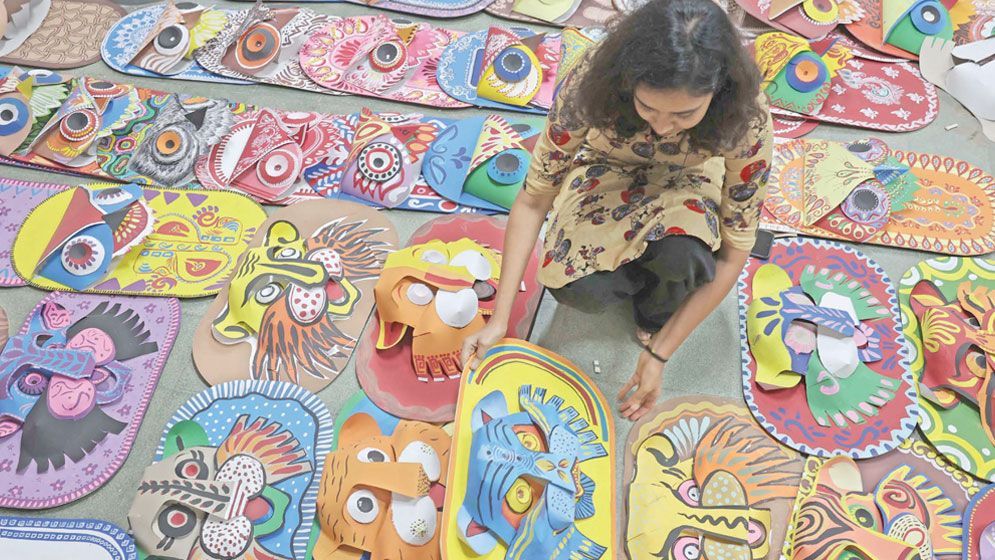
Preparations are in full swing, with students and teachers working intensively to create large artistic motifs using bamboo, wood and paper. These are being decorated with traditional Bangladeshi art forms and colours.
In front of the Zainul Gallery, students are painting alpana on clay, making masks, and depicting rural Bengal-inspired themes. Many are also raising funds by selling artwork.
This year’s procession will feature five main motifs inspired by folk traditions: a rooster, dotara, wooden elephant, pigeon and tapa horse, symbolising awakening, creativity, peace, heritage and dynamism.
Dean of the Faculty of Fine Arts Professor Md Azharul Islam Sheikh said the event highlights both cultural heritage and contemporary social messages, with the rooster symbolising a new dawn and collective awakening.
Authorities have issued strict security and participation guidelines. Entry will be allowed through Nilkhet and Palashi intersections, while other access points will remain closed during the procession. Participants must carry identity cards.
For security reasons, masks, bags, English placards, balloons, festoons and fireworks have been prohibited. CCTV surveillance, archways, control rooms, help desks and temporary medical facilities have been set up across the campus. Mobile toilets have also been installed at key locations.
All activities must conclude by 5pm on today, after which the campus will be closed to entry. Only vehicles with authorised stickers will be permitted from Monday evening, while full traffic restrictions will apply today.
Separately, Bangla Academy and the Bangladesh Small and Cottage Industries Corporation are jointly organising a seven-day Baishakhi fair and discussion programmes from 14 to 20 April. The Bangladesh Folk and Crafts Foundation will also hold a 14-day traditional Baishakh fair from 20 April.
Special arrangements have been made nationwide to serve traditional foods in prisons, hospitals and children’s care homes, alongside cultural programmes involving children. Museums and archaeological sites remain open free of charge for children, students, persons with disabilities, and special-needs visitors.
At district and upazila levels, Baishakhi Shobhajatra processions, cultural events, folk fairs and educational competitions are being organised. Educational institutions across the country are also celebrating independently in festive spirit.
Separately, the Director General of Rapid Action Battalion Additional Inspector General Md Ahsan Habib Palash has confirmed that there is no security threat ahead of Pahela Baishakh celebrations.
Speaking after inspecting security arrangements at Ramna Batamul, he said adequate measures have been taken at key venues including Shahbagh, TSC, Hatirjheel, Manik Mia Avenue and Ramna Batamul. Screening checkpoints, observation posts, bomb disposal units, dog squads, CCTV monitoring and control rooms have been deployed nationwide.
He added that law enforcement agencies remain alert to prevent harassment and ensure peaceful celebrations, expressing hope that this year’s Pahela Baishakh festivities will be more joyful than ever.



 For all latest news, follow the Daily Sun's Google News channel.