


 For all latest news, follow the Daily Sun's Google News channel.


Once the ceasefire agreement on the Iran front was announced on 8 April, the status of Lebanon within its framework remained conspicuously vague. When Pakistani Prime Minister Shehbaz Sharif announced the ceasefire, he specifically stated it would apply “everywhere, including Lebanon and elsewhere”. Benjamin Netanyahu moved swiftly to resolve that ambiguity, not through diplomacy, but through a massacre, making clear in the most brutal terms that what had been agreed regarding Iran was an entirely separate matter from what he intended to pursue in Lebanon.
The Israeli military dubbed the assault “Operation Eternal Darkness”, striking more than 100 targets within 10 minutes across Beirut, the Bekaa Valley, and southern Lebanon, in what it described as the largest coordinated wave of strikes since the current round of fighting began on 2 March. Lebanese Civil Defence reported at least 254 people killed and 1,165 wounded. Among the targets were several civilian infrastructure sites across the country.
This was not a sudden eruption but an escalation of a protracted campaign. Israeli attacks killed more than 1,500 people and displaced more than 1.2 million since 2 March in Lebanon. The war has cost Lebanon around 5 to 7 per cent of GDP, which is dangerous for a country already weakened by years of political paralysis and economic collapse.
What makes this development particularly striking is the direct American endorsement of Netanyahu’s escalation. Rather than pressing for restraint, Washington granted him the political cover to continue the war in Lebanon as he was compelled to stand down on the Iranian front. Trump claimed that Lebanon was not part of the deal “because of Hezbollah”, dismissing the ongoing assault as “a separate skirmish”.

The contradiction at the heart of the deal was exposed almost immediately. Iranian President Masoud Pezeshkian said ending hostilities in Lebanon was a core condition of Iran’s 10-point ceasefire plan. Iran’s parliament speaker said the US had already violated three clauses of that plan less than a day after agreeing to it, citing the continued attacks on Lebanon, an alleged drone incursion into Iranian airspace, and attempts to ban Iranian uranium enrichment. Tehran’s response was swift: Iran announced it would again close the Strait of Hormuz in response to Israel’s attacks on Lebanon, threatening to unravel the very deal that had just been celebrated.
One would have hoped that any ceasefire agreement would be comprehensive, encompassing all theatres of conflict across West Asia, including Gaza, where the humanitarian toll continues to mount with no end in sight. Instead, what materialised was something closer to a reconfiguration of the war: a redistribution of roles and theatres that does not lay the groundwork for any meaningful political process, let alone a path toward ending the broader conflict. Israel made sure to convince the US not to accept the Iranian demand to have Lebanon included in the ceasefire agreement. The architecture of the deal, in other words, was partly built around preserving Israel’s freedom to continue one war while being forced to pause another.
The announcement of the two-week truce prompted many to rush toward premature verdicts, declarations of who won, who lost, who broke the other’s resolve. But it is far too early to tell. If the deal holds, it returns the region to roughly the same position from the day before hostilities erupted. The structural tensions remain intact. As long as Donald Trump remains the ultimate decision-maker, the trajectory of events on every front remains hostage to his calculations, his mood, the pressures bearing down on him, and the unpredictable and often manic ways in which he chooses to respond to them. Moreover, Trump, the wartime leader, has shown he is prepared to grant Netanyahu the leeway to accept whatever suits him and to pelt with fire whatever does not. That dynamic is the certain formula for the continuation, expansion and escalation of the war.
_____________________________________
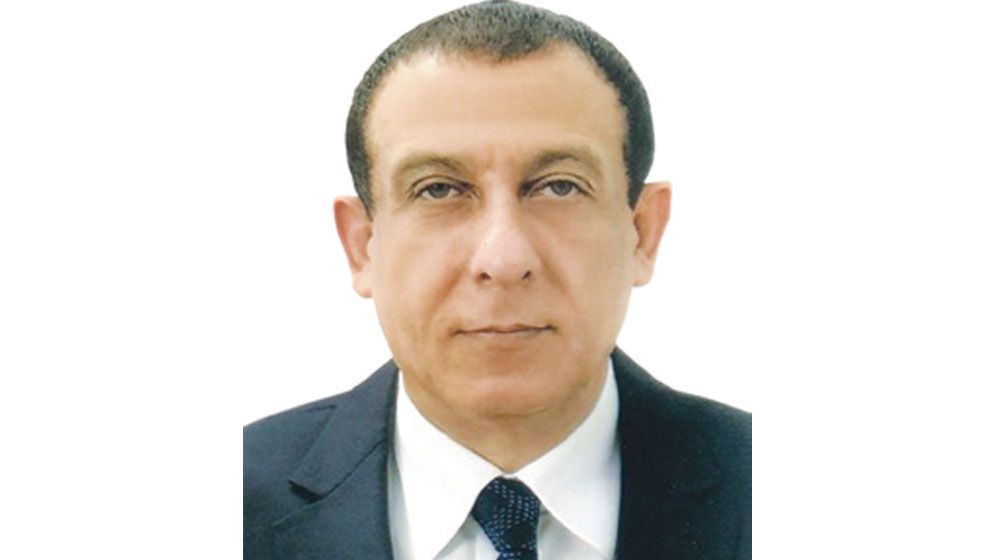
The writer is the Ambassador of Palestine to Bangladesh