


 For all latest news, follow the Daily Sun's Google News channel.


Measles surge: Emergency vaccination drive kicks off today to protect under-fives
Daily Sun Report, Dhaka
Published: 05 Apr 2026, 12:00 AM
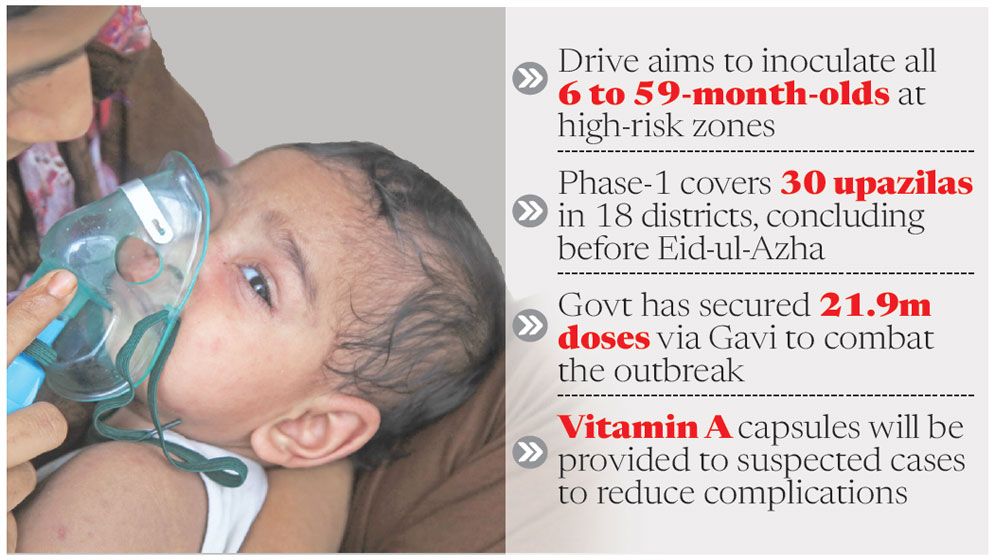
The government is today launching a nationwide emergency Measles-Rubella (MR) vaccination campaign, specifically targeting children aged between six and 59 months in high-risk regions across Bangladesh.
According to the Ministry of Health and Family Welfare, the programme will initially run simultaneously across 30 upazilas in 18 districts. Priority is being given to young children within the specified age bracket to curb a recent surge in infections.
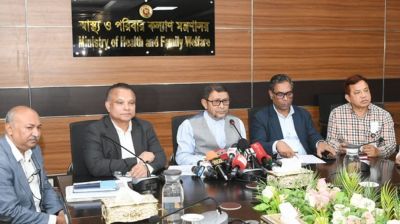
Health and Family Welfare Minister Sardar Md Sakhawat Hossain announced the initiative during a press briefing at the Secretariat on Saturday.
“This emergency vaccination programme has been initiated under the guidance and direct supervision of Prime Minister Tarique Rahman, ensuring every child in the country is protected as swiftly as possible,” the Adviser stated.
He noted that the National Immunization Technical Advisory Committee (NITAG), following consultations with domestic and international experts, recommended the emergency drive in response to the spread of measles.
The campaign forms part of an integrated prevention strategy designed to rapidly control the disease’s transmission.
“This drive will include all children under the age of five, regardless of whether they have been previously vaccinated. Our goal is to ensure no child is left behind,” the Adviser added.
The programme is set to be implemented in stages. Following the initial rollout in 30 high-risk “hotspots”, the campaign will expand nationwide based on the evolving epidemiological situation and field-level readiness.
The government aims to complete the entire programme by 21 May 2026, ahead of the Eid-ul-Azha holidays.
The official inauguration is scheduled for 9am today at various locations. The health minister will launch the campaign at the Nawabganj Upazila Health Complex in Dhaka, while the home minister will preside over the launch in Cox’s Bazar.
Simultaneous inaugurations will take place in Pabna Sadar and Gazipur, led by the state minister for health and the health services secretary respectively.
The 30 upazilas targeted in the first phase include Godagari (Rajshahi), Nawabganj (Dhaka), and various upazilas within Munshiganj, Jhalokathi, Mymensingh, Chandpur, Barishal, Pabna, Naogaon, Gazipur, Netrokona, Shariatpur, Barguna, Madaripur, Cox’s Bazar, Chapainawabganj, Natore, and Jashore.
Government guidelines dictate that while all children aged 6-59 months are eligible, those currently suffering from fever or illness should wait until recovery before being inoculated. Furthermore, any child with a suspected case of measles will receive Vitamin A capsules to help mitigate complications and aid recovery.
Adviser Sakhawat assured the public that all logistics, including vaccine procurement, cold chain maintenance, and staff training, are complete.
“The vaccines are safe and effective. There is no cause for panic, but we require the conscious and active participation of all citizens,” he said, urging parents and community leaders to help dispel rumours.
Addressing the rationale behind the age bracket, the health minister noted that approximately 82% of Measles-Rubella cases occur in children under five. Vaccinations will be available daily from 9am to 5pm at schools, community centres, and existing EPI sites.
When questioned regarding the decline in vaccination rates during 2025, the minister maintained that the current priority remains immediate protection over investigating historical trends.
Dr Ziauddin Hyder, a member of the BNP chairman’s advisory council on health, nutrition, and development, told the Daily Sun that 21.9 million doses are currently in stock via Gavi, the Vaccine Alliance.
He confirmed the doses are already in-country and will be utilised for this emergency phase.
The government has allocated Tk601 crore for further procurement, with the Gavi-supplied doses to be replaced once new stocks arrive.
The campaign will utilise syringes already available under the Expanded Programme on Immunization (EPI) framework.