



 For all latest news, follow the Daily Sun's Google News channel.


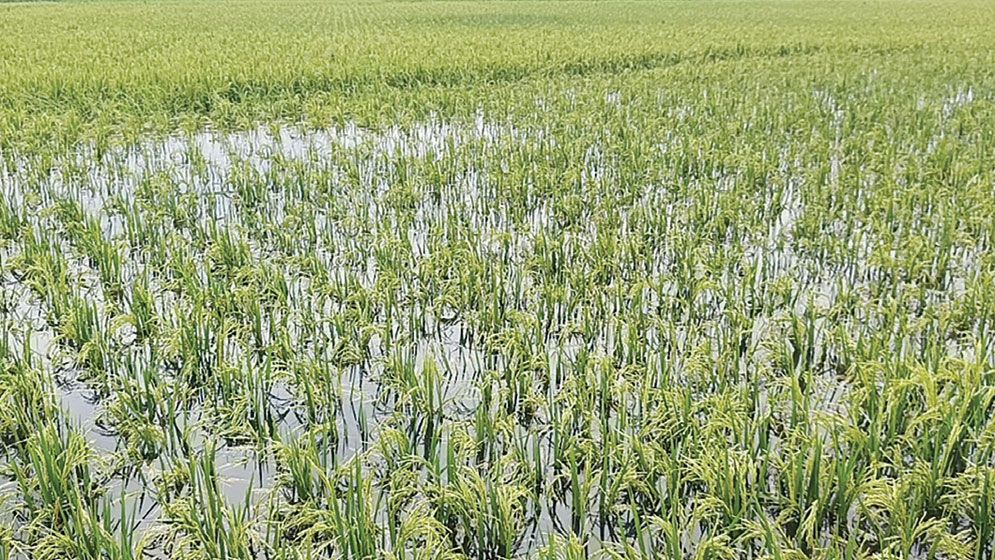
Low-lying Boro paddy fields in Sunamganj have been submerged due to recent rainfall, raising fears of significant crop losses just weeks ahead of harvest.
Farmers in the haor areas, vast lowlands known as the country’s one of the country's key crop-producing lands, say paddy that was due for harvesting within 20 to 25 days is now at risk of being destroyed due to waterlogging.
According to the Department of Agricultural Extension (DAE), about 1,189 hectares of land across the district, including areas in Sadar, Bishwambharpur, Tahirpur, Jamalganj, Madhyanagar, Dharmapasha, Shantiganj, Dirai and Shalla upazilas have been inundated. Farmers, however, expressed deep concern over the situation. Faruk Mia from Shani Haor said crops in low-lying land will be completely lost if immediate measures for drainage are not taken.
Another farmer, Mohibur Rahman from Deran Haor, said he cultivated his land with great hardship, but recent rains have submerged the crop. “If the water does not recede soon, everything will be lost,” he lamented.
Farmers are attempting to drain water using local methods and machines, while some are demanding that crop protection embankments be cut to release excess water. However, authorities remain cautious over such a decision, fearing that cutting embankments could trigger greater flooding if water flows intensify from upstream hills.
Local administration officials said discussions have been held with farmers and local representatives to avoid risks.
They noted that river water levels are already rising, and cutting embankments at this stage could worsen the situation by increasing pressure from the river water level.
Shantiganj Upazila Nirbahi Officer (UNO) Mohammad Shahjahan said around 3,500 hectares of Boro land in Dekhar haor across four upazilas have been cultivated, of which about 66 hectares have been affected. “We cannot risk the remaining areas by taking hasty decisions,” he added.
Deputy Commissioner Dr Mohammad Ilias Mia said any decision to cut embankments must consider all possible risks. He said water drainage could be allowed in a controlled manner if necessary, ensuring the embankment can be restored quickly within a short time. He also informed that five-member committees have been formed in each upazila—comprising local representatives, union parishad chairmen, sub-assistant engineers, UNOs and agricultural officers—to decide on whether embankments should be cut.
Experts and concerned locals emphasised the need for long-term solutions, including regular excavation of canals in haor areas to ensure proper drainage and protect crops from recurring natural disasters.