



 For all latest news, follow the Daily Sun's Google News channel.


Public health experts and tobacco control advocates have expressed concern over the government’s plan to lift the ban on e-cigarettes, warning it could undermine recent progress in tobacco control and expose young people to new forms of addiction.
The government is now moving to exclude provisions banning e-cigarettes and other emerging tobacco products from the Smoking and Tobacco Products Usage (Control) (Amendment) Ordinance, 2025, which had earlier imposed a strict prohibition on such products.
The interim government had issued the ordinance on 30 December 2025, banning the production, import, sale, and promotion of e-cigarettes. The law also introduced several stringent measures, including redefining public places, prohibiting the sale of tobacco products within 100 metres of educational institutions and hospitals, raising fines for smoking in public places from Tk300 to Tk2,000, and mandating 75% graphic health warnings on packaging.
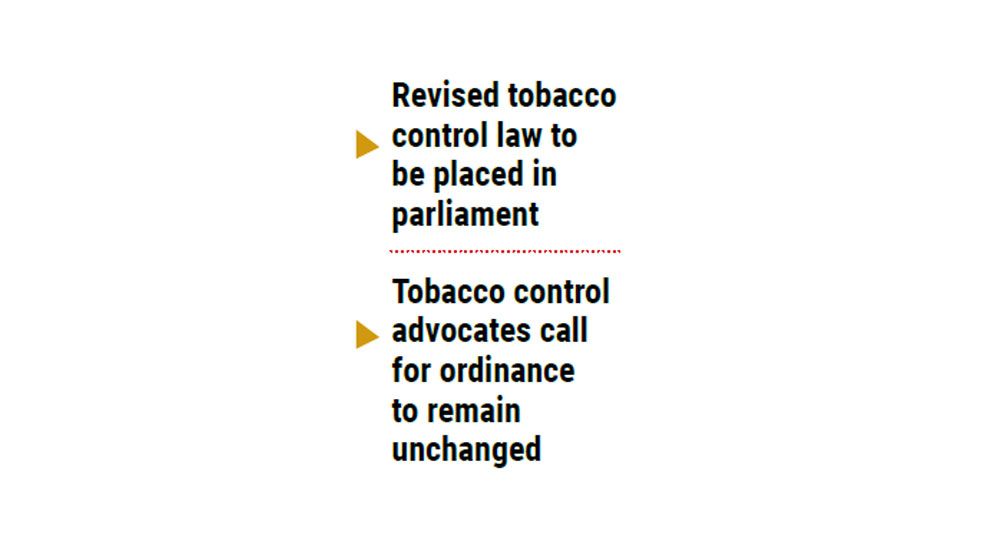
However, the 13-member special parliamentary committee formed to review 133 ordinances has recommended amendments to certain clauses of the law. According to the committee’s report placed in Parliament on Thursday, 15 ordinances, including the tobacco control ordinance, remain under further scrutiny and are set to be presented in revised form.
The committee, chaired by Advocate Zainul Abedin, recommended changes to provisions that imposed a ban on emerging tobacco products, effectively paving the way for lifting the restriction on e-cigarettes.
Public health activists, who had earlier welcomed the ordinance, have criticised the move to revise it. They fear that industry influence may be behind the proposed changes and have urged the government not to dilute the law.
“The 2025 ordinance was a victory for public health. It should be retained without amendments. The ban on emerging tobacco products like e-cigarettes and the 75% warning labels must remain non-negotiable,” said Syed Mahbubul Alam Tahin, a tobacco control advocate and expert on public health and policy.
Tahin added, “Removing the ban now will expose millions of young people to new forms of addiction. Early intervention is crucial to prevent widespread use.”
Aminul Islam Sujon, a consultant at Vital Strategies, also criticised the move, describing it as “unfortunate” and “frustrating”.
Hamidul Islam Hillol of the Bangladesh Network for Tobacco Tax Policy (BNTTP) called for the ordinance to be passed without any changes.
Some activists alleged that the move to lift the ban is influenced by multinational tobacco companies, including Philip Morris International, which promote e-cigarettes under the concept of “harm reduction”.
While the tobacco industry markets these products as safer alternatives, the World Health Organization (WHO) has warned that e-cigarettes and nicotine pouches are addictive and harmful to health.
Globally, e-cigarettes are fully banned in 47 countries, including the UK, the United States, India, and Thailand. A further 11 countries, including Singapore and Russia, have banned nicotine pouches, while many others have imposed strict regulations.
Experts argue that Bangladesh is at a critical stage where enforcing a ban would be easier, as usage rates remain relatively low.
Meanwhile, anti-tobacco groups have already begun protesting the proposed move. The Bangladesh Anti-Tobacco Alliance (BATA), along with 16 other organisations, staged a sit-in programme in front of the National Museum at Shahbagh in the capital on Wednesday.