


 For all latest news, follow the Daily Sun's Google News channel.


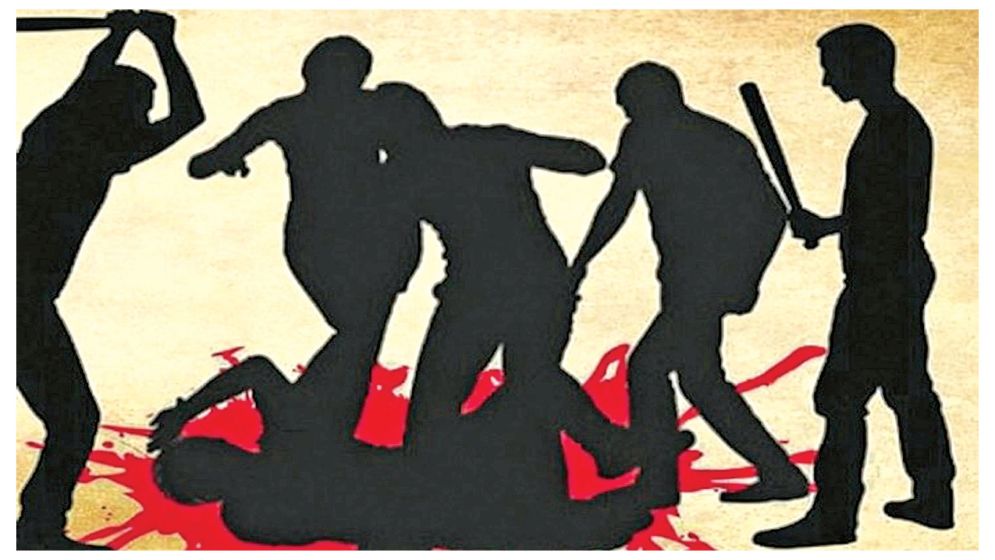
Mob violence is not new to Bangladesh. But something far more troubling is now taking shape: the mob is increasingly acting as judge, jury, and executioner – in plain sight, on camera, and almost entirely without consequence.
On the night of 18 September 2024, a mentally ill 32-year-old named Tofazzal Hossain was seized inside Fazlul Huq Muslim Hall on the Dhaka University campus by students who suspected him of theft. He was beaten with cricket stumps, brought to the canteen and fed a meal while students photographed him, then beaten again until he could not survive it. The university proctor team arrived but could not prevent further assault in time. By midnight, Tofazzal was dead. Six students were arrested and gave confessional statements. A charge sheet naming 21 was eventually filed – only for the university to dispute it and the court to order a fresh investigation. The case remains unresolved. No one has been punished.
The brutality of the incident shocked the country. But the deeper shock lies elsewhere – in how easily it unfolded, how publicly it was carried out, and how little has followed. According to a Netra News analysis of data compiled by Ain o Salish Kendra, mob killings roughly tripled in 2025 compared to 2023. More chilling still, killings bearing clear signs of premeditation – planned in advance but staged as spontaneous mob violence – rose from just four cases in 2023 to 34 in 2025. The Human Rights Support Society documented 201 incidents in 2024 alone, the highest in a decade, with 179 people killed and 88 more seriously injured. When independent organisations arrive at figures of this magnitude, the debate is not about the numbers. The debate should be about why nothing is being done.
The mechanics are grimly familiar. Someone shouts a single accusatory word – thief, robber, blasphemer – and within minutes a crowd has assembled, a verdict reached, and a sentence carried out. By the time police arrive, the killers have become bystanders, and the bystanders have become witnesses to nothing in particular. Responsibility dissolves across dozens of pairs of hands, and nobody, in the end, is responsible for anything. This is how mob violence survives not because it is invisible, but because it is collective.
What makes the current crisis uniquely dangerous is not just the scale but the sophistication. Bangladesh's mob violence is no longer only an expression of collective anger. It has become a deliberate instrument of premeditated killing. A personal grudge over land, money, or a business rivalry can now be settled under the cover of a crowd, with the real motive buried beneath layers of anonymous fists. The killer disappears into the noise. The motive disappears into the crowd. And the justice system finds itself chasing shadows.
When mobs begin to function as instruments of punishment, the authority of the justice system itself begins to erode. Courts exist to determine guilt through evidence, due process, and legal standards. A mob replaces that process with suspicion, anger, and impulse. No society can sustain both systems at once – and Bangladesh is fast approaching the point where it will have to choose which one it actually believes in.
Bangladesh does not need more condemnations. It needs decisive action. A dedicated Mob Violence Prosecution Unit should fast-track cases where killers are already named and filmed. Legislation establishing command responsibility must hold police accountable if they fail to intervene. Fast-track courts should ensure families receive verdicts in months, not decades. And social media platforms and loudspeaker networks used to spread mob-inciting rumours must face genuine legal liability because the tools of incitement are well known and regulating them is a political choice that has simply never been made.
This country has the laws. It has the courts. What it does not have is a single convincing reason for killers to stop. Someone in power needs to provide one – through prosecution, through conviction, through consequences visible enough that the next man with a megaphone thinks twice before he shouts. Because if they do not, the next body will not be the last. It will simply be the most recent.
The writer is a student at the Department of Mass Communication and Journalism at the Bangladesh University of Professionals
Read More