


 For all latest news, follow the Daily Sun's Google News channel.


CHINESE STORIES FROM CHINESE AMBASSADOR
Five-Year Plans: Decoding the Institutional Logic of China’s Governance
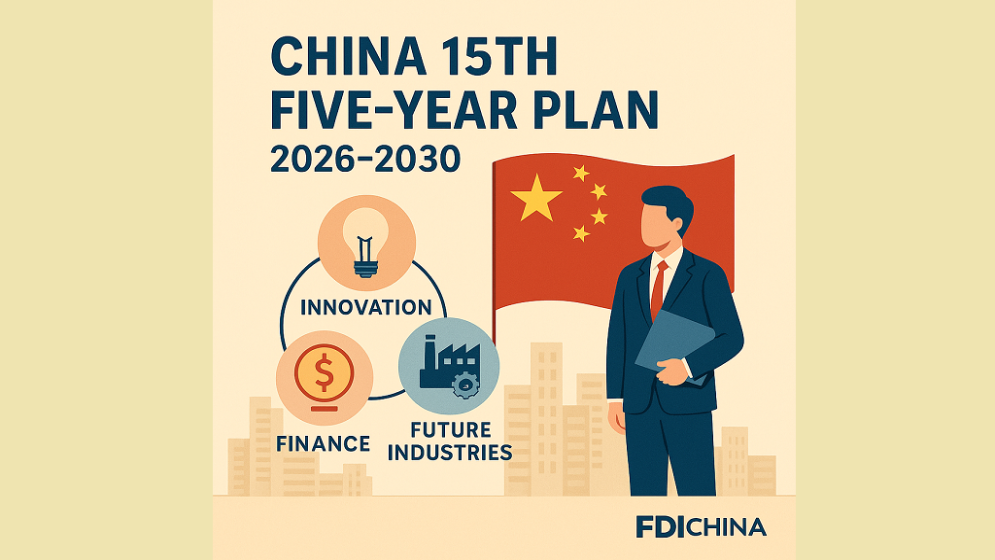
The Five-Year Plan, formally known as the Five-Year Plan for National Economic and Social Development of the People’s Republic of China, is China’s medium to long-term national development blueprint and a key guiding document for the country’s economic and social progress. It sets out overall objectives, major tasks and policy priorities for the next five years across a wide range of areas, including the economy, society, science and technology, ecological conservation and public well-being. The formulation and implementation of Five-Year Plans constitute an important approach through which the Communist Party of China governs the country and have served as a vital instrument behind China’s sustained economic growth and long-term social stability. This distinctive governance mechanism, deeply rooted in China’s national conditions, reflects the CPC’s unique experience in state governance.
Five-Year Plan as an Institutional Framework for Long-Term National Development
Since 1953, China has implemented fourteen Five-Year Plans. This decades-long “relay race” has charted the remarkable journey of the People’s Republic of China, from standing up to growing prosperous and to becoming stronger. The Five-Year Plan is not merely an economic blueprint; it is also a fundamental institutional arrangement for national governance. Through extensive research, expert consultation, and public participation, the planning process combines top-down strategic design with bottom-up public input, ultimately producing a programme of action that carries both legal authority and strong mobilising power.
During the 13th Five-Year Plan period (2016-2020), China launched an unprecedented campaign to eradicate extreme poverty. With clearly defined timelines, roadmaps, and accountability mechanisms, the country lifted 55.75 million rural residents out of poverty, accomplishing the historic task of eliminating absolute poverty. During the 14th Five-Year Plan period (2021-2025), China’s GDP expanded from over US$17 trillion to about US$20 trillion, with growth significantly outpacing the global average. The per capita disposable income also grew at an average annual rate of 5.4 per cent, while life expectancy rose to 79.25 years. The achievements of poverty alleviation were consolidated, laying a solid foundation for the transition toward high-quality development. This institutional resilience embodied in the principle of “carrying a blueprint through to completion” ensures that national development remains consistent and focused, providing valuable certainty amid an increasingly complex international and domestic environment.
The 15th Five-Year Plan: A Strategic Blueprint for High-Quality Development
China’s development has now entered a new stage in which the central task is to advance high-quality development. The 15th Five-Year Plan, covering the period from 2026 to 2030, will represent a critical step in this historic transition.
The plan will put high-quality development high on the priority list. It will promote the development of new quality productive forces tailored to local conditions, with technological innovation serving as the primary driver. Efforts will focus on upgrading traditional industries, expanding emerging sectors, and nurturing industries of the future, thereby accelerating the establishment of a modern industrial system.
At the same time, the 15th Five-Year Plan will place greater emphasis on addressing the imbalances and inadequacies in development. In improving public well-being, the plan will further see to it that children receive proper care and education, workers earn fair incomes, patients have access to medical services, the elderly are well supported, citizens enjoy adequate housing, and vulnerable groups receive assistance. In promoting the green transition, the plan will impose strict requirements for optimising the energy mix and strengthening ecological protection in pursuit of China’s goals of carbon peaking and carbon neutrality. In advancing common prosperity, measures such as improving the income distribution system and promoting coordinated regional development will help ensure that the benefits of development are shared more broadly and equitably among the population.
Five-Year Plan as a Valuable Reference for Developing Countries, Including Bangladesh
As a country that once faced a weak economic foundation and a relatively late start in development, China has, through successive Five-Year Plans, translated long-term national visions into concrete, actionable, and measurable stages. This approach has ensured continuity, stability, and predictability in development strategy, enabling China to gradually chart a modernisation path suited to its own national conditions. In doing so, it has also provided a useful reference for other countries exploring their development trajectories.
Today, Bangladesh stands at a critical stage in its reform and development. Exploring a development path that reflects its own national conditions remains essential for achieving lasting prosperity and stability. China recognises that each country’s circumstances are unique and that development paths must therefore differ. With sincerity and openness, China stands ready to share both the experience and lessons learned from its own development process, particularly in areas such as policy coordination and governance capacity building, to offer constructive reference for Bangladesh as it pursues a development model tailored to its own needs.
Through joint exploration of the pathways to modernisation, China and Bangladesh can further deepen their comprehensive strategic cooperative partnership and bring about even more fruitful outcomes for the peoples of both countries.
The writer is the Ambassador of China to Bangladesh