


 For all latest news, follow the Daily Sun's Google News channel.


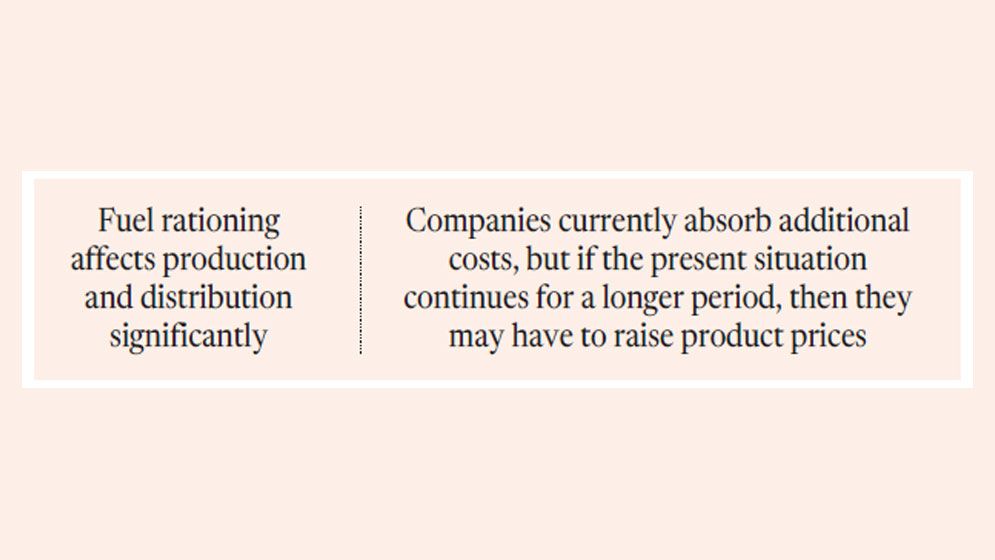
The fuel crisis amid the war in the Middle East may hamper the production of consumer products and imported essentials, potentially affecting the supply chain across the country.
If this situation continues for a month, then, the supply chain for consumer products and imported essentials may be affected, said market insiders.
The crisis has been aggravated by global tensions, as the United States and Israel have been carrying out attacks on Iran since 28 February, and Iran has been retaliating. As the conflict spreads across several Middle Eastern countries and Iran closes the Strait of Hormuz, fears of a global fuel supply disruption have increased, raising concerns over sharp price hikes in the international oil market.
In this situation, the Bangladesh Petroleum Corporation (BPC) has imposed a restriction on fuel sales. Big industries usually collect fuel directly from refineries, which have been fulfilling their demands for fuel until very recently, when government restrictions suspended the supply of fuel to them. This in turn affected the manufacturers’ ability to fulfil their fuel demand, which may have hampered their production.
The BPC directive stated that a motorcycle can receive up to 2 litres of petrol or octane per day and cars can receive up to 10 litres of fuel. Sports Utility Vehicles (SUVs, also known as jeeps) and minibuses can receive 20 to 25 litres of fuel per day. Pickups or local buses can receive 70 to 80 litres of diesel per day. Long-distance buses, trucks, covered vans, and container trucks can receive 200 to 220 litres of fuel daily.
Executive Director and Chief Operating Officer of ACI Consumer Brands Md Quamrul Hassan told the Daily Sun that the ongoing fuel crisis has created some disruptions in the transportation system. In particular, the shortage of fuel for trucks has been affecting the transportation of goods.
“Truck fares have increased significantly. In many cases, trucks are not available, and even when they are, the rent is about one and a half to two times higher than before. We have more than 100 trucks of our own, but even those are not getting sufficient fuel. As a result, we are unable to operate transportation at full capacity,” he said.
This is not only our company’s problem, but it seems that everyone across the country is facing the same situation, said the official.
Regarding product prices, he said, “So far we have not increased the prices of any products, because consumer product prices cannot be raised instantly. Usually, companies absorb the additional costs for some time. But if this situation continues for a longer period, such as 15 to 20 days or a month, then many companies may be compelled to increase product prices.”
He expressed hope that the situation would improve soon and said that this may be a temporary issue.
Biswajit Saha, director of corporate and regulatory affairs of City Group said, “We are not getting adequate transport due to the fuel crisis, we used to get 100 trucks earlier; now we can only get 60 vehicles.”
“There is a supply problem, but the supply issue has not become very serious yet. Production is already facing problems due to the gas shortage,” he said.
“We are supplying products to the market. If you talk about edible oil, we are not facing any crisis in edible oil. We are continuing to supply it,” he said.
The reporter can be reached at [email protected]