


 For all latest news, follow the Daily Sun's Google News channel.


RISE OF WOMEN’S SPORTS
Ensuring safety, equality, and opportunity for women athletes across Bangladesh
Daily Sun Report, Dhaka
Published: 11 Mar 2026, 12:00 AM
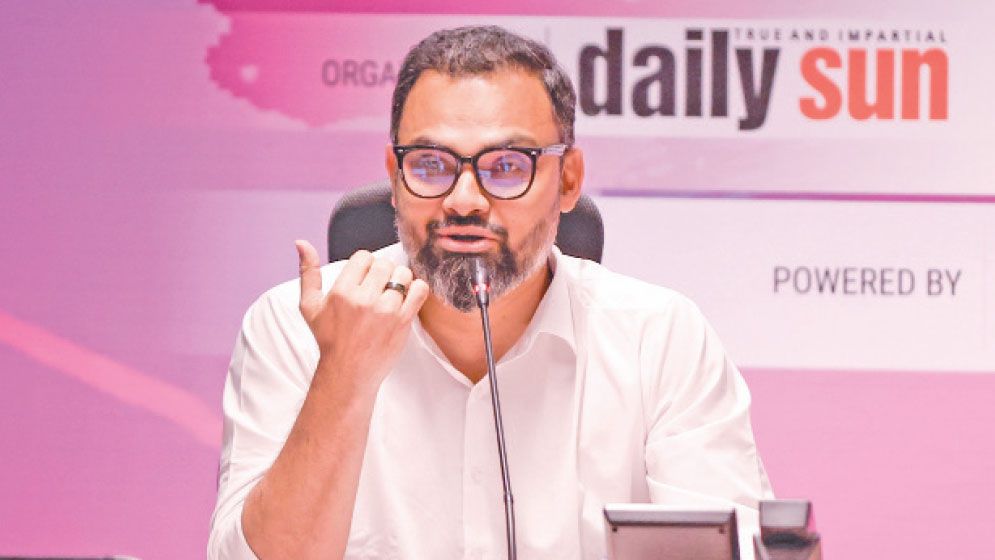
Aminul Haque, State Minister for Youth and Sports Government of Bangladesh
It is a privilege to gather here today for this unique event, bringing together voices and experiences of so many remarkable female athletes from across our country. I sincerely thank the Daily Sun for organizing this excellent event to support and promote women athletes. Our government and Honorable Prime Minister envision empowering women, and this initiative reflects that commitment. We have listened closely to their stories the challenges they face, their achievements, and their aspirations.
As a former athlete myself, I understand the importance of opportunities and facilities for sportspeople. Today, our primary focus is ensuring the safety and security of our female athletes. To that end, my ministry, in coordination with the National Sports Council and relevant departments, is establishing a dedicated cell to address these concerns. This unit will ensure that women athletes have safe environments and access to all necessary resources, including support for family-related challenges, so they can fully realize their potential.
Bangladesh has tremendous potential across many sports. Cricket and football are widely popular, but we also have exceptional talent in archery, shooting, weightlifting, and table tennis. For example, Maria’s needs were addressed immediately; NSC support and a permanent sponsorship have been arranged starting Monday. Similarly, our boxing star Jannat has achieved a remarkable 20th position globally—a milestone that deserves recognition and media coverage so that more talented women can be inspired to excel.
Our aim is to create equal opportunities for men and women in all sports. Under the guidance of the Honorable Prime Minister, we have already begun incorporating athletes who represent Bangladesh internationally into a formal salary structure. Nearly 500 athletes including footballers, cricketers, archers, shooters, volleyball players, and bodybuilders will initially be included, ensuring fair treatment across disciplines. Our policy is clear: no sport is less important than another, and no athlete will face inequality.
We are also making sports compulsory from grade four in schools, covering at least seven events initially. This ensures that children develop physically, mentally, and socially, while keeping them engaged and away from harmful distractions.
Financial support for federations is also being strengthened so that all athletes, regardless of their sport, have access to sponsorship and international opportunities.
Our objective is clear: to build a safe, fair, and encouraging environment for athletes, where performance and well-being are prioritized. From grassroots initiatives to national programs, including the upcoming “New Kuri Sports” initiative for ages 12-14, we aim to nurture talent at every level. These programs will be structured to ensure that female athletes, alongside male athletes, can train year-round and reach their fullest potential.
We have made progress, but more remains to be done. By supporting athletes during and after their careers, we ensure they have opportunities, recognition, and security. Inspired by role models like Maria and other women in athletics, we hope to empower the next generation of female athletes to dream bigger and achieve more.

SM Shahidur Rahman
Chairman, S Rahman Group
Women in sports face far more barriers than men, and it is crucial to create opportunities that address these challenges. Encouragement, sponsorship, and proper support can help female athletes overcome obstacles and excel in their fields.
Sports and culture are vital to Bangladesh’s identity. When our athletes perform well internationally, the world recognizes Bangladesh, bringing pride and respect. Women’s achievements in sports contribute equally to this recognition, yet they often lack the same resources and support as men.
Small and large contributions from all sectors federations, corporations, and individuals—can nurture talent and make sports an empowering avenue for women. By ensuring consistent guidance, facilities, and opportunities, female athletes can reach their full potential, inspiring the next generation.
Through these efforts, women will advance further, Bangladesh will gain wider recognition for its sports, and our society will grow stronger, healthier, and more inclusive.

Shafiq Bhuiyan
Head of Internal Comm and
CSR,BRAC Bank
Initially, we had no formal plan for supporting athletes beyond cricket and football. But as we built our own cricket and football teams from Premier League players, we realized these athletes cannot play professionally forever. Fitness declines with age, and not all can pursue coaching. That led us to hire players and offer them career opportunities.
Our interest then grew in women’s hockey. Initially, we didn’t even know female hockey existed in Bangladesh. After learning that the national women’s hockey team were runners-up at an Asia Cup, beating strong teams, we engaged with the Hockey Federation. We organized a tournament, which yielded impressive results and highlighted the potential of players like Arpita and others.
This year, 324 female hockey players from 16 districts participated in our “Oparajoyee Alo” tournament. We are identifying novice players and supporting them with physical training, health care, and education. Scholarships are available after SSC or HSC exams, and BRAC Bank provides opportunities for jobs and long-term career development.
Our goal is to create a complete journey for athletes—combining sports, education, and career support. Similar projects can be expanded to other sports. With guidance from federations, the Ministry, and corporate partners, athletes will have clear paths for the future, removing parental concerns and empowering them to thrive.

Salma Khatun
Former Cricketer
When we first started playing cricket, we did not have much support or proper facilities. At that time there were many obstacles for us. People often questioned why girls should go to the field, why girls should dress like boys, and why they should wear pants while playing. Hearing such comments felt very bad and sometimes discouraging. Despite these challenges, we continued to play and tried to improve our performance day by day. As we started doing better and achieving good results, people’s attitudes slowly began to change. Many people who once doubted us started to believe that girls can also play sports and perform well.
From the time we started until now, women’s sports have developed a lot. Not only cricket, but many other sports are also progressing for women. Girls are now participating in athletics, football, and different kinds of sports, and more opportunities are being created for them. New girls are coming forward with interest and passion, which is a very positive sign for the future of women’s sports. Compared to the past, negative comments toward girls playing sports have reduced a lot.
Earlier, society questioned whether girls should even be on the field, but now there is more acceptance and encouragement. However, it is still very important that girls continue to participate in sports. Playing sports helps them grow, build confidence, and move forward in life.

Mabia Akhter
Bangladeshi Weightlifter
When I started weightlifting, it was a very unfamiliar sport. Most people only knew about football or cricket, and many did not know about other sports. Weightlifting was something people hardly had any idea about. If I talk about facilities, when I started weightlifting there was almost no recognition or proper facilities. Even my seniors represented Bangladesh with fewer facilities than we had.
From the time I started until now, I still see almost the same situation in weightlifting. There has not been much change. Even though we are bringing medals for the country, our discipline often gets less importance. Among many sports, weightlifting brings a lot of medals and whenever we go to competitions we try to achieve good results. But when it comes to giving proper value or opportunities, weightlifting is often kept behind. This is something we see quite often.
In the South Asian Games, which is considered very important for Bangladesh sports, we performed consistently well. From 2010 to 2019, weightlifting brought gold medals continuously for the country. No other discipline in Bangladesh sports has been able to maintain that kind of continuity. I personally won two gold medals in 2016 and 2019.

Mst Ferdousi Akter Maria
Tri-athlete
I play a very challenging event which is considered one of the toughest in the world. It is a combination of three events: swimming, cycling, and running, with very long distances. I have participated in Ironman 70.3 twice, and both times I became first runner-up and qualified for the World Championship. The first time I had no sponsor, so I participated with financial support from my brother because I did not know how to manage sponsors. Later, when I tried to contact corporate offices for sponsorship, many of them told me that since I am a girl, I might not be able to complete such a challenging event.
For a full Ironman, the distances are 3.8 km swimming, 180 km cycling, and 42.2 km running, a total of 226 km. The event I currently compete in is Ironman 70.3, which includes 1.9 km swimming, 90 km cycling, and 21.1 km running, totaling 113 km. It is a very tough event. I also participated in the 100 km coastal run as the youngest female in Bangladesh and achieved second place. I also completed the 16 km Bangla Channel swim from Teknaf to Saint Martin’s in 7 hours and 12 minutes.
Before one of my Ironman 70.3 competitions, I approached many corporate offices for sponsorship, but they refused, saying that since I am a girl, they could not take the risk. In the end, my brother borrowed four lakh taka from a friend and helped me participate in the Ironman 70.3 in Colombo on 22 February, where I finished second in the 18–24 age category.

Tasmayati Emma Ali
National Shooter
In shooting, athletes require specialised gear such as shooting jackets, rifles, shoes, and other equipment, each with a limited lifespan. For example, a shooting jacket typically lasts six to seven months, making regular replacement essential for maintaining performance. Many athletes belong to civil clubs or service clubs. Those from civil clubs often have to finance their own gear, including personal jackets and rifles, which can cost over one and a half lakh taka. Replacing equipment so frequently is extremely difficult without support.
Although the federation sometimes provides backup gear to selected athletes, many talented shooters from civil clubs are unable to participate in the national team due to lack of facilities and financial support. For instance, before an international competition in Indonesia, even with a qualifying score, an athlete was pressured to provide a large financial contribution to participate. Despite paying personally, the athlete was still dropped from the team.
Another critical issue is the security of female athletes. It is important to establish a dedicated sector or system within the federation to fully investigate complaints and ensure a safe and secure process. This system should protect athletes, identify the responsible parties, and hold them accountable for any misconduct. Proper support, fair treatment, and security are essential to create an environment where athletes can concentrate on training and performance without fear or undue pressure, ensuring their talent is nurtured and their participation in sports is safe and equitable.

Sonam Sultana Soma
National Table Tennis Champion
Table tennis is not an extremely expensive sport, yet due to lack of sponsorship, it is difficult to organize major tournaments or year-round high-quality coaching camps. This issue is not solely the responsibility of the federation. While sponsors focus on large-scale events, table tennis is often overlooked, even though the national team consists of only four to eight players, both male and female.
Bringing in a high-quality coach for monthly training could cost around ten lakh taka, but with proper sponsorship, the sport has significant potential. For example, in the last Islamic Solidarity Games, the national table tennis team achieved its best result, winning a silver medal in mixed doubles. This demonstrates that with the right support, table tennis players can perform at a high level internationally.
Investment in coaching, training facilities, and sponsorship will allow players to focus on their performance without financial stress and help the sport reach its full potential. Table tennis is a promising game, and with proper guidance and resources, it can bring consistent achievements for the country. Support from sponsors and attention from authorities can transform the sport and enable athletes to excel on the global stage.

Kamrun Nahar Koly
National Shooter
Shooting in Bangladesh has great potential, but in recent months, female athletes have faced several difficult situations. At times, we have had to organize protests to ensure our safety. Therefore, it is crucial that whenever female athletes are placed under any committee or guardian system, it is done transparently, and our security is fully guaranteed.
Over the past eight months, we have filed complaints and fought for our rights, but the investigation and resolution process is often lengthy. During this period, athletes involved in complaints are kept away from practice and competitions, which negatively affects their careers. The prolonged process and lack of timely action can significantly impact performance, preparation, and professional growth.
A swift and transparent system for handling complaints is necessary to protect female athletes and allow them to focus on training and competitions. Ensuring proper security and a safe environment will prevent harassment and create a supportive space for women in sports. Government oversight and proper management of these issues would greatly benefit female athletes across all sports disciplines, allowing them to continue performing at their best without fear or disruption to their careers.

Sadia Rahman Mou
National Table Tennis Champion
I have been playing in the national table tennis team for almost sixteen years, and throughout this journey, my mother has been my greatest supporter. Earlier, my father did not provide much support, and I often heard neighbours questioning where I went, what I was doing, and what sport I played. Although these questions have decreased over time as more women are participating in sports, female athletes still face unnecessary scrutiny. People often ask why we do not play football or cricket, or comment on our studies, future marriage, or other personal matters. No athlete should have to face such questions.
Another concern is recognition for less-known or unrecognized events, such as weightlifting, Ironman competitions, or table tennis. These sports are often overlooked because they are not widely acknowledged, even though they are competitive and require dedication. Proper recognition, support, and structured management are essential for athletes to focus fully on training, diet, injury management, and practice without financial or logistical stress. Many athletes spend personal funds to maintain equipment and manage daily expenses, which can be a significant burden over time.
I appeal for a guaranteed monthly stipend for all athletes, ensuring they can concentrate on their sport without external pressures. This support would allow athletes to train effectively and perform at their best. Women’s sports in Bangladesh have progressed significantly, and proper recognition, resources, and management will further strengthen this growth. With continued support, the rise of women in sports will be sustained and future generations will be encouraged to participate and excel.

Sanjida Jannat
Professional Boxer
Boxing in Bangladesh is not yet as popular as cricket or football, and athletes in this sport often require significant financial support. As a professional boxer currently ranked 20th in the world in the 48 kg weight category, I face high costs for diet, nutrition, and equipment, which I cannot fully bear personally.
Proper financial support from corporate sponsors is essential to compete at the international level and maintain world-ranking standards. With adequate backing, I will be able to prepare fully for upcoming competitions. In particular, I have a major fight coming up for the WBC Asian Title. With support from sponsors, I am confident that I can fight hard in the ring and bring home a victory and the title for Bangladesh, Insha’Allah.
Corporate assistance would enable me to focus on training, nutrition, and performance without the burden of financial constraints, ensuring the country’s representation at the highest level and inspiring future athletes in boxing.

Arpita Biswas
Captain, Bangladesh Under-19
Football Team
Our country is dreaming big and aiming to compete in the Football World Cup. With proper opportunities and facilities, players can perform even better. We need a high-quality playing field, a well-equipped gym, and access to a swimming pool for recovery, along with proper accommodation and rest facilities. With these resources, we can train effectively, improve our skills, and represent the national flag proudly on the world stage. Proper support and infrastructure are essential to achieve excellence and bring recognition to Bangladesh in international sports.

Bonna Akter
National Archer
As a female athlete supporting my family, I want to highlight that Bangladesh sports still lacks sufficient facilities and financial assistance. Therefore, I sincerely request that this matter be looked into so that athletes like us receive the promised support and recognition for our achievements.
Proper financial backing is essential for athletes to continue performing and representing the country at a high level. This support would not only motivate female athletes but also ensure that our efforts and successes are properly valued.

Mahamuda Shorifa Oditi
Former Football Player,
Current Coach
Women in sports face challenges every single day, not just on special occasions. Throughout our careers, we have documented countless issues from rehabilitation needs and physical abuse to logistical and financial difficulties across different events. Simply taking note of these problems is not enough; solutions must be actively implemented. I sincerely appeal for concrete initiatives to address the challenges women athletes face, such as establishing dedicated rehabilitation centers, creating women’s wings in sports institutions, and setting clear timelines for these actions. This kind of structured support will allow athletes to focus on training and competition without fear or disruption.
A major concern is the early dropout of talented female athletes. Many leave after completing secondary education because families pressure them to prioritize domestic responsibilities over sports. Even after long, productive training camps at institutions like BKSP, some of our best players are lost to the system. Their skills, dedication, and potential contributions to national teams are wasted. There is an urgent need for programs that retain talent, provide post-retirement opportunities, and integrate retired athletes into coaching, administration, or mentorship roles. This will ensure that the investment in their development continues to benefit the sports ecosystem.
Media coverage often highlights achievements, but real change requires leadership and action. Those in positions of authority must actively create pathways for female athletes, ensure security and psychological support, and recognize their contributions. A structured system of guidance, protection, and career opportunities will not only help current players but also inspire the next generation to pursue sports with confidence. The dedication and sacrifices of women athletes deserve respect, recognition, and tangible support. Starting these initiatives now will ensure that female athletes are valued, protected, and able to continue representing the nation with pride and excellence. It is time to move beyond observation and take meaningful action for the future of women in sports.

Golam Robbani Choton
Former Women’s
Football Coach
Women’s football in Bangladesh began with immense challenges. In 2008, only a few players were available from select districts, and introducing proper training, football attire, and competitive discipline required tremendous effort. Many players had never worn half-pants for running or followed standard football rules, so building their skills and mindset took time and dedication. Despite these obstacles, the team participated in the 11th South Asian Games, securing victories against Pakistan and the Maldives and earning a bronze medal. Over the years, structured training, national tournaments, and careful selection helped the team grow stronger, preparing for AFC qualifications and international competitions.
The journey was never easy. Female players faced societal skepticism, family hesitation, and limited resources. Yet, through the support of devoted coaches and local guardians from districts like Narayanganj, Satkhira, and Jessore, women’s football gradually gained recognition. Today, the team demonstrates technical, tactical, and physical excellence, often putting their well-being on the line to bring honor to the country.
Despite these achievements, challenges remain. Young captains and players preparing for international competitions face security, logistical, and psychological pressures. Ensuring their safety, well-being, and fair treatment is crucial so they can focus fully on training and competition. Female athletes dedicate themselves entirely to the nation, and in return, they deserve guaranteed support, recognition, and protection.