


 For all latest news, follow the Daily Sun's Google News channel.


From time to time, we receive notifications advising us to
stay indoors or take shelter, followed by messages thanking us for our
cooperation. This has become a recurring experience for many citizens,
residents and visitors. It feels surreal to imagine such alerts in cities like
Dubai and Abu Dhabi; yet, increasingly, this seems to be becoming more common
than we would like to admit.
Across the world, similar notifications, alerts and drills
have become part of daily life. I would not delve into the “more”, because we
see enough of it on the news. The message is always the same: “These are
uncertain times.”
Like many others, I watched some reels, interviews and
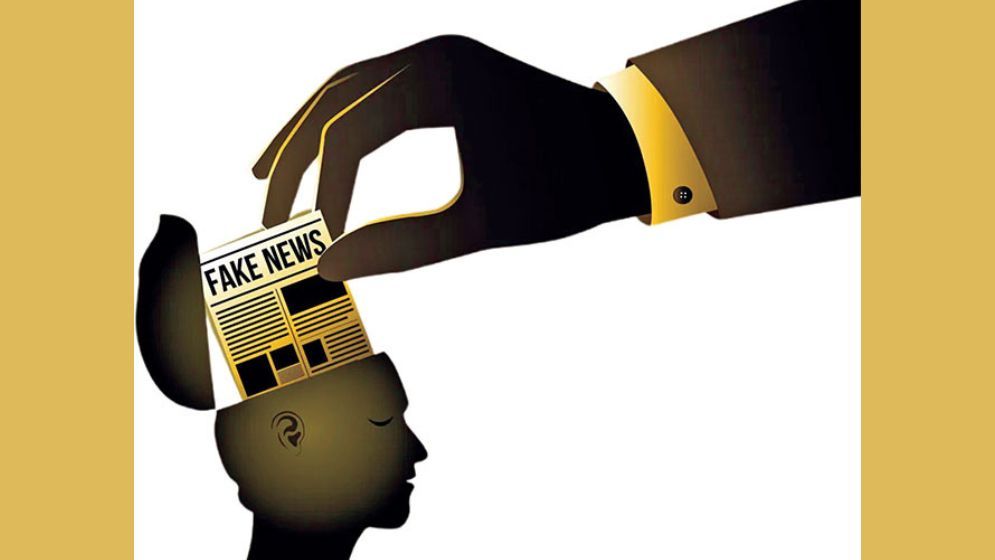
official statements circulating on social media. They tend to fall into two
categories: misinformation that fuels panic and information that urges calm.
This raises an important question: are we being responsible in what we choose
to share?
As a professional who understands climate impacts, lived
through the pandemic, and has recently experienced geopolitical tensions in the
places I reside and visit, I recognise the familiar drill: avoid
misinformation, stay aware and follow protocols.
In our everyday lives, we do what we can: we try to keep
calm and carry on. Yet the word ‘resilience’ quietly echoes in the background.
On the one hand, there is human resilience: the ability to withstand and
recover from difficulty. On the other, there is the United Nations Office for
Disaster Risk Reduction (UNDRR)’s definition, which is “The ability of a
system, community, or society exposed to hazards to resist, absorb,
accommodate, adapt to, transform and recover from the effects of a hazard in a
timely and efficient manner… through risk management.”
So, the question is where does one form of resilience end
and the other begin? And how equipped are different states and nations to
manage risk? To explore this, it helps to understand how systemic resilience
enables human and community resilience and how people, in turn, reinforce the
systems that protect them. The second more pressing question is why are some
nations, states and communities better equipped than others? Broadly, it comes
down to three interconnected layers – preparedness, governance and risk
management – or simply, the capacity to respond effectively when a crisis
unfolds.
Preparedness, in its simplest linguistic sense, means “a
state of readiness, especially for war”. Technically, in the context of
disasters (as per UNDRR), it is defined as “the knowledge and capacities
developed by governments, response and recovery organisations, communities and
individuals to anticipate, respond to and recover from likely or current
disasters.”
So how does preparedness translate into everyday governance
and risk management? Residents in the UAE describe it succinctly: “Missiles are
literally intercepted over our heads. Yet the country responds with calm and
planning and clear communication. No frills, no drama, just the system working
quietly.”
Clear communication builds trust. People from diverse
backgrounds like officegoers, business owners, baristas and cab drivers echo
the same sentiment: a felt sense of safety, even in uncertain times. This
confidence stems from governance systems that function smoothly, guided by long
term vision and disciplined leadership.
Over time, this consistency shapes behaviour. People follow
rules, reinforce norms and internalise discipline. In turn, this behavioural
stability strengthens governance systems, creating a feedback loop where risk
management becomes embedded in everyday processes.
But this is only one half of the equation. The other half is
infrastructure and economic capacity. Countries with greater economic strength
can invest in resilient infrastructure such as robust power grids, safe
buildings, advanced monitoring systems, redundancy mechanisms and social
protection measures like insurance and compensation. Economic capacity reduces
vulnerability, even if it cannot eliminate risk.
To put this disparity in perspective, World Bank data (2024)
shows that GDP per capita in the USA is 65 times higher than in least developed
countries (LDCs), and the EU’s is 33 times higher. It is a stark reminder that
many of the world’s most vulnerable nations also have the least economic
buffer.
Yet even the strongest infrastructure relies on governance
and communication to function effectively. In moments of crisis, systems that
are transparent, coordinated and trusted prevent panic and maintain societal
calm.
Ultimately, resilience is not accidental; it emerges when
informed governance, disciplined communities, reliable information systems and
economic capacity reinforce one another. In times of uncertainties and
geopolitical tension, the ability to distinguish information from
misinformation becomes central to public trust and calm. Nations that align
human behaviour, systemic preparedness and clear communication are better
equipped to withstand uncertainty, while gaps in any of these dimensions deepen
vulnerability.
The writer is an expert on climate change and sustainability
issues with 17+ years of experience across India, South Asia and Africa. She
can be reached at [email protected]