



 For all latest news, follow the Daily Sun's Google News channel.


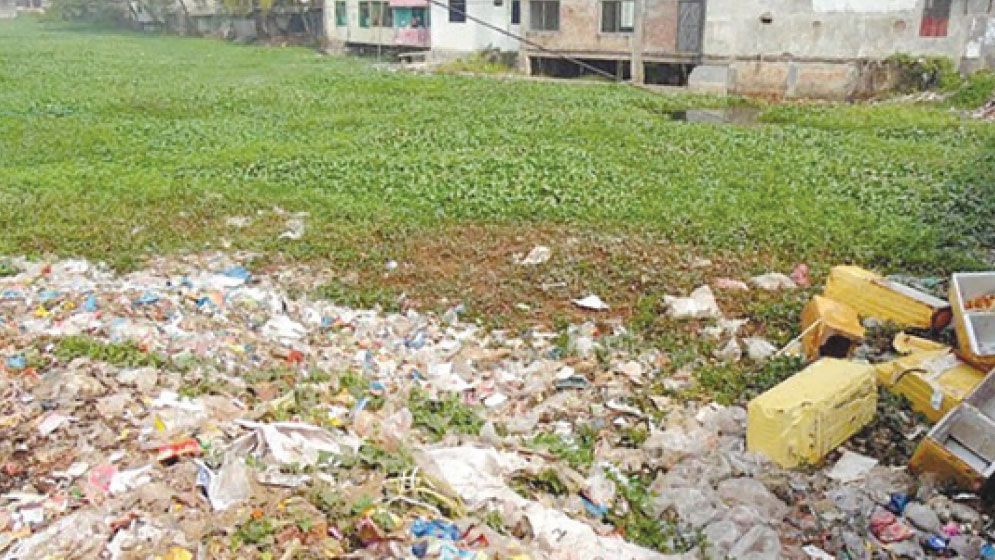
Once a mighty and vibrant waterway flowing through Raipur and Sadar upazilas, the Dakatia River is now facing near extinction due to severe pollution, encroachment and prolonged neglect.
Even four decades ago, the river served as a principal inland route in the region. Country boats, passenger launches and cargo trawlers regularly navigated its waters, facilitating trade and communication, according to the locals.
Farmers depended on the river for irrigation during the dry season, while fishermen sustained their livelihoods through abundant native fish species. Thousands of families were directly and indirectly reliant on the river-based economy.
However, the river has now lost much of its navigability. Large sections have turned into sandbars, while other stretches are choked with dense water hyacinth, resembling stagnant canals. The absence of regular dredging has left farmers struggling to irrigate their lands, increasing their dependence on costly alternative water sources.
On 12 July 2024, around one kilometre of the river within Raipur municipality was cleared of water hyacinth and waste, from WAPDA Colony near Post Office Road to the embankment. Although the initiative offered temporary relief, no sustained measures followed, and the river soon returned to its previous state.
A recent visit on 2 March revealed alarming conditions. In some areas, the dried riverbed has developed cracks, while in others, crops are being cultivated on reclaimed land and soil is being extracted. Illegal structures, commercial establishments and residential buildings have emerged along both banks, allegedly built by influential encroachers.
Household waste, along with effluents from hotels and small factories, is reportedly being discharged directly into the river, further polluting the remaining water.
Originating in the Indian state of Tripura, the Dakatia enters Bangladesh through Cumilla and Feni districts, flows across Chandpur and Faridganj, and finally merges with the River Meghna at Raipur. The river stretches approximately 207 kilometres, with an official width of about 67 metres (220 feet). However, in many places, its width has narrowed drastically to just 30 to 40 feet.
Local residents expressed frustration over the continued degradation. They recalled a time when large vessels and passenger launches travelled along the river, traders from neighbouring districts frequented Raipur, and thousands of fishermen earned their livelihoods. “Now the river’s very existence is under threat due to encroachment and pollution,” said a resident.
According to the Lakshmipur office of the Water Development Board (WDB), a project proposal has been submitted to dredge the River Dakatia along with seven canals in Raipur. The proposal is currently awaiting approval from the ministry concerned.
Officials said eviction drives against illegal encroachers would be conducted jointly with the district administration and the Bangladesh Inland Water Transport Authority once the project receives approval.
At a recent discussion meeting with civil society members in Lakshmipur, Water Resources Minister Shahiduddin Chowdhury Anee said that, in line with electoral commitments, there is a target to dredge 20,000 kilometres of canals nationwide within five years. He added that visible progress has already begun following the formation of the government.
Environmentalists and residents alike warned that without urgent and sustained intervention, the once-mighty Dakatia may soon survive only in memory. For the people of Lakshmipur, they say, the river’s fate is not merely an environmental issue but a matter of economic survival and ecological balance.