



 For all latest news, follow the Daily Sun's Google News channel.


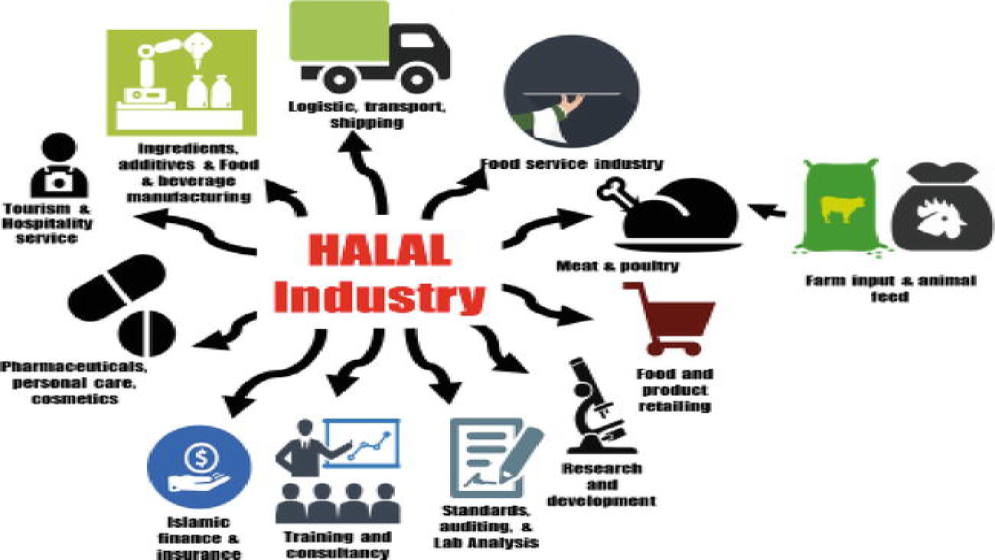
The new government of Bangladesh has assumed office with a debt burden of Tk23 trillion. At present, the country’s economic condition is fragile. In this situation, the new government may face significant challenges in managing its activities. To overcome this crisis, initiatives should be taken to restructure various economic sectors of Bangladesh. Alongside the garment industry, other sectors are also showing growing potential. With proper decisions and strong political will, economic recovery is possible. One such promising sector is the halal industry.
The question is: Can the halal industry make a major contribution to the national economy? The answer is yes; it can. The halal industry has the potential to contribute significantly alongside the garment sector. The global halal market is continuously expanding. If the existing barriers in this sector can be removed, even greater success can be achieved. Experts expect that by 2030, the halal products market will reach 9.5 trillion dollars. Therefore, if effective steps are taken quickly, Bangladesh will have the opportunity to capture a significant share of this vast global market.
One of the major challenges in Bangladesh is the presence of two halal certification authorities. Since 2007, the Islamic Foundation of Bangladesh has been issuing halal certificates for products such as food items, cosmetics, pharmaceuticals (medicines), and consumer goods. Its objective has been to enhance and ensure the global acceptability of halal products. However, from 11 April 2022, the BSTI also began issuing halal certificates for halal food and other products. Its aim is to increase the export of domestic halal products and ensure compliance with international standards (OIC/SMIIC).
The existence of two government bodies issuing halal certificates, however, has created confusion among businesspeople regarding which authority to approach and which certification carries greater international recognition. Therefore, it would be appropriate for the government to merge these two authorities. Other challenges include lack of adequate equipment and research laboratories; limited global recognition of the certification authorities; shortage of skilled manpower in Shariah compliance services; failure in maintaining quality control from production to the consumer level; and weak packaging systems.
Therefore, if improvements are made in these areas, Bangladesh will be able to establish a strong position in the global halal market. This could bring significant transformation to the country’s economy. Export-orientated trade would increase, contributing substantially to foreign currency earnings.