



 For all latest news, follow the Daily Sun's Google News channel.



Jatiya Party (JaPa)
The Jatiya Party (JaPa), founded by HM Ershad which gave legitimacy to fascist Awami League regime for three consecutive terms, has suffered a historic electoral collapse in the 13th parliamentary election held on Thursday, failing to secure a single seat.
For the first time since the restoration of parliamentary democracy in Bangladesh in 1991, no candidate from the party has been elected to the Jatiya Sangsad.
This time, JaPa fielded candidates in 196 constituencies. However, none even emerged as serious contenders in their respective races. The party also experienced a major setback in Rangpur – long regarded as its political stronghold.
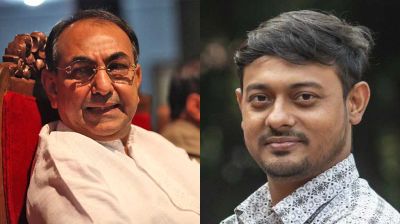
Even the party’s top leadership failed to retain influence in their own constituencies. JaPa Chairman GM Quader finished third in Rangpur-3, securing 43,385 votes, according to unofficial results.
The seat was won by Mahbubur Rahman of Bangladesh Jamaat-e-Islami, who received 175,827 votes.
Similarly, party’s General Secretary Shamim Haider Patwary came third in Gaibandha-1, obtaining around 34,000 votes – far behind winning Jamaat candidate Md Majedur Rahman, who secured approximately 140,000 votes.
Across all six constituencies in Rangpur, JaPa failed to even secure second position, as candidates backed by the Bangladesh Nationalist Party (BNP) and Jamaat alliance dominated the contests.
From opposition to oblivion
The party had entered Parliament in three consecutive elections – 2014, 2018, and 2024 – during the tenure of the Awami League government, serving as the official opposition. However, the 13th parliamentary election has reversed that trajectory dramatically.
JaPa’s electoral history reflects a once-significant political force. Following Ershad’s fall in 1990, the party secured 35 seats in the 1991 election. It won 32 seats in 1996, 14 in 2001, and 28 in 2008 as part of the Awami League-led alliance.
In 2014, JaPa obtained 34 seats, followed by 22 seats in 2018. In the 2024 election, the party won 11 seats. The 13th parliamentary election, however, marks the first time the party has failed to secure any representation in Parliament.
Reason behind downfall
Political analysts attribute the crushing defeat to organisational weaknesses, internal divisions, and shifting public sentiment. Since its formation, the party has experienced at least six major splits, weakening its grassroots structure.
Several veteran leaders, including Anisul Islam Mahmud, Mujibul Haque Chunnu, Ruhul Amin Howlader and Kazi Firoz Rashid, had announced separate political platforms ahead of the election but were unable to contest under distinct electoral symbols due to procedural complications.
Mezbah-ul-Azam Sowdagar, a faculty member of the political science department at Jagannath University, said the outcome stems from a public repudiation of the party for its role in bolstering and legitimising fascist governance.
According to him, the political relevance of all affiliated pro-fascist entities has been effectively rendered obsolete in the contemporary landscape of Bangladesh.
JaPa Vice Chairman and MP candidate Amir Uddin Ahmed Dalu acknowledged the challenges, stating that the party entered the election under difficult circumstances but expressed hope that it will reorganise and return stronger in future contests.
Earlier, Chairman GM Quader told the Daily Sun that electoral victory was not the party’s primary objective this time. “We aimed to highlight attempts to sideline us and to energise our grassroots leaders,” he said, adding that the election experience will help the party rebuild for the future.
The reporter can be reached at: [email protected]
Read More