


 For all latest news, follow the Daily Sun's Google News channel.


13TH PARLIAMENTARY ELECTION
Dhaka-13: Security, influence and youth hopes shape a high-stakes race
Abid Fahad, Dhaka
Published: 07 Feb 2026, 12:00 AM
As the 13th parliamentary election approaches, Dhaka-13 is emerging as one of Dhaka’s most closely watched battlegrounds, with two prominent figures locked in the contest for the seat.
BNP candidate Bobby Hajjaj and Bangladesh Khelafat Majlis Ameer Maulana Mamunul Haque are competing for the constituency long plagued by mugging, extortion, drug abuse and gang violence. For voters, the choice increasingly centres on who can restore security, dignity and order to daily life.
Campaign activity across Mohammadpur, Adabor and Sher-e-Bangla Nagar has intensified in recent weeks. Processions, street meetings and door-to-door outreach by both camps are now a regular sight, giving the area a lively political atmosphere.
Among first-time voters, particularly students, uncertainty remains high. Near Mohammadpur Preparatory School and College, several students were seen discussing the election.
“We are a bit sceptical about whether candidates will keep their promises, but let’s see what the future holds,” said one student, echoing the doubts of many young voters.
Across the constituency, residents paint a grim picture of daily life. Daytime robberies, extortion and gang activity have become common, leaving many voters cynical about political change.
Kamrul Hasan, a resident of Shekhertek, described life as a constant struggle with gas shortages, seasonal waterlogging and street crime. “No matter who comes to power, I fear these problems will continue,” he said.
Others focus on extortion as their primary concern. Md Nizamuddin Ibrahim, a 39-year-old trader from Johori Mahalla, said controlling extortion will be a major test for the next MP. “I know it will not disappear, but someone has to put it on a leash,” he said.
Yet not all voters are pessimistic. Rumana Begum, a long-time resident of Rayerbazar, said visible pre-election initiatives have raised her hopes.
“I have seen Bobby Hajjaj’s supporters installing CCTV cameras and building police boxes to improve security and traffic management. These things make me optimistic,” she said.
The Geneva Camp, home to around 30,000 residents, remains a crucial factor in the race. Abdul Sattar, a camp resident, expressed frustration with past representatives.
“It is always the same. Drugs are sold from the camps, but police raids are random and unfair,” he said, adding that camp residents will support whoever commits seriously to rehabilitation and justice. Md Sejadur Jasim, a regular visitor to the Hazrat Haider Shah (R.) Dargah Sharif, highlighted concerns of the mazar-centred community. “We are a minority in Mohammadpur. I hope the winning candidate will contribute more to our community,” he said. Against this backdrop, both leading candidates are seeking to project themselves as credible alternatives through detailed manifestos alongside active street campaigning.
Mamunul Haque, also joint secretary general of Hefazat-e-Islam Bangladesh who is contesting with the “Rickshaw”, is banking on his deep roots in Mohammadpur and his long-standing religious and social influence. Educated in religious studies and economics, Mamunul has taught at madrasahs and universities and edited several publications. His family’s long association with Jamia Rahmania Arabia Madrasah has earned him strong recognition, particularly among Qawmi supporters.
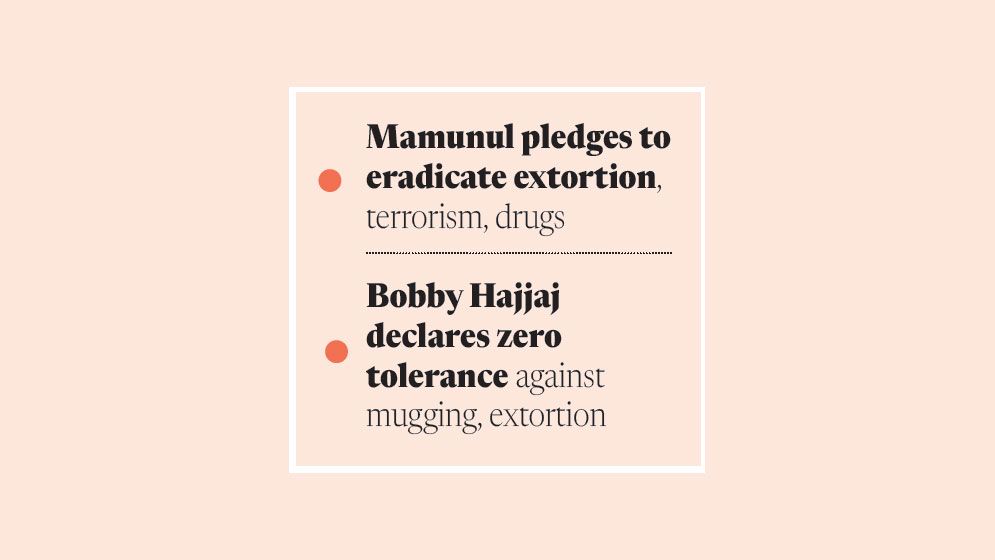
He has been organising “Jagaroni Padajatra” (awakening marches) across the constituency and claims strong public response. “People of all ages are welcoming me – students, businessmen and professionals,” he said earlier, stressing that he sees no personal rivalry with Bobby Hajjaj. On Wednesday, Mamunul unveiled his 13-point manifesto at an Election Commission programme, pledging to eradicate extortion, terrorism and drug abuse, with a focus on tackling teen gangs. The manifesto also emphasises protecting culture, heritage and civil liberties, improving security, infrastructure and cleanliness of religious institutions, and ensuring rehabilitation of Geneva Camp residents with dignity.
An Oxford MBA graduate and son of businessman Musa Bin Shamsher, Bobby Hajjaj has experience in teaching, research and political organising. His campaign focuses on exchange meetings and door-to-door visits, backed by local BNP leadership. On Wednesday, he also announced his nine-point manifesto at the same programme, declaring zero tolerance against mugging and extortion. His proposals include joint operations against gangs and drugs, expanded CCTV coverage, improved street lighting, rapid response mechanisms, and a dedicated help desk for extortion complaints. “This election is a battle to protect democracy,” Bobby Hajjaj said, warning against extremist politics and promising safer streets for residents, traders and youth. Although several other candidates are contesting, the Dhaka-13 race is widely viewed as a straight fight between Mamunul’s religious-backed grassroots strength and Bobby Hajjaj’s BNP-led youth and progressive appeal.
The constituency is comprised of wards 28-34 of Dhaka North City Corporation, with 408,791 voters. For many, especially young and first-time voters, the final decision may depend on who can turn promises into lasting solutions for security and governance.