



 For all latest news, follow the Daily Sun's Google News channel.


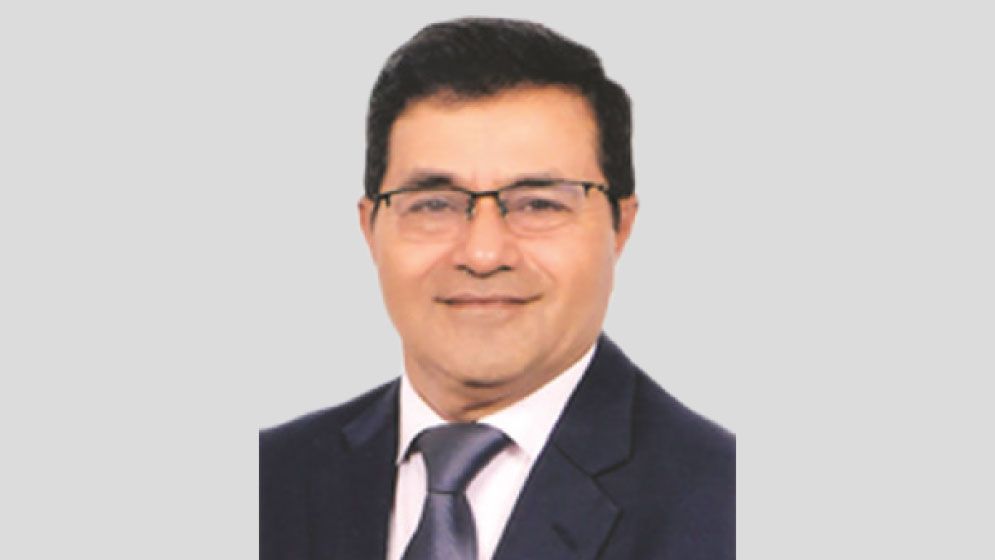
I met Prince Turki Al-Faisal bin Abdulaziz Al Saud at the Xingshan Conference in Beijing from 15 to 17 September 2026, and the encounter left a lasting impression. From the outset, his manner stood out, marked by warmth, calm poise, and a level of intelligence that never felt performative. Despite the prominence of his name in global public life and scholarship, his personal presence was what stayed with me most: attentive, approachable, and quietly confident.
In conversation, Prince Turki came across as highly polite and genuinely friendly. He listened carefully, allowing ideas to land fully, and responded with clarity. What impressed me most was how naturally he communicated without theatrics, without rushing and with a clear sense of how to move discussion forward. There was a polished ease to his words, but also a depth beneath them that suggested long experience and a disciplined way of thinking.
The meeting also highlighted something important about how Prince Turki reasons. Drawing from his biography spanning roles in statecraft, his appointment as Advisor at the Royal Court, his leadership as Director-General of Saudi Arabia’s General Intelligence Directorate, and later diplomatic posts, he did not speak merely from prestige. He spoke with good reasons, offering explanations that felt grounded and deliberate. When points differed, he did not escalate into conflict; instead, he argued with respect, using logic and evidence to clarify rather than to dominate.
That restraint and clarity gave the conversation its own momentum. Prince Turki’s views were not presented as slogans, but as carefully considered positions. It was evident that he values understanding and treats dialogue as something meaningful, something that can improve perspectives instead of merely exchanging opinions.

It also became clear why he is respected far beyond diplomatic circles. His involvement in educational and research institutions worldwide, reflected in his engagement with universities and global platforms, helped explain the breadth of his knowledge. Meeting him in person, I realised that a human quality matches his intellectual stature: he comes across as kind-hearted. The combination of sharp thinking and respectful conduct is rare, and it shaped my overall impression of the day.
Beyond the personal impression, the substance of Prince Turki’s remarks carried equal weight. He returned repeatedly to a central conviction: that diplomacy must take precedence over confrontation. In his view, negotiations, not military escalation, offer the only durable path to resolving the conflicts across the Middle East. This was not an abstract principle for him; it reflected a lifetime spent in statecraft, intelligence and diplomacy, where he witnessed firsthand how force so often deepens the very crises it claims to solve.
From this conviction flowed his insistence on international cooperation. He argued that overcoming current challenges demands a worldwide, cooperative approach rather than isolated efforts. Lasting peace, he suggested, becomes achievable only when nations act in concert, pooling their influence and goodwill instead of pursuing unilateral agendas. In this context, he highlighted Saudi Arabia’s own attempts to end the war during the recent crisis, describing the Kingdom’s efforts to encourage diplomatic engagement, including its urging of the United States to support negotiations rather than military escalation.
His critique of the cycle of violence was equally direct. Amid rising tensions, he observed, attacks and retaliations only deepened the conflict, creating what he described as a “murky” and “dark” environment in which ordinary lives are lost to broader ambitions. For Prince Turki, the conflicts of the Middle East are not distant geopolitical puzzles but a shared humanitarian concern. He linked peace directly to the protection of lives, underscoring the human cost driven by actions from different sides and by regional rivalries that too often override the interests of ordinary people.
What gave his arguments their coherence was his consistent emphasis on settlement through consultation and negotiation. Political settlements, he maintained, should be conducted through dialogue, an approach that aligns naturally with the idea of consultation as the mechanism for de-escalation. He did not present these views as slogans, but as carefully reasoned positions, each grounded in experience and a disciplined way of thinking.
He also expressed approval of China’s role in the region, referencing China as the host of the Saudi-Iranian settlement of differences three years ago and noting its engagement as constructive and stabilising. When asked about the PLA’s 100th anniversary, he urged continuity of peaceful intentions, framing his message as support for stability and restraint. It was a fitting note on which to close: a statesman whose words, like his conduct, pointed consistently toward peace.
When I left the conference, I felt that I hadn’t simply attended an event with a famous figure. I had spoken with someone whose discipline, intellect and character were evident in every exchange. Xingshan provided the setting, but what made the moment memorable was Prince Turki himself, an example of leadership that is as principled as it is compassionate.
___________________________
The writer is an Editor and Publisher of The Security World