


 For all latest news, follow the Daily Sun's Google News channel.


The Al Mayeda strike shows the limits of Pakistan’s Hormuz mediation
Pakistan can broker agreements over the Strait of Hormuz, but it has no way to enforce compliance
The Diplomat
Published: 03 Nov 2026, 07:01 PM
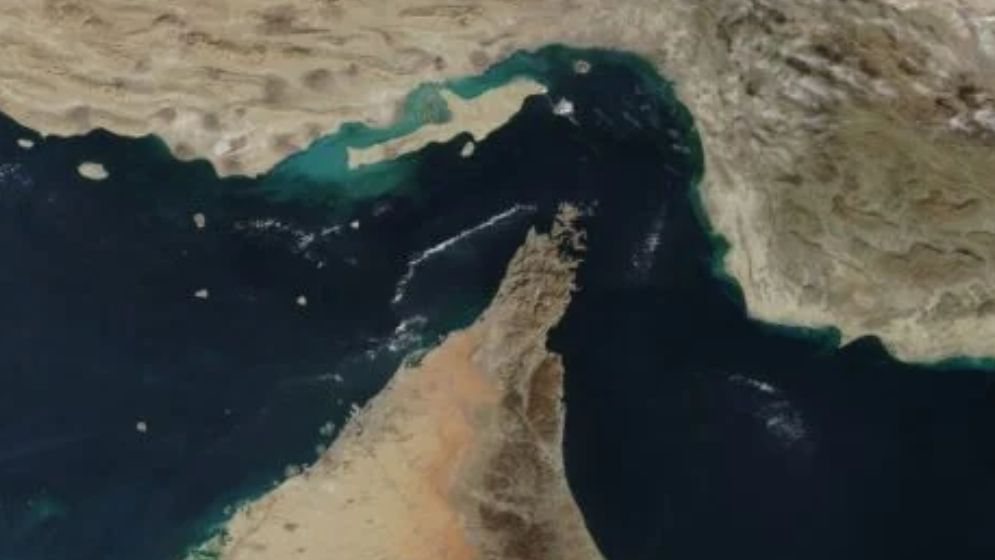
Photo: NASA
On Sunday, a third straight day of talks was held in Doha between Iranian negotiators and Qatari mediators. Afterward, Iran’s Foreign Minister Abbas Araghchi said the plan’s timeline for reopening the Strait of Hormuz had been shortened from seven days to two.
Sanctions relief, a reduced US military presence, and
recognition of new shipping routes designated by Iran and Oman are among the
conditions put forward.
Tehran presented these demands as its response to months of
war and the US blockade of its ports, while Washington warned it will consider
other options if normal navigation is not restored.
Two days earlier, however, a ship that had been cleared for
passage was struck. Safe transit is not guaranteed even with Iran’s permission.
The ship was carrying gas bound for Pakistan, and its
clearance had been arranged by Islamabad. According to people familiar with the
shipment who spoke to Bloomberg, safe passage for the Qatari LNG carrier Al
Mayeda had been negotiated by Pakistan before the vessel was struck near the
strait on 30 October.
Until then, it had seemed that Pakistan’s diplomacy was
producing concrete results: Several earlier cargoes cleared the same way had
crossed safely.
With renewed strikes being weighed in Washington after the 3
November midterms and a forceful response promised by Tehran, the incident
leads to a clear conclusion: Pakistan can broker access, but it has little
recourse if those commitments are later ignored.
Pakistan’s mediation record this year is substantial.
Islamabad hosted the talks that produced the interim memorandum reached in
June, and Field Marshal Asim Munir traveled to Tehran twice in October, after
which a Pakistani military spokesman called Islamabad “cautiously optimistic”
while warning of “powerful spoilers and detractors.”
Qatar, which is hosting the current round of talks, is
actively partnering with Pakistan in these efforts.
Such achievements are made possible by Pakistan’s ability to talk to both sides while threatening neither.
But the Hormuz crisis increasingly demands a guarantor – and this is a role Pakistan is ill-equipped to fill. The Al Mayeda case illustrates the problem. The vessel’s passage was cleared through Pakistan’s good offices, but the promise was swiftly broken – and Islamabad could do nothing about it.
Responsibility for the attack has not been established, and
no one has claimed it. Qatar is investigating the attack.
The Strait of Hormuz has become a contested space in which a
number of actors carried out a record number of strikes in October.
Tehran has submitted evidence to the International Maritime
Organisation of alleged US and Israeli attacks on its own ports and vessels. In
such an environment, a ship cleared through Pakistan’s channel becomes an
obvious target for those who would rather see the talks fail, consistent with
the warning about “spoilers” issued by Pakistan’s military spokesman.
Regardless of who was responsible, the strike damaged the credibility on which
Pakistan’s mediation rests.
Pakistan’s energy exposure compounds the problem. Imported
LNG – nearly all of traversing Hormuz – met about a fifth of its gas demand
last year, yet Pakistan received just two Qatari cargoes in October against
eight a year earlier.
QatarEnergy has extended its force majeure to 29 December,
and spot cargoes cost roughly double the contract price.
Islamabad’s engagement with Tehran on safe passage is a
product of close neighborly relations, but it also ties Pakistan’s energy
security to the fate of the talks. The longer Hormuz remains insecure, the
higher the economic cost of Pakistan’s mediation role.
In keeping with Pakistan’s consistent preference for
dialogue over force, the answer is not to step back from mediation but to share
the burden of guaranteeing compliance.
The June memorandum was facilitated alongside Saudi Arabia,
Turkiye, Qatar, and Egypt, and Qatar now leads the Doha track.
A multilateral deconfliction arrangement for neutral energy
cargoes would spread the reputational risk and raise the diplomatic cost for
anyone who puts a cleared ship at risk. A collective assurance is far harder to
ignore than a Pakistani one.
Islamabad also needs to separate its energy security from
its mediator role. Pakistan is reportedly considering buying ten spot cargoes
worth more than $1 billion and sourcing supplies from the United States and
Azerbaijan.
Such diversification is expensive, but doing nothing may
cost more in the long run. Energy security is not merely sound economic policy
but a precondition for credible mediation.
Just as important, Pakistan should be candid with all
parties about what it can deliver. US Secretary of State Marco Rubio has
confirmed that talks are ongoing but offered no timeframe, and President Donald
Trump says he is in no rush.
Islamabad can pass messages, host talks, and test proposals, but it cannot verify any party’s conduct at sea. If Pakistan exaggerates its role, it would become the obvious scapegoat if a plan to reopen Hormuz collapses. With the fate of negotiations uncertain, Islamabad’s credibility is best protected by claiming less.
Middle power mediation has gained prominence this year, with Qatar, Turkiye, Oman, and Pakistan all finding new relevance as great power crises multiply. Yet the events of 2026 have exposed the limits of that role: mediators can reduce the cost of negotiating, but they cannot guarantee compliance once an agreement is reached. As debate continues in Doha over how ships will pass safely through the Strait of Hormuz, the strike on the Al Mayeda reminds us that promises alone cannot protect vessels.