


 For all latest news, follow the Daily Sun's Google News channel.


A Digital Sentinel Against Corruption
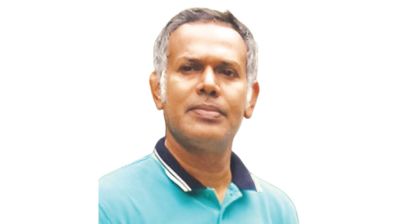
Muhammad Masudur Rahman
Published: 04 Oct 2026, 12:16 AM

Muhammad Masudur Rahman
Corruption in Bangladesh has evolved into a systemic problem affecting administration, economic development, investment, public confidence and the quality of governance. According to Transparency International’s Corruption Perceptions Index 2024, Bangladesh ranked 149th among 180 countries, scoring only 25. The economic consequences are equally serious. Resources meant for education, healthcare, infrastructure and social protection are often lost through corruption and illicit financial activities.
For decades, Bangladesh has largely relied on a reactive approach. Investigations usually begin after allegations emerge, complaints are filed or wrongdoing becomes publicly visible. By then, illicit wealth may already have been transferred, hidden or invested in the names of relatives and associates. What Bangladesh now needs is a preventive, technology-driven framework capable of identifying suspicious financial behaviour before corruption becomes deeply entrenched. In this context, the idea of “One Citizen, One Digital ID, One Digital Wallet” could offer a historic opportunity. Every citizen could have a secure digital identity connected, where legally appropriate, to a regulated financial ecosystem involving banks and mobile financial services.
Bangladesh’s expanding digital infrastructure could become more than a mechanism for delivering public services; it could strengthen financial transparency. On this foundation, Bangladesh could consider establishing a technology-driven and institutionally independent body, such as a National Wealth Management Authority (NWMA). Its purpose would be to develop an integrated system for monitoring significant wealth accumulation and identifying suspicious financial patterns within a clearly defined legal framework. Bangladesh already has institutions working against corruption and financial crime, including the Anti-Corruption Commission (ACC), National Board of Revenue (NBR), Bangladesh Financial Intelligence Unit (BFIU) and Criminal Investigation Department (CID). Yet a major challenge remains: relevant information is often scattered across institutions without a sufficiently integrated mechanism for secure sharing and analysis. Consider a hypothetical example. A government official purchases an expensive apartment in Dhaka, registers valuable jewellery in a spouse’s name and sends a child abroad for costly education. Different institutions may possess different pieces of information, but no single authority may see the complete financial picture. Such gaps allow illicit wealth to remain hidden. A National Wealth Tracking System could help reduce this problem. Built around secure digital identity infrastructure, it could connect significant assets and major financial activities with a verified identity. Property registration, land and apartment purchases, substantial banking transactions and other high-value activities could be analysed within a secure framework.
Artificial intelligence and machine learning could play an important role. An income-and-expenditure analytics system could compare declared income with observable financial behaviour. If someone declares an annual income of Tk1 million but purchases a luxury vehicle and an expensive apartment without an apparent legitimate source of funds, the system could generate a risk alert. It could also examine wealth accumulation over five- or ten-year periods and identify sudden, unexplained increases in assets. Where legally justified, beneficial ownership could be examined to determine whether assets have been transferred merely to conceal their real ownership. One principle, however, must remain absolute: technology should identify risk, not determine guilt. An algorithm must never declare anyone guilty of corruption. Suspicious behaviour should trigger scrutiny and investigation—not automatic punishment. Final decisions must remain with authorised investigators, prosecutors and courts. Every citizen must retain the right to explain legitimate sources of income and wealth. Due process, judicial oversight and fundamental rights must remain central to the system.
Technology alone, however, cannot defeat corruption. Several complementary reforms are equally important. First, e-procurement should be expanded wherever technically and legally feasible. Government procurement is particularly vulnerable to manipulation. A transparent, digital and auditable system can reduce unnecessary human discretion and make irregularities easier to detect. Second, Bangladesh needs stronger whistleblower protection. People who expose corruption often face intimidation and retaliation. A credible protection mechanism could encourage citizens and officials to report wrongdoing. Third, an effective Beneficial Ownership Registry is essential. Knowing whose name appears on a company or property document is not always enough; the state must be able to identify the person who ultimately owns or controls an asset. Fourth, asset declarations by public officials should not simply be collected and forgotten. Subject to reasonable privacy protections, unexplained increases in wealth should receive proper institutional scrutiny. Fifth, Bangladesh should gradually reduce excessive dependence on large cash transactions. Expanding digital payments for major commercial activities would make illicit financial flows more difficult to conceal. International experience—from Singapore and South Korea to Estonia and Rwanda—shows that strong institutions, financial transparency, digital identity and data integration can significantly reduce opportunities for corruption. There are also serious challenges. Privacy must be protected through a strong legal framework defining who can access information, for what purpose and under whose authority. Cybersecurity is equally critical. Sensitive databases require strong encryption, strict access controls, independent security audits and continuous monitoring.
Digital inequality is another concern. Not every citizen has access to smartphones or reliable internet. Digital inclusion must therefore progress alongside digital governance, ensuring that no citizen is excluded from essential services because of technological or economic disadvantage. Yet the greatest challenge is political will. No technology can successfully fight corruption if powerful individuals are allowed to bypass the system. The most sophisticated algorithm is powerless where the rule of law is weak. Bangladesh now stands at an important crossroads. Its National Identity infrastructure, expanding digital payments and widespread mobile financial services provide an unprecedented technological foundation for greater transparency. Corruption is not merely an individual moral failure; it is also a systemic failure. And systemic failures require systemic solutions. When major transactions become traceable, assets are properly recorded, beneficial ownership can be identified and declared income can be compared with financial behaviour through transparent and legally governed systems, opportunities for corruption to hide will inevitably shrink. The digital sentinel will not eliminate corruption overnight. But it can make corruption far more difficult to conceal. The opportunity is before Bangladesh. The challenge is to build this system wisely, securely, independently and within the framework of law. The time to build that digital sentinel is now.
The writer is PhD researcher at the University of Dhaka