


 For all latest news, follow the Daily Sun's Google News channel.


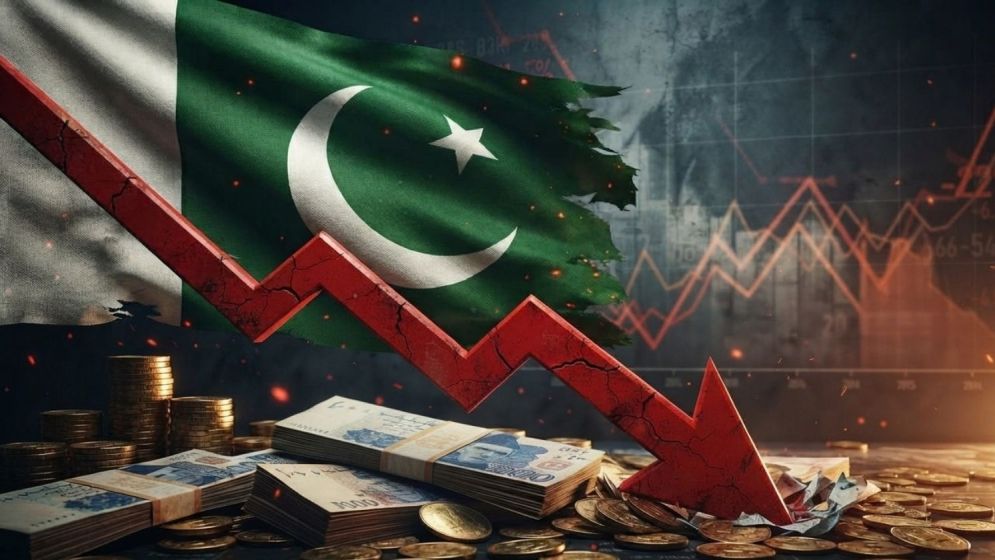
Representational image
Pakistan’s external liquidity rests shakily on the two crutches of endless IMF loans and rollovers of patron-state deposits. Both carry high costs — economic and political.
Our rulers entice patron states to bankroll a
near-bankrupt state via its geopolitical, not economic, value. Rulers exploit
both for personal, not public, gains. They court patrons well, but turn
patronage into public progress poorly and personal profits ably. So, our growth
spurts are all import-led rather than export-led. We spend dollars faster than
we earn and court crises. We recover by choking growth instead of increasing it
alongside exports. We have had several chances but have squandered most of
them.
Musharraf squandered the biggest one this
century. He ruled the longest, with the deep state and opposition under his
thumb, and gained over $45bn in US aid, debt relief, FDI, and portfolio inflows
after 9/11. Yet, a strong export base eluded him. Inflows fuelled consumption,
imports, and property binges and bubbles; volatile portfolio funds and
domestically focused FDI later led to outflows. They initially kept the rupee
high, hurting exports. Their value doubled, but value-added dawdled and the
export-GDP ratio fell below 1990s levels. A record current account deficit of
8.2 per cent of GDP in 2008 led to a big crisis. Bad security policies fuelled
two conflicts that still hurt progress. The PPP cut the deficit. But energy
woes, insecurity, ineptitude and failed reforms reduced growth.
Later, CPEC provided over $20 billion for
energy and roads. This eased energy gaps, but the PML-N failed to build a
durable export base. An expensive rupee led to an import surge and a current
account deficit of about 6pc by 2018. The PTI had brought it down to 0.6pc by 2021
and managed the Covid phase well. But the Covid stimulus raised imports as
exports lagged. The deficit rose to 4.6pc in 2022, partly due to global price
shocks and political turmoil. So, the PML-N bequeathed a crisis to the PTI only
to inherit one back, karma-style.
We spend dollars faster than we earn and
court crises.
Import-led growth led to dollar crunches.
Instead of curbing crises, high reserves made them more likely as rulers
increased imports to fuel growth. Their frequency and common causes could have
taught the current rulers how to avert such crises. But they are as clueless
about them as they are about regular floods, even though such crises can be
foreseen and forestalled. This is worse than incompetence; it shows wilful
neglect. They cause and gain from such crises. The people are worse off now.
As CPEC flows shrank, we courted IMF loans
and state deposits, which ballooned from 36pc of the State Bank’s reserves in
2016, when deposits were only $700 million, to nearly 600pc in early 2023. About
$11bn in IMF debt, $8bn in Saudi deposits and $4bn in Chinese deposits together
still exceed even our highest-ever SBP reserves of $21bn. We are the most
persistent user of both crutches over time, and we now have the second-most
such deposits and the third-most IMF debt globally. They are on top of an
external debt of over $80bn. Unlike that debt, they don’t fund projects or jobs
directly, earn no direct revenue to pay the interest and are taken only due to
a dollar crunch. Even these crutches may not carry the weight of our follies,
so we now eye a $10bn lifeline from our oldest but most fickle patron — the US.
Bangladesh, once our lesser half, has no such deposits, and its IMF debt is
only 13pc of reserves as its $48bn exports mock our $30bn levels.
Such crutches hurt. The PML-N and PTI both
ignited growth spurts as reserves peaked. Despite higher SBP reserves now,
this set-up hasn’t changed outcomes, given the nature of its reserve cushion.
The IMF keeps us on a leash, and patron-state deposits can be recalled
quickly (as in the UAE case), unlike flows with longer, fi_xed return dates.
So, even patronage quality has fallen: from post-9/11 aid and debt relief to
CPEC flows to harsh loans and fickle deposits. We now build reserves
precariously rather than finance them prudently or earn them creatively.
After four years, this set-up boasts only
stabilisation and opaque foreign forays. But as a strong export base and growth
elude it, stabilisation is really stagnation. Foreign forays are sucking us
into endless wars, jeopardising our own security for the sake of others. We
face two risky paths: hobble on with slow growth and risk unrest, or rush
recklessly into import-led growth to court a dollar crisis and unrest. With no
major investments here even from the patrons it serves loyally, only the two
crutches prop up a bailout state. How long will its weak life jackets keep it
afloat?
The writer has a PhD in political economy from the University of California, Berkeley, and 25 years of grassroots-to-senior-level experience across 50 countries.
------------------------------------
The writer has a PhD in political economy from the University of California, Berkeley, and 25 years of grassroots-to-senior-level experience across 50 countries.
Source: Dawn