


 For all latest news, follow the Daily Sun's Google News channel.


Saudi allies are now discovering the cost of 'commitment' and not liking it
Aditi Bhaduri
Published: 17 Sep 2026, 07:08 PM
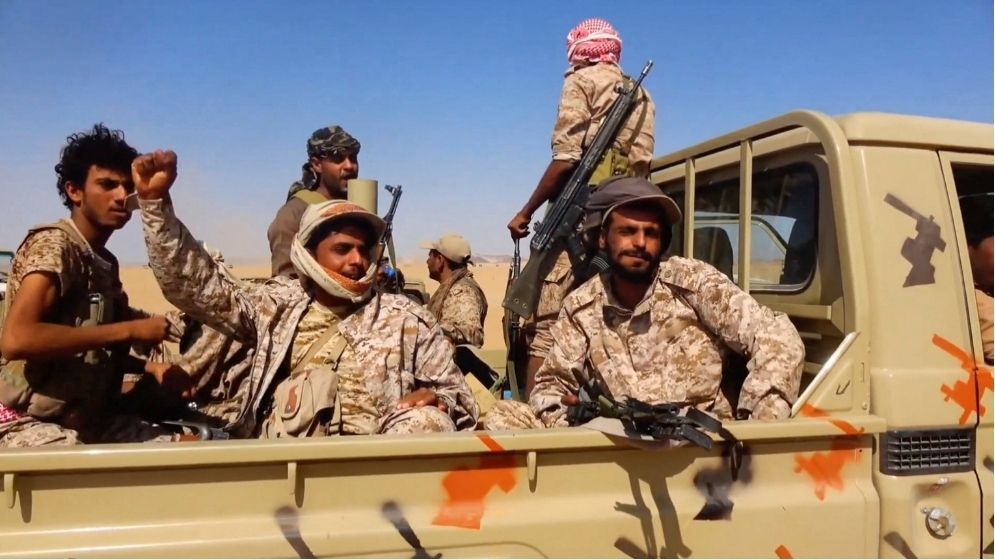
Members of the Saudi-backed Yemeni government forces react during what they say to be clashes with Yemen's Iran-aligned Houthis in a location given as near Al-Hazm, Yemen, in this screen grab obtained from a handout video released 9 September 2026. Photo: Reuters
Finally, though rather swiftly, the Mecca Defence Agreement between the Kingdom of Saudi Arabia (KSA), Pakistan, and Turkey has been revealed. It's not coming apart, per se, but it has been revealed for what it is, or rather, what it is not: a defence pact in the manner of NATO, as Turkish Foreign Minister Hakan Fidan had boastfully described. That, of course, was a non-starter, since Turkey, a NATO member, does not have the liberty to join another military bloc simultaneously. Nonetheless, the grouping had the blessings of the US, which, under President Donald Trump, is looking across the globe to share its burdens.
Of course, no one really expected either
Pakistan or Turkey to jump into battle with a strike on the Kingdom because the
pact is essentially that - a security hedge for Saudi Arabia. Since the Iran
war began and Saudi Arabia and its critical infrastructure came under sustained
attacks, Pakistan, which had a year earlier concluded a mutual defence
agreement with it, did not jump into any combat role. While it did station
troops, fighter air rafts and weaponry on Saudi soil, it instead opted for
mediation between the US and Iran. The Mecca agreement, which expanded this
arrangement to include Turkey, was built on the 2025 Saudi-Pakistan defence
pact.
A Paper Tiger
However, the attacks that the Houthis have
launched against Saudi Arabia since last week have busted the myth of a mutual
defence arrangement. If they began the attacks to test the pact, then they now
have full confirmation that it remains just a paper tiger. For, the attacks
have targeted not just Saudi territory but also critical and strategic
infrastructure, including the East West Pipeline, which the Saudis were almost
exclusively relying on since the closure of the Strait of Hormuz. Known as the
Petroline, it connected to Saudi Arabia's Yanbu port on the Red Sea on the
country's west coast. From there, exports can travel to Europe; but, for its
main Asian markets, that is, India, China, Japan, and South Korea, it has to
pass through the Bab-al-Mandab, which the Houthis now control. While Saudi
shipping came under attack in the Bab-al-Mandab, the pipeline, which had become
a crucial alternative for sending the Kingdom's oil to global markets, has been
damaged and shut down.
Moreover, the Houthis have now also captured
the key Yemen port of Mokha in the Taiz region, which increases the magnitude
of the threat against Saudi Arabia.
In this scenario, such a spectacular no-show
by Saudi Arabia's defence allies - Pakistan, a nuclear power, and Turkey, which
has NATO's second-largest and battle-hardened army - is mind-boggling.
Of course, both Pakistan and Turkey have
jumped into damage control mode now.
Saudi On Fire, Pakistan On X
In a phone call with Saudi Crown Prince
Mohammed bin Salman, Pakistan's Prime Minister, Shehbaz Sharif, expressed full
solidarity with the Kingdom and strongly condemned Houthi actions. A statement
released by his office said, "While expressing complete solidarity with
the Saudi leadership as well as the brotherly people of Saudi Arabia, the Prime
Minister stated that the recent Houthi actions threatened regional peace and
security and could further disrupt the global economy and energy
supplies."
Now that the Saudis have also reported that a
drone was also launched at Mecca, Islam's holiest site, a claim the Iranians
have dismissed, Shehbaz Sharif condemned the attack and urged "all parties
to exercise maximum restraint and to step back from the brink of further
escalation".
In a post on X, he said, "Our region has already suffered far too much from conflict. Dialogue and diplomacy remain the only sustainable path towards peace ... Pakistan stands unwaveringly, shoulder to shoulder with the brotherly Kingdom of Saudi Arabia, in defence of its sovereignty and territorial integrity, as well as for the security and sanctity of the Haramain Sharifain, a duty that every Pakistani carries close to their heart."
Unless much of the world is suffering some
kind of vision impairment, it is difficult to see how exactly Pakistan is
standing "shoulder to shoulder with the brotherly Kingdom of Saudi Arabia,
in the defence of its sovereignty and territorial integrity".
Nevertheless, Pakistan persists, and it will
be interesting to see how its defence of its Saudi brothers pans out. It was
just a decade ago when the very issue of the Houthis, Yemen, and Gulf defence
drove a wedge between Pakistan and its Gulf friends. And it was to deter
exactly such attacks that the Saudis had concluded first the bilateral pact
with Pakistan last year and then with both Pakistan and Turkey this year.
Pakistan's Never-Ending Problems
Of course, Pakistan has sound reasons for not
wading into a conflict that could pit it directly against Iran, with which
Pakistan shares a 909-km-long border. They have not forgotten the missile
attacks launched at them by the IRGC just a couple of years ago. Pakistan
already faces India and the spectre of Sindoor 2.0 on its eastern border. On
the north and northwest, it confronts a hostile Afghan Taliban, with whom it
has been clashing for over a year. Its army is stretched battling the Baloch
and Tehreek-e-Taliban insurgencies at home. The last thing it would want is an
attack from Iran.
Moreover, Pakistan, already beset by
sectarian friction internally, has a sizeable Shia population that would not
brook any Pakistani adventures against Iran. Just think back to the protests
that gripped Karachi in the wake of the US-Israel attacks on Iran earlier this
year. Ten Pakistanis lost their lives when the US Consulate General opened fire
on protesters at the consulate. And for whatever it's worth, Field Marshall
Asim Munir is also a Shiite. So, Pakistan has ample reason not to militarily
intervene against the Houthis.
The Saudis have been patient, as of now. The
Crown Prince is touring Egypt, which has also put up a show of solidarity. It
should be noted here that while Egypt had been a part of the quadrilateral
talks with Saudi Arabia, Pakistan, and Turkey in the run-up to the Mecca Pact,
it did not join the grouping. In spite of its recent rapprochement with Turkey,
it is doubtful whether Egypt would participate in a defence pact that also
involves Turkey.
Given the hefty funding, loan rollovers, and
fuel payment waivers extended to Pakistan by the Saudis, the latter have the
leverage to force Pakistan and, to some extent, Egypt, to militarily support
it. Reports, however, suggest that the Crown Prince is reaching out to Israel,
something he seemed to have avoided till now, turning instead not long ago to
rival Turkey.
Turkey's Golden Goose
As for Turkey, observers of the region will
know that it never meant to come to any kind of direct military defence of
Saudi Arabia. The Mecca Pact was supposed to be a golden goose for it - as, of
course, for Pakistan - to expand its defence industry, build critical
infrastructure, and then supply its military goods to both Saudi Arabia and
other countries. It is Turkey, not surprisingly, that has been the most vocal
about the Mecca pact's expansion.
In a diplomatic exercise, President Recep
Tayyip Erdogan had said the trilateral Mecca Joint Defense Agreement sends a
powerful signal of unity to the Islamic world, emphasising that Turkey, Saudi
Arabia, and Pakistan were joining forces to overcome the mounting security
challenges currently facing Muslims. How exactly is something the world would
love to know.
So, what much of the world had been
speculating has now been confirmed by the Houthis: that the Mecca Defence Pact
is not a defence pact, but a failed deterrent.
The author is a senior Indian journalist
Source: NDTV