


 For all latest news, follow the Daily Sun's Google News channel.


Swami Vivekananda’s Question Still Hangs over Us
On the 133rd anniversary of the Chicago Address
Probir Chandra Das
Published: 10 Sep 2026, 08:21 PM
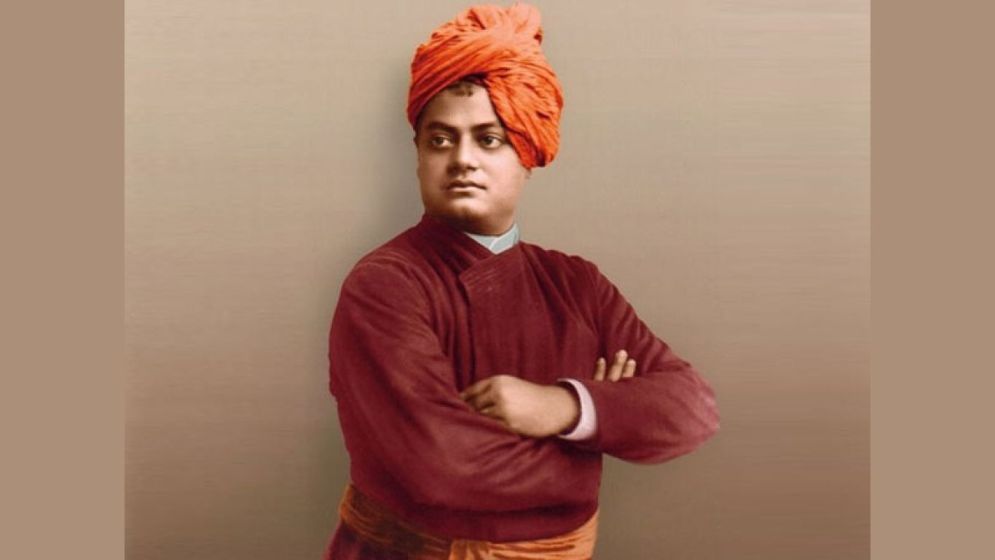
Photo: Collected
On 11 September 1893, a young monk from India stood before nearly seven thousand people at the World’s Parliament of Religions in Chicago and began with four words that still reverberate: “Sisters and Brothers of America.” The hall rose in a standing ovation lasting more than two minutes. In that instant Swami Vivekananda did not simply introduce Hinduism to the West; he issued a challenge that remains unfinished 133 years later — the choice between harmony and fanaticism.
As we mark the 133rd anniversary in 2026, the
question feels sharper than ever. In an age of artificial intelligence, climate
anxiety, religious polarisation and digital tribalism, why does a speech
delivered under gaslight still matter? Because its central insight has not been
answered: the deepest truth of religion is the oneness of humanity, and genuine
spirituality must liberate rather than divide.
Narendranath Datta, who became Swami Vivekananda,
reached Chicago almost by accident — with little money, no formal invitation,
and only a letter of introduction. On 11 September he was thirty, clad in the
ochre robes of a sannyasi, carrying the spiritual weight of an ancient
civilisation into a hall that expected the East to appear as a curiosity. He
refused that role.
In his opening address and the talks that followed —
especially “Why We Disagree” — he rejected both aggressive proselytisation and
defensive apologetics. He presented the Vedantic vision that all religions are
paths leading to the same summit. Quoting the Bhagavad Gita he declared:
“Whosoever comes to Me, through whatsoever form, I reach him; all men are
struggling through paths which in the end lead to Me.” He condemned
sectarianism, bigotry and fanaticism as the true enemies of religion. The test
of a living faith, he insisted, is not the number of converts it claims but the
character it produces and the compassion it inspires.
To drive the point home he told the parable of the
frog in the well. A frog who had lived its whole life in a small well met
another from the ocean. When the ocean frog described the vastness of the sea,
the well frog could only measure it against the walls of its own narrow home
and dismissed the larger reality as impossible. Vivekananda used the story to
expose the mental prison of sectarianism: each tradition, trapped in its own
well, mistakes its limited view for the whole of truth. The Parliament, he
hoped, would help humanity climb out of those wells.
The speech was radical for its time. Colonial powers
still spoke of a “civilising mission.” Many missionaries regarded other faiths
as darkness awaiting the Gospel. Vivekananda asserted the dignity of every
sincere spiritual tradition. He did not dilute Hinduism; he elevated the entire
conversation.
The immediate impact was electric. American
newspapers reported on the “Hindu monk” who had captivated the Parliament. Over
the next few years Vivekananda lectured across the United States and Europe,
founded the Vedanta Society, and planted seeds that later grew into a worldwide
interest in yoga, meditation and Indian philosophy. When he returned to India
in 1897 he was received as a national hero. His message had reversed the colonial
gaze: India was no longer merely a land to be saved; it had something essential
to offer the world. The Chicago addresses became a founding document of modern
interfaith dialogue. “We believe not only in universal toleration,” he said,
“but we accept all religions as true.”
One hundred and thirty-three years later the
problems Vivekananda diagnosed have only changed costume. Religious conflict
continues to scar societies. Faith is still too often weaponised. Digital
platforms have become the new wells: algorithms amplify the loudest voices,
turning complex traditions into caricatures and locking users inside echo
chambers that feel complete and absolute. In this climate, Vivekananda’s
insistence that every sincere seeker is equally worthy of respect is a radical
act of courage. He never claimed that every doctrine is equally accurate. He
claimed that the human being seeking the divine deserves dignity, regardless of
the path chosen.
Equally relevant is his critique of hollow
religiosity. “The poor, the illiterate, the ignorant, the afflicted — let these
be your God,” he said. Climate refugees, economic migrants and those left
behind by technological change stand as living tests of whether our faith
traditions retain any moral force. Vivekananda was a fierce patriot who wanted
India to awaken to its spiritual strength, yet he never confused pride with
chauvinism. He urged his countrymen to honour their heritage while remaining
open to the best in other civilisations. That balance — rooted confidence without
arrogance — is what many societies struggle to find today.
For the young the speech carries special power.
Vivekananda placed his deepest faith in the younger generation. “My faith is in
the younger generation, the modern generation,” he declared. “Out of them will
come my workers. They will work out the whole problem, like lions.” He saw
youth not as a passive stage but as the most potent force for transformation —
provided it was trained rightly.
That training, he insisted, must be education in the
true sense. “Education is the manifestation of the perfection already in man,”
he said. He rejected an education that merely filled the mind with information.
“We want that education by which character is formed, strength of mind is
increased, the intellect is expanded, and by which one can stand on one’s own
feet.” The end of all education, he argued, should be man-making — the building
of fearless, compassionate, self-reliant human beings capable of serving
others. In a time of anxiety and digital distraction, these words cut with
fresh force. Character, self-mastery and service remain the surest antidotes to
both consumerism and nihilism.
The real test of the Chicago addresses is whether
their spirit can still shape institutions and individual lives. Universities
can teach comparative religion as a search for shared human questions and form
character rather than merely transmit data. Religious leaders can model the
humility Vivekananda displayed. Policymakers can remember that social harmony
is not produced by uniformity but by the capacity to hold difference without
fear. Ordinary citizens can practise the simple discipline of listening before
judging — of climbing, however briefly, out of their own wells. Honouring the
Chicago speech means offering a vision of unity that does not erase diversity.
At the final session Vivekananda expressed the hope
that the Parliament would mark the death-knell of all fanaticism, of all
persecution with the sword or the pen, and of all uncharitable feelings between
persons journeying toward the same goal. That hope has not yet been fully
realised. Wars continue to be fought in the name of God. Digital wells grow
deeper every day.
Yet the fact that we return, generation after
generation, to those words suggests that something in them remains unfinished
and necessary. One hundred and thirty-three years on, the young monk’s voice
still asks: Can we recognise the divine in those who pray differently? Can we
build societies that honour both freedom of conscience and the bonds of common
humanity? Can we make spirituality a force for liberation rather than control?
The answers will not come from repeating the speech.
They will come from living it — imperfectly, persistently, and with the same
courage that once made a hall in Chicago rise to its feet. In a world still
hungry for meaning and still wounded by division, Swami Vivekananda’s message
has not grown old. It has simply been waiting for us to climb out of our wells
and catch up.
The writer is a senior assistant director at the University Grants Commission (UGC)