


 For all latest news, follow the Daily Sun's Google News channel.


Allegations of Criminal Offenses Against Dr Yunus: Maximum Punishment Capital Punishment
Dr. Yunus faces at least five major allegations of constitutional violations
Audite Karim
Published: 16 Aug 2026, 09:32 PM
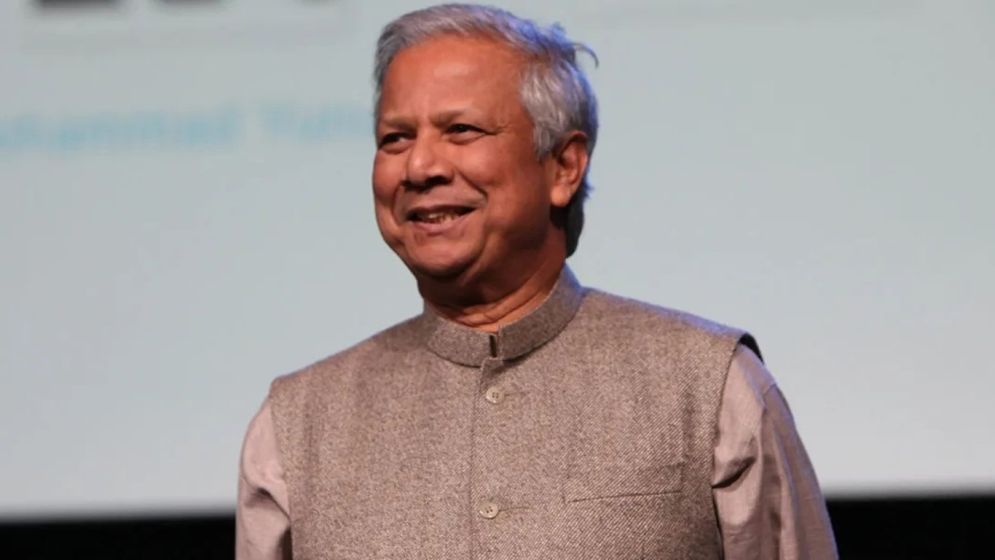
File Photo
During the tenure of Dr. Yunus's administration, serious criminal allegations—including constitutional violations—have been raised against his government. If proven true, the maximum penalty under existing Bangladeshi law could be capital punishment. Additionally, Dr Yunus faces allegations of abuse of power, corruption, and fraud, which carry penalties of up to 14 years in prison upon conviction.
A review of Dr Yunus's 18-month administration
highlights several severe allegations:
Constitutional Violation and Contempt
The Constitution of Bangladesh is the supreme law of
the land. According to Article 7:
• 7(1):
All powers in the Republic belong to the people; and their exercise on behalf
of the people shall be effected only under, and by the authority of, this
Constitution.
• 7(2):
This Constitution is, as the solemn expression of the will of the people, the
supreme law of the Republic, and if any other law is inconsistent with this
Constitution, that other law shall, to the extent of the inconsistency, be
void.
Article 7A provides strict penalties for
constitutional violations:
• 7A(1):
If any person, by show of force or use of force or through any other
unconstitutional means— (a) abrogates, repeals, cancels, or suspends this
Constitution or any article thereof, or attempts or conspires to do so; or (b)
subverts, attempts, or conspires to subvert the confidence, belief, or faith of
citizens in this Constitution or any of its provisions— such act shall be
treason, and such person shall be guilty of treason.
• 7A(2):
If any person— (a) abets or incites any act described in clause (1); or (b)
approves, condones, supports, or ratifies such act— such act shall also
constitute the same offense.
• 7A(3):
A person guilty of the offense described in this article shall be punished with
the maximum penalty prescribed for other offenses under prevailing laws.
Under the Penal Code of Bangladesh, the maximum
penalty is capital punishment (death penalty). Dr. Yunus faces at least five
major allegations of constitutional violations:
1. Ultra
Vires Constitutional Amendment Order: While serving as Chief Adviser, Dr. Yunus
promulgated the July National Charter (Constitutional Reform) Implementation
Order, 2025—a special ordinance issued by the interim government following the
2024 student-led mass uprising. Promulgated by the President on November 13,
2025, it aimed to implement over 84 proposals, including comprehensive
constitutional reforms and an election-period caretaker government. This
directly contradicts Article 142 of the current Constitution, which mandates
that constitutional amendments require a bill passed by a two-thirds majority
in Parliament. Enacting an amendment order without parliamentary approval
violates the Constitution. Critics, including former legal ministers and
constitutional experts like Dr. Shahdeen Malik, labeled this order an
unconstitutional act of treason.
2. Unlawful
Referendum Ordinance: The existing Constitution contains no provision for
referendums. Promulgating a Referendum Ordinance and holding a referendum
outside parliamentary authority constitutes a direct constitutional violation.
3. Breach
of Oath: Appointed to the chief executive role based on a Supreme Court
reference, Dr. Yunus took an oath as Chief Adviser promising to "preserve,
protect and defend the Constitution" and to "do right to all manner
of people according to law, without fear or favor, affection or ill-will."
Allegations suggest widespread bias and nepotism during his administration,
violating this sacred oath.
4. Deprivation
of Fundamental Rights: Articles 26 through 47 guarantee citizens' fundamental
rights. Under Dr. Yunus's administration, several core rights were allegedly
infringed upon:
o Article
27 (Equality before law): Over 50,000 citizens were reportedly detained without
trial, denying them legal recourse.
o Article
28 (Non-discrimination on grounds of religion, etc.): Amnesty International
reported roughly 1,000 attacks on religious minorities over 18 months,
alongside attacks on Baul communities and shrines, without adequate state
protection.
o Articles
31 & 32 (Protection of law and personal liberty): Thousands faced mob violence
or had bank accounts frozen without due process.
o Article
39 (Freedom of thought, conscience, and speech): Intimidation and physical
attacks on news offices and journalists constrained press freedom.
o Article
40 (Freedom of profession or occupation): Teachers, government employees, and
business owners were forcibly prevented from carrying out their professional
duties.
5. Violation
of Protocol on International Treaties: Article 145A dictates that all
international treaties must be submitted to the President for presentation in
Parliament. Controversial defense and trade agreements—such as trade agreements
with the United States, defense deals with China, military equipment
procurements, and agreements with Japan—were allegedly finalized without presidential
or parliamentary submission.
Abuse of Power and Illicit Benefits
During his 18 months in office, Dr. Yunus allegedly
abused his position to benefit entities associated with Grameen:
• Grameen
University: Approved in December 2024 within three months of application under
Grameen Trust.
• Manpower
Export License: Grameen Employment Services Limited (GESL) received a
recruitment license (RL No. 2806) in January 2025.
• Digital
Wallet PSP Approval: Grameen Telecom affiliate 'Samadhan Services Limited' received
a Payment Service Provider NOC from Bangladesh Bank in September 2024.
• Grameen
Bank Ordinance: Government shareholding in Grameen Bank was reduced from 25% to
10% in April 2025.
Under the Penal Code (Sections 166, 167, 168) and
Section 5(2) of the Prevention of Corruption Act, 1947, a public servant
leveraging official authority for personal or institutional gain commits a
cognizable criminal offense punishable by up to 14 years imprisonment.
Interference in Judicial Proceedings
Within days of assuming office, Dr. Yunus was
acquitted in money laundering and tax evasion cases, while previous labor law
convictions against Grameen Telecom directors were set aside. Interference in
or obstruction of ongoing judicial proceedings is punishable under Section 228
of the Penal Code and the Contempt of Courts Act, 2013, carrying prison
sentences of one to three years.
Liability for Negligent Homicide (Measles Deaths)
Under Section 304A of the Penal Code, causing death
through severe negligence or reckless acts constitutes negligent homicide.
Severe administrative negligence during Dr. Yunus's administration allegedly
led to the disruption of childhood measles vaccination programs, resulting in preventable
child fatalities.
Given the gravity of these allegations, a formal and
independent commission of inquiry should be established to conduct an impartial
investigation into the charges against Dr. Yunus.