



 For all latest news, follow the Daily Sun's Google News channel.


Bangladesh Needs a Digital Shield, Not a Digital Gag
What Dhaka can learn from India's tougher platform regulation while protecting democratic dissent
Daily Sun Report, Dhaka
Published: 13 Aug 2026, 09:14 PM
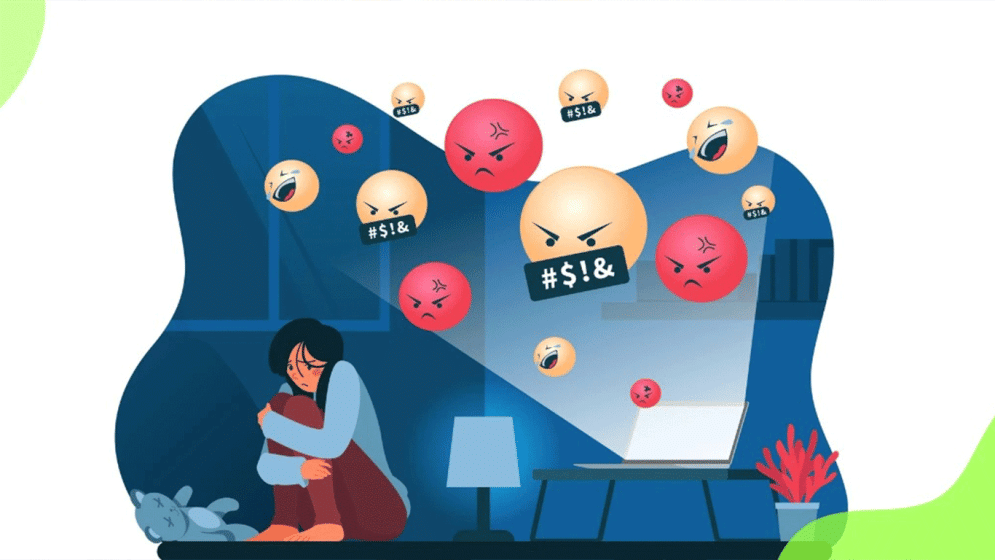
Representational Image
Social media has transformed the political battlefield. Facebook, YouTube, TikTok, X and messaging services such as WhatsApp are no longer simply channels of communication. They are places where political narratives are created, contested and amplified–often at a speed with which governments, journalists and traditional media struggle to keep pace.
That creates a difficult challenge for any
democracy. An elected government has a legitimate responsibility to protect
citizens and state institutions from foreign interference, terrorist
propaganda, incitement to violence, coordinated disinformation and digitally
organised attacks. But that responsibility cannot become a licence to suppress
criticism, journalism or political opposition.
Bangladesh has particular reason to be cautious. We
have already seen how broadly worded digital-security laws can become
instruments of repression. The cases of writer Mushtaq Ahmed and cartoonist
Ahmed Kabir Kishore became emblematic of concerns over the use of the Digital
Security Act and its implications for freedom of expression. International
rights groups also criticised the subsequent Cyber Security Act on similar
grounds.
The country subsequently repealed the Cyber Security
Act, 2023 and replaced it with the Cyber Security Ordinance, 2025. The
ordinance, gazetted on 21 May 2026, removed nine controversial provisions of
the earlier law.
Bangladesh now has the Cyber Security Act, 2026,
while the government is considering further amendments to the law. Parliament
also passed a Cyber Security (Amendment) Bill in June, including provisions
concerning harmful and defamatory AI-generated content.
This is therefore a good moment to look beyond our
borders. India, in particular, offers a model worth studying–not necessarily copying
wholesale.
India's important lesson
India has taken a more assertive approach to
intermediary responsibility through its Information Technology (Intermediary
Guidelines and Digital Media Ethics Code) Rules, 2021. The rules impose
due-diligence obligations on online intermediaries, with additional
requirements for significant social-media platforms.
Their February 2026 amendments are particularly
relevant to Bangladesh because they introduce a specific framework for
synthetically generated information–including AI-generated or manipulated
audio, visual and audiovisual material. Platforms are required to employ
technical measures concerning specified unlawful synthetic content, while other
synthetic material covered by the rules is subject to disclosure and related
safeguards.
The amendments also reduced, in specified
circumstances, the period for intermediaries to act on government or court
notices concerning unlawful content from 36 hours to three hours. The amended
rules took effect on 20 February.
That is a powerful regulatory tool, and it is not
without controversy. Three hours can be a remarkably short period in which to
determine whether politically sensitive material is genuinely unlawful or
merely offensive, satirical or critical.
Yet the underlying principle deserves Bangladesh's
attention: social-media platforms cannot always be treated as passive
noticeboards when their algorithms and recommendation systems can amplify
information to millions of people almost instantaneously.
The threat is not criticism. It is manipulation.
Bangladesh should be careful about how it defines
the threat.
A citizen criticising the government is not an enemy
of the state. Peaceful protest, investigative journalism, satire and opposition
politics are indispensable to a functioning democracy.
The greater danger is coordinated malicious
activity.
A sophisticated influence operation can combine fake
accounts, automated amplification, manipulated videos, fabricated documents,
paid advertising and coordinated activity across several platforms. What
appears to be spontaneous public sentiment may sometimes be the product of
organised amplification.
Artificial intelligence makes the problem more
acute. A fabricated video can make a political leader appear to say something
he never said. A cloned voice can create a fictitious telephone conversation. A
manipulated photograph can be circulated during a communal confrontation before
anyone has established its authenticity.
The question, therefore, should not simply be: Who
posted this?
It should also be: How was it amplified? Who
coordinated the amplification? Was the network authentic? And did the platform
take reasonable steps to prevent a demonstrably malicious operation from
reaching millions?
That is a more sophisticated approach to digital
security.
Regulate platforms, not political beliefs
The European Union offers another useful lesson.
Under the Digital Services Act, very large online
platforms and search engines must assess and mitigate systemic risks, including
risks to electoral processes, public discourse and fundamental rights. The
European Commission's latest assessment continues to examine risks arising from
the design and operation of major platforms.
Bangladesh need not reproduce the European system.
But it could require major platforms operating here to assess risks associated
with coordinated inauthentic behaviour, bot networks, election manipulation,
deepfakes and cross-platform campaigns intended to provoke violence.
Australia offers another useful example. Its
online-safety framework places obligations on digital services concerning recommender
systems, anonymous accounts, generative AI and coordinated high-volume attacks
across platforms.
The lesson from these jurisdictions is increasingly
clear: platform accountability should focus not only on individual pieces of
content but also on the systems that amplify harmful activity.
Speed matters–but so does due process
Digital misinformation has one particularly
dangerous characteristic: speed.
During an election, communal confrontation or
national emergency, a false claim can spread across several platforms before an
official correction reaches the same audience.
India's amended framework recognises that reality.
Bangladesh should consider whether it needs an emergency mechanism for narrowly
defined circumstances–for example, credible incitement to imminent violence,
terrorist propaganda, fabricated emergency instructions, impersonation of
public institutions or synthetic material demonstrably intended to trigger
serious disorder.
But speed cannot come at the expense of due process.
Government requests should identify the legal basis
and the specific material concerned. Platforms should have a meaningful avenue
of rapid review. Emergency decisions should be recorded and, where appropriate,
subject to independent or judicial scrutiny.
The principle should be speed with accountability,
not speed without accountability.
Bangladesh must not repeat its own mistakes
There is an equally important lesson at home.
The repeal of the 2023 law was significant precisely
because nine controversial provisions were removed from the framework. The
change reflected long-standing concerns about the criminalisation of speech and
the potential misuse of digital-security legislation.
That lesson should not be lost as Bangladesh moves
towards stronger regulation of AI-generated content.
The country should seek greater leverage over global
technology companies without giving the executive an unrestricted power to
determine what constitutes acceptable political speech.
Nor should allegations of foreign interference or
“anti-state” activity be enough by themselves. Such allegations require
evidence. Any official designation of a campaign as foreign-backed or
coordinated should be based on verifiable evidence and subject to independent
scrutiny.
The law should focus on conduct and demonstrable
harm: covert foreign influence operations where supported by evidence,
terrorist recruitment, incitement to imminent violence, cyberattacks,
fraudulent impersonation, coordinated inauthentic networks and deliberate manipulation
capable of producing serious harm.
It should not criminalise political disagreement.
What Bangladesh can borrow
Dhaka can selectively draw from several democratic
models.
From India, it can learn about stronger intermediary
obligations, rapid responses to unlawful content and explicit regulation of
synthetic media.
From the European Union, it can consider
systemic-risk assessments and greater transparency from the largest platforms.
From Australia, it can examine the advantages of a
specialist regulator with powers to demand information and assess online-safety
practices.
From the United Kingdom, it can consider an approach
that links certain online offences to identifiable harm and intent rather than
simply criminalising false information.
And from the United States, Bangladesh should take
the enduring lesson that governments must exercise particular restraint when
regulating political expression.
The objective should be neither unrestricted
platforms nor unrestricted government power.
It should be accountable platforms operating within
a rights-respecting legal framework.
Protect democracy, not the government from criticism
The distinction is fundamental.
The purpose of digital-security legislation should
not be to protect a government from criticism. An elected government must be
able to withstand criticism; that is the price of democratic accountability.
But neither should the state be expected to stand
helplessly while networks fabricate statements, impersonate public officials,
coordinate digital attacks or deliberately manufacture communal tensions.
The state has a legitimate duty to protect citizens
and democratic institutions from such operations.
What Bangladesh needs is an independent,
evidence-based mechanism capable of distinguishing a genuine security threat
from political dissent.
One possibility would be a specialised
digital-threat response mechanism involving cybersecurity professionals,
law-enforcement agencies, election authorities and independent legal experts.
Its mandate should be narrow. Every intervention should have a recorded legal
basis and an auditable trail. Platforms should have avenues of appeal, while an
independent oversight body should publish periodic data on government requests,
removals and successful challenges.
Such safeguards would make it harder for
digital-security powers to quietly become instruments of political censorship.
The real battle is over trust
The next generation of influence operations may not
seek to persuade citizens to support one particular party. A more damaging
objective could be to convince citizens that nothing is trustworthy–not the
government, not the media, not election authorities and not even the results of
an election.
That is a serious democratic vulnerability.
Bangladesh therefore needs to treat information
integrity as part of national security. But information integrity cannot mean
government-controlled truth.
The lesson from India's evolving framework is that
powerful platforms must accept greater responsibility for the information
ecosystems they create and amplify. The lesson from Europe, Australia and
elsewhere is that such responsibility must be accompanied by transparency,
proportionality and protection for legitimate speech.
Bangladesh should build a digital shield, not a
digital gag.
A strong democracy should not fear criticism.
It should be equipped to resist manipulation.