


 For all latest news, follow the Daily Sun's Google News channel.


Why a President committed to political ideology is needed
Special Correspondent, Dhaka
Published: 06 Aug 2026, 01:57 PM
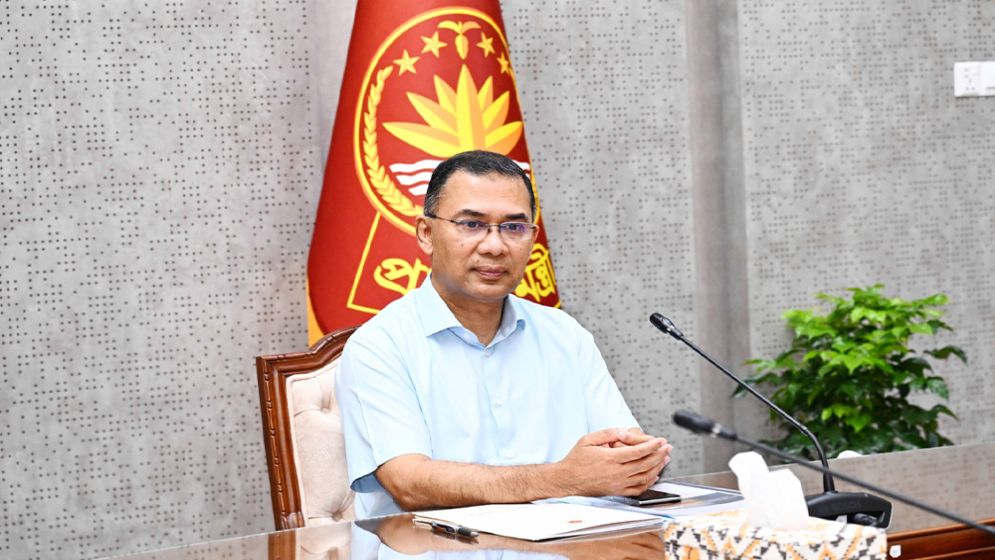
Prime Minister Tarique Rahman. Photo : PMO
Just like the 13th National Parliament, the Bangladesh Nationalist Party (BNP) came to power with a landslide victory in the October 2001 elections. The four-party alliance led by Begum Khaleda Zia achieved a massive landslide. After forming the government, the BNP elected Professor Badruddoza Chowdhury, the party’s founding Secretary-General, as the President. However, the BNP leadership did not appreciate Professor Chowdhury’s stance on several issues. Before the BNP could take any formal negative action against him, Professor Chowdhury resigned.
Prior to the election of a new President, the then Speaker, Barrister Jamiruddin Sircar, served as the Acting President. Many anticipated that Jamiruddin Sircar would become the next President. However, surprising everyone, the BNP chose Dr. Iajuddin Ahmed, a professor at Dhaka University, for the presidency. BNP selected a neutral and civil society representative under the impression that the President would remain above all controversy. Although Iajuddin was involved in university-centric teacher politics, he was not directly involved in BNP’s core political affairs; nor was he the top leader of the White Panel in teacher politics. Iajuddin was likely made President out of a desire to elect a non-partisan individual to the highest constitutional post in the country. Furthermore, after the bitter experience with party leader Professor Badruddoza Chowdhury, the BNP did not want to appoint anyone directly affiliated with the party as President.
However, the BNP had to pay a heavy price for this decision. Iajuddin was one of those whose incompetence, failures, and conspiracies led to the unconstitutional 1/11 government coming to power in 2007. During extreme crisis, he displayed boundless failure in fulfilling the duty entrusted to him to protect the Constitution and democracy. As President, Iajuddin proved himself to be incompetent, unfit, and spineless. His reign has found its place in the dustbin of history.
In late 2006, towards the end of the BNP government's tenure, the Awami League launched movements on various issues. According to standard constitutional rules, the latest retired Chief Justice, K.M. Hasan, was supposed to become the head of the upcoming Caretaker Government. However, the Awami League raised unreasonable objections regarding his appointment. To prevent Justice K.M. Hasan from becoming the head of the Caretaker Government, they enforced various violent programs including strikes, blockades, and arson, creating extreme chaos and anarchy in the country.
Under such a dire situation, Justice Hasan himself declined to accept the position. Following constitutional provisions after all other options were exhausted, President Iajuddin was declared the head of the Caretaker Government. The opposition, including the Awami League, accepted this decision. Ten advisors nominated by the BNP and Awami League took oath. January 22, 2007, was announced as Election Day. However, due to Iajuddin’s boundless incompetence, mistakes, and irresponsible behavior during this period, chaos broke out in the country once again.
A section of civil society and several foreign states had long been looking for an opportunity to establish long-term unelected rule in Bangladesh. To this end, they were systematically stoking divisions between the two major political parties. The execution of their plan became effortless due to a spineless President like Iajuddin. In 2007, an artificial political crisis was engineered, which was made possible because of Iajuddin. At the last minute, the Awami League withdrew from the election, followed by the Jatiya Party. The anti-democratic conspirators took advantage of this.
A group of ambitious military officers led by the then Army Chief, Moeen U Ahmed, entered Bangabhaban and forced Iajuddin to resign from the post of Chief Caretaker Advisor at gunpoint. They made him read a dictated address to the nation. The blueprint of 1/11 was executed by keeping the gun on Iajuddin's shoulder. On that day, because of the fear and cowardly behavior of the individual occupying the highest constitutional position, Bangladesh's democracy was taken hostage.
In this context, we need to look back at 1996. A similar situation had arisen at Bangabhaban back then as well. At that time, the President was Abdur Rahman Biswas. He was not a prominent leader of the BNP initially, but through his own merit as a dedicated grassroots leader, he rose to the highest constitutional post. In 1996, the Awami League and Jamaat joined forces to demand a non-partisan Caretaker Government and resigned from Parliament. However, determined to maintain democracy and constitutional continuity, Begum Khaleda Zia defied all odds and held the 15th February National Parliament election in 1996.
The new parliament solely amended the Constitution regarding the Caretaker Government system. Within the shortest possible time, Begum Zia handed over power to the Caretaker Government led by former Chief Justice Muhammad Habibur Rahman. During this period too, there were conspiracies to foil the election and impede democracy.
According to the provisions of the Caretaker Government, control of the armed forces was vested in the President. The then-President Abdur Rahman Biswas, utilizing his constitutional power and authority, reshuffled several key positions in the military. General Nasim, the then Army Chief, strongly objected to this. Like Moeen U Ahmed, he too marched into Bangabhaban armed, aiming to stage a military coup. But because of his political consciousness and steadfast dedication to duty, Abdur Rahman Biswas did not bow down. He exercised his constitutional powers to dismiss the Army Chief.
President Abdur Rahman Biswas’s political firmness saved the country from an inevitable conflict and the threat of a military coup on that day. After appointing General Muhammad Mahbubur Rahman as the new Army Chief, the President firmly suppressed the military rebellion. Elections were held on time. Needless to say, the BNP did not win that election; the Awami League won and formed the government. But the real winner was democracy. A person with political consciousness becomes courageous in times of crisis to protect democracy and does not bow before the barrel of a gun.
If the BNP Chairperson and Prime Minister consider these two incidents when nominating a President, making a decision will be easier for them. We know that the BNP Standing Committee has given sole authority to the party chief to decide on the presidential nomination. Tarique Rahman will surely evaluate past experiences before making a decision.
The BNP might prefer a high-profile, famous individual as President, but will that ultimately benefit the people or the BNP? In the past, we have seen that such individuals prioritize their personal interests over the interests of the country’s people. They use the position to boost their own image, placing personal interests above national ones.
The upcoming presidential election is vital for several reasons. The non-partisan, neutral Caretaker Government system has been restored in the country. According to the ruling of the highest court, the next National Parliament election will be held under a Caretaker Government. The process of handing over power from an elected government to a Caretaker Government is complex and sensitive.
During this period, various political tensions and divisions surface, creating disunity and conflict among political parties. Having a President with strong character, determination, and political judgment makes navigating such crises easier. A President acceptable to all political parties provides a platform where all sides can express their views and find a path toward resolving political crises through dialogue. Therefore, the post of President is exceptionally crucial this time.
Selecting someone as President who previously served as the executive head of the state or government could plunge the BNP into fresh complications. If such a person assumes the highest constitutional post, they may attempt to complete their unfinished business and reinstate their preferred individuals in the administration, raising concerns of a dual rule in state governance.
The BNP received the mandate of the people based on its 31-point outline. If someone who does not believe in the party’s ideology becomes President, they will focus on fulfilling their personal agenda rather than the 31 points. Consequently, a conflict of interest with the government will inevitably arise, potentially imperiling democracy. Anti-democratic forces remain active; those who wished to stay in power without votes for another 50 years have not abandoned their agenda. Bangladesh’s democracy is still not entirely out of danger.
Most importantly, the BNP possesses its own distinct political culture and ideology. Democracy will only be consolidated if the President embodies this political culture and ideology, establishing a balanced government in the country. It must be remembered that a patriotic politician is far more essential for the nation than a power-hungry intellectual.