


 For all latest news, follow the Daily Sun's Google News channel.


Coming Abroad Is Easy, Surviving Is Not
In Germany, migrants earn on average 34 per cent less than local workers with the same qualifications, and the gap is widest when people first arrive
Jannatul Fardous Joty
Published: 31 Jul 2026, 05:08 PM
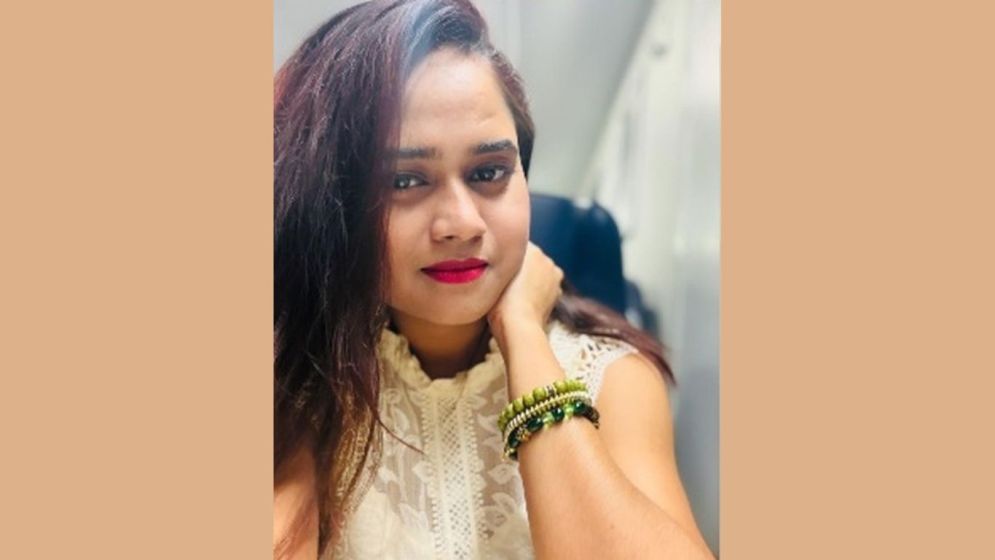
Photo: Courtesy
I came to Berlin on a student visa without knowing one word of German. Almost two years later, this is what it cost me — and what I want to tell anyone who is about to do the same.
On my second day in Berlin, I set out for my
university.
I had the route on my phone. A younger friend of
mine studies at TH Wildau too. He told me to meet him at one place and from
there he would take me the rest of the way. Two buses and one U-Bahn. I had
looked at the map the night before. I looked at it again, standing on the
street. I still could not understand how to get there.
A German woman finally stopped and explained it to
me. S-Bahn is the train that runs above the ground. U-Bahn is the train that
runs under it.
That was the whole lesson. Two letters. And standing
on that Berlin footpath in December, I remember thinking, Oh My God. I am
finished.
The supermarket was worse because there is nobody to
ask. Every aisle is labelled in German. I would say the English name of a
product to a shop worker and get a blank face back. They did not understand me
and they could not tell me which aisle to try. As a Muslim I also had to work
out what was halal and what was not. Where do I buy meat? Which rice do I buy?
There is no rice here like the rice at home. Every kind I carried back tasted
of polao to me. In the end I gave away almost twenty kilos of rice because I
could not eat it.
None of this was supposed to happen to me. My
Master's at TH Wildau (European Business
Management ) is taught in English. German is not compulsory in my course. So before
I came, I did not think learning it mattered. And when my offer letter arrived
and I saw that I would be living in Berlin, the capital, I felt lucky. I don't
know German, I thought but I am going to the capital city. English will be
enough.
English is not enough. Older people here will not
even look at you in English, let alone talk to you.
Then my real fight began and it was about work.
I applied for cleaning jobs and restaurant jobs.
Even cleaning jobs here want German. I walked into restaurants and the first
question was always whether I spoke German. I did not spoke Deutsch, not one
word, at that time. In Bangladesh I worked at City Bank. I have never worked in
a restaurant in my life. None of that mattered. What mattered was the one
language I did not have.
I was sending more than a hundred applications a
day. Nothing came back. I have never been rejected so many times in my life as
I have been rejected here.
I have been helped here and I want to say that
clearly. But I have been insulted many more times than I have been helped.
Constant humiliation. Backbiting, rumours, unethical proposals and more. Our
own people here love to gossip about one another and it is ugly.
And still, there are two or three people close to me
who trust me completely. They helped me learn German. They gave me directions.
They gave me guidelines. They told me what would happen if I did this instead
of that. Whatever stability I have today, I have because of them.
Now I want to put some numbers beside my story,
because I am not a special case, and this is not only about Germany.
In Germany, migrants earn on average 34 per cent
less than local workers with the same qualifications, and the gap is widest
when people first arrive. Italy has the largest Bangladeshi community in mainland
Europe, and the Italian government publishes job figures for each community.
About 51 per cent of Bangladeshis there have work, against 58 per cent for
non-EU residents overall. Among Bangladeshi women in Italy, only 6.5 per cent
have a job. Ninety-two per cent are not even looking for one. Same country as
the men. Same legal status. The difference is the language.
In Greece, the number of Bangladeshis holding a
residence permit rose from 10,566 at the end of 2023 to 15,119 by September
2024, almost all of them in seasonal farm work. In Portugal the legal minimum
wage is about €820 a month, but reports from the berry farms of the Alentejo
found workers keeping only €100 to €150 after costs, while owing €15,000 to
€20,000 to the agents who sent them. In Malta, recruiters have offered
Bangladeshis jobs at €600 a month when the legal minimum is €925. Romania gives
out thousands of work permits to Bangladeshis and almost nobody stays — up to
2020, only about 161 Bangladeshis were recorded as actually living there.
And in 2024, 43,236 Bangladeshis applied for asylum
in Europe. Ninety-six per cent were refused.
Look at these numbers before you choose a country.
Not after.
What has helped me most is YouTube, and it still
does. I have learned a lot from it. I use apps to practise reading and writing.
What did nothing at all was online applications. LinkedIn did nothing. Most of
the time there is not even a rejection — just silence. As a job market for
someone in my position, it is bad, and I would rather say so than pretend.
I am still doing my Master's. I am trying to finish
quickly, because I do not want to stay in part-time work much longer. After
about a year and a half here, and a lot of struggle, I am finally somewhere
close to normal. Most of my situation is under control now. Alhamdulillah for
everything.
I will not pretend the rest is fine. Life here is
depressing, and many of us live inside that depression without ever saying it
out loud. That is the honest version. Coming abroad is easy. Surviving here is
hard. Many people give up and go back. The work does not come. Only the ones
who stay know how heavy it really is.
“Language is the thing that turns a visa into a
living.”
So here is what I want to tell you, and it is not
only about Germany. If you are going to any country where English is not the
main language — Italy, France, Portugal, Greece, Romania, anywhere — study it
before you go. The city. The transport. And above everything, the language. I
did not do that, and it cost me almost two years in which I learned very little
else.
If you are coming as a student, do not build your
plan around odd jobs. Odd jobs here are hard. They need real physical strength.
For women they are often not suitable at all, and nobody tells you that in the
consultancy office in Dhaka.
What I have learned by living it is simple. Language
is the thing that turns a visa into a living. It opens the work. It lifts the
income. It ends the unemployment. It would be better for our country too — more
of our people abroad actually earning, actually sending money home.
Two letters, U and S, defeated me on my second day.
Learn them before you land.
The writer is a master's student in European Business Management at TH Wildau, Berlin