



 For all latest news, follow the Daily Sun's Google News channel.


Allocation for Education, Health Must Increase in National Budget
A country prospers when it can educate its children and the youth properly and ensure sound health for its citizens

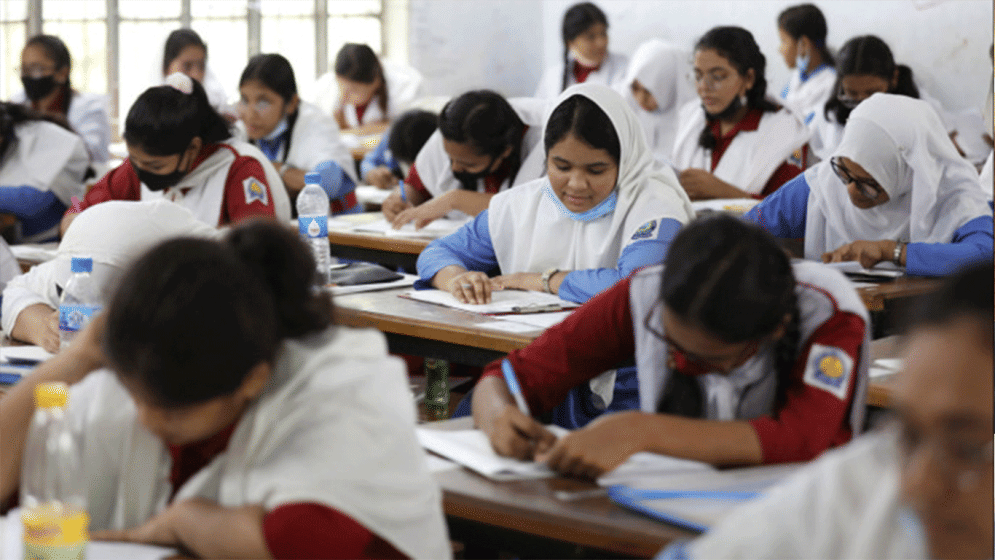
File Photo
Tk1.23 lakh crore sounds enormous at first sight. When compared to Bangladesh’s gross domestic product (GDP), it is only 2%. This is the amount which would probably be allocated for the education sector in the upcoming national budget for the 2026-2027 fiscal year. The good news is that the allocation has increased by 0.5% from the previous budget formulated by the interim government led by Muhammad Yunus, while prior to that period, the allocations were much lower. But is the increased allocation enough for ensuring quality education for all?
The education sector comprises primary, secondary
and higher education, with general, technical and madrasa-based learning
systems. The money that would be allocated by the government for this sector
would be divided into all these mediums and tiers of education, with more money
going to higher education and less money going to the lower tiers. No matter
where the money goes, speculation about the recipients of this money is growing.
When in power, Sheikh Hasina, the ousted prime
minister who fled to India following a mass uprising in 2024, spent most of the
allocation for the education sector on building beautiful school buildings all
over the country. One of her successful
publicity stunts was the distribution of free textbooks for the primary and
secondary students, with critics pondering over the contents that those books
held. On the one hand the education sector received a minuscule allocation, but on the other hand the sector lacked
quality and suffered from an acute manpower shortage. No matter how much of an
increase in budget allocation this sector gets, these issues still persist.
The previous governments have failed miserably to
ensure the wellbeing of teachers, especially those who teach at primary and
non-government secondary schools. Previously, the streets of Dhaka saw
continuous demonstrations by these
teachers, who were underpaid and lacked
any employment benefits. There were some instances when the law enforcers fired
rubber bullets, tear gas shells and
sprayed hot water to disperse them, let alone the arrests and detentions. In a
country where teachers, who are
responsible for building the country’s future by educating children, are
insulted and deprived, an increase in budget allocation will not mean much.
It takes at least 17 years to finish schooling and
higher education in Bangladesh. Even after this period, most graduates fail to
communicate properly, both in Bangla and English, whether verbally or in
written format. Most graduates do not know how to write an email properly, how
to create a basic PowerPoint
presentation, how to handle stress and act strategically at work, and most
importantly, how to negotiate career-related issues, including salary,
increment and promotion. According to media
reports, around two million graduates are being added to the country’s job
market every year, without any link between their university majors and their
potential career trajectory. These are some of the underlying issues that are paralysing Bangladesh’s economy and society,
which need to be addressed before increasing the budget allocation, as a failure
to do so will result in wastage of
hard-earned government resources.
When we look at
the health sector of Bangladesh, the picture gets much grimmer. It has traditionally been one of the most
neglected sectors of the country’s economy, getting only 5% of the national
budget as allocation. This has resulted in
dilapidated, primitive, substandard healthcare facilities and a shortage of workforce across the country. Hospitals, clinics
and health complexes outside Dhaka lack much-needed personnel and equipment to
treat people, while the best doctors often show an aversion to residing in rural areas and prefer practising in major urban centres like Dhaka.
As a result, patients have to incur a
huge financial burden to receive treatment by
travelling to Dhaka to seek healthcare services.
Even in the
capital, very few healthcare facilities can cater to the growing demand for
treatment of complex illnesses, and well-established institutions routinely
fail to ensure basic services like postnatal care, as has been the case with Ad-din Medical College Hospital
recently, where six newborns died due to negligence by the hospital
authorities.
Treatment of illnesses like cancer has not achieved
satisfactory results yet, and a huge amount of foreign currency is being lost
through medical tourism by Bangladeshi patients who have to travel to India or
Singapore for advanced treatment. Although thousands of doctors are being
produced by the country’s medical colleges every year, the government health
facilities still lack the required number of doctors. The health sector is
also plagued by local brain drain, as a lot of MBBS degree holders avoid
joining the medical profession and choose administrative or diplomatic careers.
These issues prove that the government must increase its budget allocation for
the health sector manifold if it wants to retain talent, stop capital flight,
and ensure a healthy citizenry who will in turn contribute to the best of their
abilities for the country’s benefit.
A country prospers when it can educate its children
and the youth properly and ensure
sound health for its citizens, which is needed to excel in academic ventures.
One way to ensure economic development is through increasing budget allocation
for these two sectors and ensuring that the money is being used properly and
adequately.
The writer is an online journalist at the Daily Sun. He can be reached at: [email protected]