




 For all latest news, follow the Daily Sun's Google News channel.


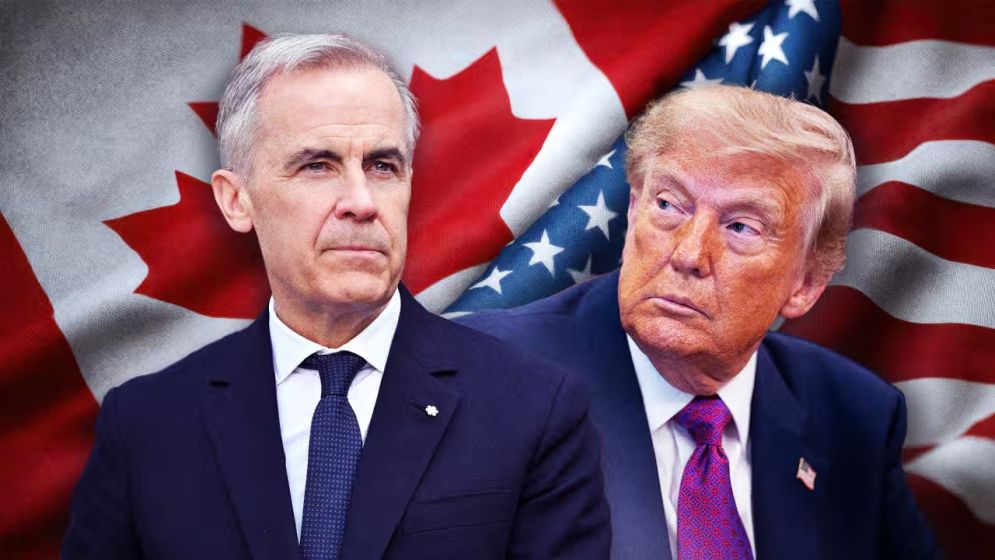
For generations, Canada and the United States have managed a relationship shaped by geography but refined by history. The world’s longest peaceful border has supported deeply integrated economies, shared security frameworks and a continental partnership that has endured global wars, ideological shifts and political turbulence. Canada has long been one of America’s most reliable allies. Yet during Donald Trump’s presidency, this relationship has been subjected to an unusual combination of tariff pressure, political provocation and open challenges to Canadian sovereignty. The familiar explanations – trade disputes, defence spending, critical minerals, Arctic access and Trump’s preference for maximalist negotiation – capture parts of the story, but do not fully explain why Trump has repeatedly suggested that Canada should become America’s 51st state.
A different variable deserves consideration: presidential legacy. This is a hypothesis, not a definitive account of an unspoken motive. But viewed through this lens, disparate actions begin to align. The impulse to secure a lasting presidential legacy may help explain what otherwise appears to be an assortment of unrelated ambitions. Trump’s pursuit of Greenland and the Nobel Peace Prize, efforts to attach his name to the Kennedy Center, and the demolition of the White House East Wing to construct a monumental ballroom may seem disconnected. Each has an explanation of its own. Greenland has strategic value. The ballroom can be defended as functional space. The Nobel pursuit reflects his claims of peace-making. Yet considered collectively, these initiatives suggest a deeper preoccupation with permanence. The pattern extends even to national coinage. Congress authorised special 2026 dollar coinage for America’s 250th anniversary, but it did not specifically vote to place Trump’s portrait on it. The US Mint subsequently produced a dollar coin bearing his image. Separately, the Mint announced a one-ounce 24-karat gold proof coin carrying Trump’s likeness, whose design he personally approved. The episode adds another tangible dimension to the legacy hypothesis. Trump has said the new ballroom would serve the country for “hopefully, Centuries into the future!” Buildings, territorial changes, institutional names, international prizes and images struck in gold, all share one quality: they can outlive the political moment that produced them. His first-term effort to persuade North Korea to abandon its nuclear weapons ended without denuclearisation, while his tariff-driven ‘Make America Great Again’ doctrine disrupted established trading relationships and generated lasting controversy. Against that record, compelling Iran to surrender or permanently neutralise its stockpile of highly enriched uranium could offer something qualitatively different: an unmistakable strategic achievement capable of becoming a defining presidential legacy.
Political slogans have limited half-lives. ‘Make America Great Again’ reshaped American politics and returned Trump to office, but slogans eventually recede into historical quotation. Territorial acquisition, monumental architecture, names affixed to national institutions, internationally recognised achievements, and major strategic breakthroughs can endure for generations. Altering a continental map endures longest of all. Jefferson remains inseparable from the Louisiana Purchase. Alaska was acquired from Russia under Andrew Johnson. James K. Polk’s presidency is defined in part by territorial expansion. Whatever one’s judgement of those episodes, presidents associated with enlarging the country occupy unusually durable places in American history.
Seen from that perspective, Canada represents an almost unimaginable legacy. Absorbing the world’s second-largest country by area would transform American geography, vastly extend its Arctic presence and place enormous reserves of energy, minerals and freshwater within US territory. But Canada is not real estate, and Canadians are not Americans awaiting an attractive offer. Trump has explicitly spoken of using ‘economic force’, rather than military force, when discussing Canada. His administration has raised trade grievances, and not every tariff can be interpreted as part of an annexation strategy. But once a president repeatedly questions another country’s sovereignty, extraordinary economic pressure cannot be interpreted entirely separately from that rhetoric.
Even the Gordie Howe International Bridge over the Detroit River, connecting Detroit, Michigan, with Windsor, Ontario, became entangled in this dynamic. Financed by Canada to expand capacity across the vital Windsor-Detroit trade corridor, it should have been an uncomplicated symbol of continental cooperation. Before its July opening, Trump threatened to block the bridge, objecting to the existing arrangement and pressing for a larger US share of toll revenues. A structure built to connect the two countries thus became, paradoxically, another symbol of their political estrangement.
The paradox is that pressure intended to draw Canada more tightly into the American orbit has coincided with movement in the opposite direction. Trump’s tariff and annexation rhetoric has strengthened Canadian nationalism, encouraged boycotts of American goods and intensified interest in reducing economic dependence on the United States. Even in Quebec, where separatism has challenged Canadian unity for generations, recent polling has shown diminished enthusiasm for separation amid tensions with Washington.
Allies can disagree over tariffs, defence contributions and market access. They can also negotiate hard and retaliate when necessary. But there is a fundamental difference between bargaining with a neighbour and repeatedly questioning that neighbour’s right to remain a sovereign country. Canadian leaders across the political spectrum have rejected the 51st-state idea. Nor should today’s confrontation be mistaken for the permanent condition of Canadian-American relations. The two countries have developed something approaching a continental twinship: sovereign nations with distinct identities yet joined closely by geography, commerce, security, infrastructure and human relationships across a remarkably peaceful border.
Presidential legacy, however, is not determined solely by achievements a president wishes history to remember. Unwanted distinctions become part of the historical record as well. Trump remains the only American president to have been impeached twice by the House of Representatives, although the Senate acquitted him on both occasions. Whether those impeachments were deserved or politically motivated remains a matter of disagreement; their place in his presidential record does not. Just as Watergate and resignation remain inseparable from Richard Nixon’s legacy despite the diplomatic and other achievements of his presidency, impeachment will remain part of the historical accounting of Trump’s.
Canada will have to navigate the Trump presidency while defending its sovereignty and economic interests. It may emerge more diversified and more self-reliant. But presidents leave office; geography does not. The enduring forces of geography, economics and shared history will continue to pull the continental twins towards cooperation. Neither country benefits from transforming the other into an adversary. And here lies the final paradox of the legacy impulse. If Trump hoped to make history by drawing Canada into the United States, he may instead be remembered for strengthening Canadian nationalism and disrupting one of America’s most successful international relationships. In the long arc of history, the legacy he sought may be eclipsed by the legacy he inadvertently created.
Dr Abdullah A Dewan is a former physicist and nuclear engineer at the Bangladesh Atomic Energy Commission and Professor Emeritus of Economics at Eastern Michigan University, USA.
Humayun Kabir is a retired senior official of the UN living in Toronto