


 For all latest news, follow the Daily Sun's Google News channel.


‘US trade deal may constrain energy options; fiscal pressure deepens’
Daily Sun Report, Dhaka
Published: 01 Apr 2026, 12:00 AM
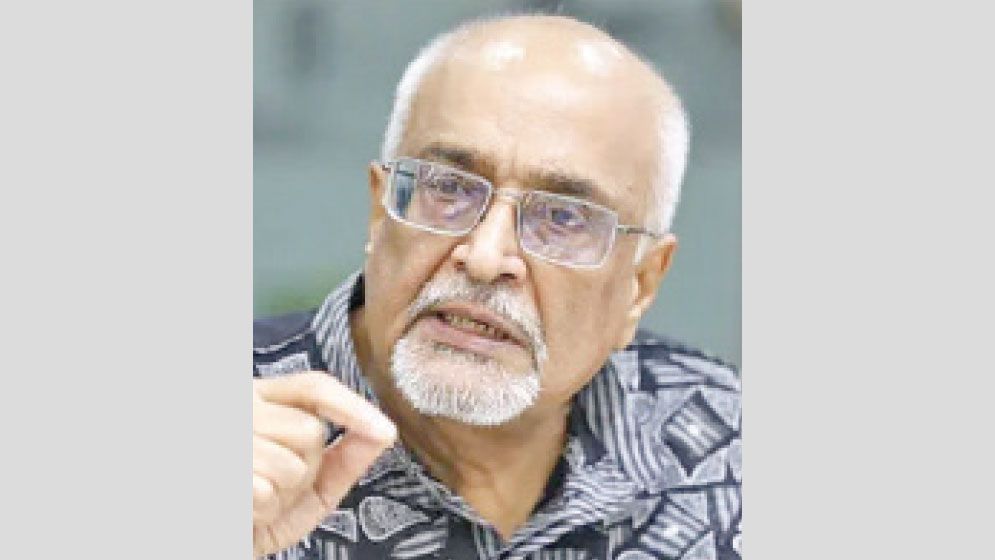
Eminent economist Debapriya Bhattacharya has cautioned that Bangladesh’s reciprocal trade agreement with the United States could significantly restrict the country’s energy sourcing flexibility, as the government prepares its first national budget under mounting economic pressure and limited fiscal space.
Speaking at a pre-budget media briefing organised by Citizen’s Platform for SDGs on Tuesday, Debapriya said provisions in the agreement limit Bangladesh’s ability to engage with countries under US sanctions and classify several economies as “non-market”, complicating imports from alternative sources such as Russia and China.
Bangladesh is currently seeking to import around 6 lakh tonnes of oil from Russia and has requested clearance from Washington.
However, the evolving geopolitical context is increasingly linking foreign policy with economic management, raising concerns about future engagement with key partners.
Debapriya, also convenor of the Citizen’s Platform for SDGs, warned that the country is facing a “three-pronged” macroeconomic impact spanning fiscal, external and monetary sectors.
He noted that rising global energy prices could increase Bangladesh’s annual fuel import costs by about $4.8 billion, equivalent to roughly 1.1% of GDP, widening the current account deficit. Higher import bills are also pushing up demand for foreign currency, putting depreciation pressure on the taka.
At the same time, the nearly Tk37,000 crore subsidy burden in the power sector is creating tensions with reform commitments under the International Monetary Fund programme, particularly regarding subsidy rationalisation.
Regional instability, especially in the Gulf, could further threaten remittance inflows, which account for nearly half of the country’s total remittances and serve as a key stabiliser of the balance of payments.
“Increased fuel costs, if fully passed through, risk fuelling high inflation,” he added.
Hard budget constraint
Focusing on the upcoming budget, Debapriya said the new government is operating under a “hard budget constraint” due to structural weaknesses, unfinished reforms, and rising economic stress.
He identified four key challenges: inherited structural problems and incomplete reforms, pressure to fulfil electoral commitments while advancing reforms, limited fiscal space due to weak revenue mobilisation, and persistent external sector imbalances.
Debapriya stressed that the government must take difficult policy decisions, particularly in managing fuel pricing and taxation. Authorities face a dilemma between maintaining fuel taxes to protect revenue or reducing them to ease consumer pressure.
He noted that price adjustments in areas such as jet fuel have already been undertaken to address the financial deficit of the Bangladesh Power Development Board, which stands at around Tk55,600 crore.
Debapriya emphasised the need for a mix of short-term stabilisation and medium-term planning. He recommended preparing an immediate three-to-four-month-long policy framework, alongside a three-year Medium-Term Budgetary Framework to ensure fiscal sustainability.
He called for restructuring subsidies, particularly in agriculture and energy, to eliminate inefficiencies and ensure fair distribution. “It is important to assess whether subsidies are benefiting the poor or disproportionately favouring the rich,” he said, suggesting a gradual phase-out of cash incentives.
The economist also urged the formation of a task force to review and rationalise the Annual Development Programme (ADP) within a short timeframe, warning that continuing with existing projects without reform would not improve outcomes.
Revenue and governance reforms
To expand fiscal space, Debapriya stressed the importance of increasing revenue collection through political commitment and administrative reforms. He recommended reducing tax exemptions, broadening the tax base, enhancing compliance through digitalisation, and introducing taxes on wealth.
He also suggested phasing out tax holidays and expediting the process of restructuring the National Board of Revenue.
On public sector wages, Debapriya said the current government should form its own pay commission rather than directly adopting recommendations made by the previous administration.
Highlighting the need to recover illicit financial flows, he said laundered money must be brought back through legal processes, including selling seized assets both at home and abroad.
Debapriya concluded by warning that failure to manage the energy crisis and broader macroeconomic pressures could lead to deeper instability.
Read More