


 For all latest news, follow the Daily Sun's Google News channel.


300 children receive free eye care from Bashundhara Group
Myopia, or nearsightedness, is one of the common vision problems among children
Daily Sun Report, Dhaka
Published: 12 Oct 2026, 10:04 PM
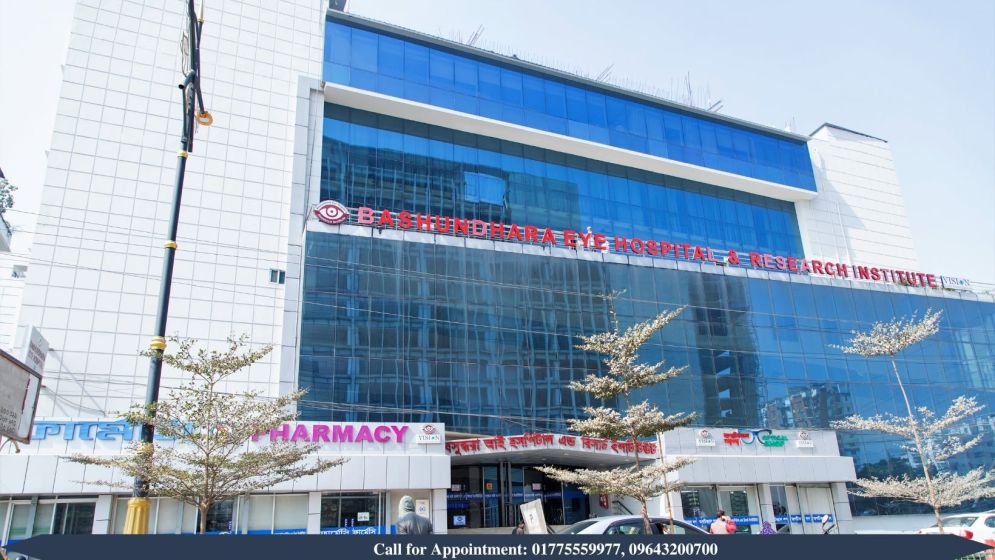
Photo: Collected
Bashundhara Eye Hospital and Research Institute has provided free eye care services to around 300 young students at Reverie School in the capital to identify vision problems at an early stage.
The eye screening camp was held on Monday at the
school in Bashundhara Residential Area, from 10am to 2pm. Nearly 300 students
from playgroup to nursery took part in the programme, receiving vision tests,
examinations of different parts of their eyes and necessary medical advice.
During the initial screening, doctors tested the
children's visual acuity using a Snellen chart, which requires them to identify
letters from a distance. They then used slit lamps to examine different parts
of the eyes, including the cornea, iris and lens, and checked for conditions
such as infections, corneal injuries and cataracts. The examinations also
identified children with refractive errors.
Dr Tasruba Shahnaz, a consultant at Bashundhara Eye
Hospital and Research Institute, said preliminary examinations found that at
least 10 out of every 20 children had some form of refractive error, many of
which had previously gone undetected.
She said excessive mobile phone use, sitting too
close to screens, limited opportunities for outdoor play and prolonged focus on
nearby objects could contribute to eye discomfort and vision-related problems
among children.
Headaches, eye pain, watery eyes, difficulty
concentrating on studies and a tendency to watch television from very close
distances may also indicate potential vision problems, she added.
Myopia, or nearsightedness, is one of the common
vision problems among children. Those affected can see nearby objects clearly
but have difficulty seeing distant objects, making it harder to read classroom
boards and potentially affecting their studies and daily activities.
Dr Md Ahnak Shahriar, a senior medical officer at
the institute, said it was important to detect myopia and hypermetropia, or
farsightedness, during childhood. Appropriate glasses and treatment can help
manage vision problems and support normal visual development.
He warned that prolonged undetected refractive
errors could interfere with visual development, while severe myopia could
increase the risk of retinal complications later in life. He recommended that
children undergo eye examinations at least once a year and before starting
school.
Mohammad Ismail Hossain, head of the Hifzul Quran
department at Reverie School, said he discovered through the camp that his own
child had an eye problem.
He said the condition might have remained undetected
for longer without the initiative, adding that children often struggle to
explain their vision difficulties, making it harder for parents to recognise
problems at an early stage.
According to Hossain, doctors also cautioned
students about excessive screen time and provided guidance on proper eye care.
Organisers said the programme aimed to identify
vision problems early and raise awareness about children's eye health. They
emphasised limiting children's mobile phone use, encouraging outdoor activities
and spending time in daylight, and arranging regular eye examinations.
The initiative is being carried out under the
guidance and vision of Bashundhara Group Chairman Ahmed Akbar Sobhan and the
supervision of the Vision Care Foundation. Since its establishment in 2014, the
foundation has been providing free eye care services in different districts
across Bangladesh.
Bashundhara Eye Hospital and Research Institute
conducts free eye camps nationwide to bring eye care services closer to
underprivileged people. The camps provide eye examinations, specialist
consultations and medicines free of charge.
The Bashundhara Group also arranges free surgeries
in Dhaka for patients suffering from cataracts, pterygium and tear duct
problems, covering their treatment, medicines, accommodation, meals and
transportation.