


 For all latest news, follow the Daily Sun's Google News channel.


Swapan urges action as 5.5% of Bangladeshi youth use emerging tobacco
Pathology and Research Department Head Prof Sohel Reza Chowdhury delivered the welcome address
Daily Sun Report, DU
Published: 10 Sep 2026, 09:19 PM
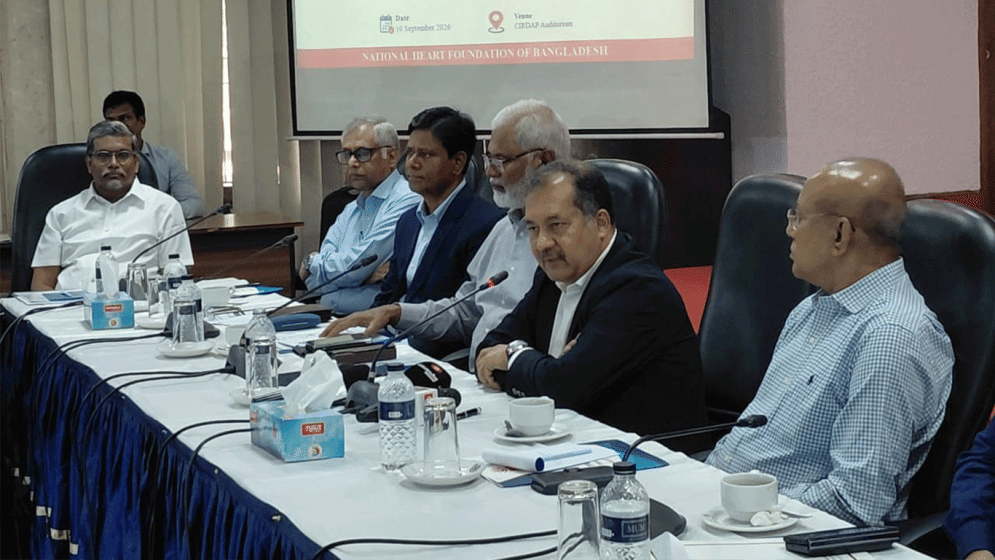
Photo: Daily Sun
Prime Minister’s Political Adviser Zahir Uddin Swapan has called for coordinated measures to prevent the spread of emerging tobacco and nicotine products among young people, warning that easy availability and marketing pose serious addiction risks.
Swapan, who also chairs the parliamentary standing
committee on planning ministry, made the remarks as chief guest at a study
dissemination event organised by the National Heart Foundation of Bangladesh at
the CIRDAP Auditorium in Dhaka on Thursday.
A new study titled "Emerging Tobacco Product
Use Among Bangladeshi Youth" revealed that 5.5% of Bangladeshi youth aged
18 to 24 currently use emerging tobacco and nicotine products, including
e-cigarettes, heated tobacco products (HTPs), and nicotine pouches.
The online survey, conducted between March and July
2025 among 524 respondents, found that 28.1% of young people had used at least
one such product during their lifetime.
E-cigarettes emerged as the most popular item with
4.6% reporting current use, followed by nicotine pouches at 1.3% and HTPs at 0.8%.
Male youth recorded a significantly higher lifetime usage rate at 34.4%
compared to 5.3% among female participants.
"Effective steps are needed to prevent the
spread of new types of tobacco products to protect the young generation from
nicotine addiction," Swapan said. "In addition to conventional
tobacco products, the marketing and availability of new products such as
e-cigarettes, heated tobacco products and nicotine pouches can create new risks
for young people. The information emerging from the study will play an
important role in strengthening policymaking and tobacco control
activities."
The study found a strong link between traditional
smoking and novel nicotine products, showing that 15.4% of current conventional
cigarette smokers also use novel tobacco products, compared to just 1.6% among
non-smokers.
Peer pressure was the leading motivation for use at
37.9%, followed by replacing conventional tobacco at 34.5% and seeking specific
nicotine levels at 31%.
Special guest and Member of Parliament Abu Mansur
Sakhawat Hasan highlighted the health risks facing young people. "The use
of tobacco and nicotine products seriously harms public health, and the use of
these products among young people increases their risk of nicotine
addiction," he said. "The availability and attractive marketing of
new types of tobacco products can draw young people towards them. Therefore,
authority must reduce the availability of these products and ensure effective
control over advertising, promotion, and sales."
Retail and social media channels drive product
distribution and exposure. Around 37.9% of current users bought items from
specialty vape shops, while only 24.1% were asked to prove their age.
Furthermore, 26% of respondents saw point-of-sale advertisements,
and 20.8% encountered marketing on social media, with Facebook leading exposure
at 89%.
Presiding over the event, National Heart Foundation
President Prof Khandaker Abdul Awal Rizvi cautioned against predatory marketing
tactics. "Various marketing strategies make new types of tobacco products
attractive to young people, including false claims that e-cigarettes are less
harmful and help people quit smoking," he said.
"The study's findings on social media and
retail marketing serve as a stark warning for public health. To protect young
people from nicotine addiction, authorities must strictly control advertising,
promotion, and sponsorship, while strictly enforcing age verification."
Pathology and Research Department Head Prof Sohel
Reza Chowdhury delivered the welcome address, while Aruna Sarkar presented the
research findings.
Special guests including Abu Mansur Sakhawat Hasan,
Ministry of Textiles and Jute Secretary Sharaf Uddin Ahmed Chowdhury, CTF South
Asia Programs Regional Director Mahin Malik, Global Health Division Additional
Secretary Sheikh Momena Moni, and Health Services Division Additional Secretary
ANM Moinul Islam also attended alongside public health experts.
To protect young people, the study recommended
closing regulatory loopholes surrounding emerging tobacco products, enforcing
age limits, restricting advertisements and point-of-sale displays, mandating
health warnings, and raising taxes on these items.