


 For all latest news, follow the Daily Sun's Google News channel.


Bus fares rise 17 paisa per km after fuel hike
Daily Sun Report, Dhaka
Published: 23 Sep 2026, 12:00 AM
Bus fares on inter-district and city routes are set to rise by 17 paisa per kilometre following the government’s decision to increase the prices of diesel, petrol, octane and kerosene by Tk20 a litre.
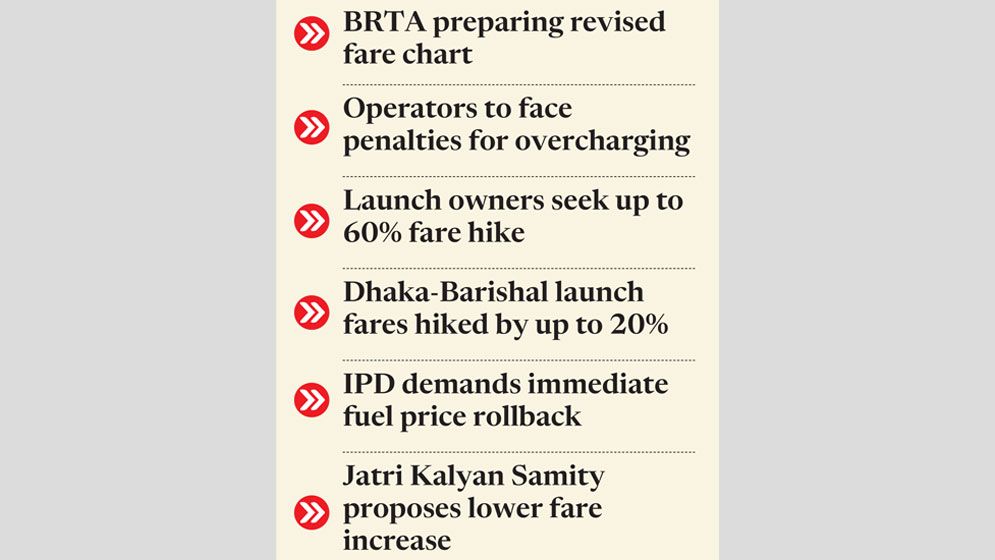
The Bangladesh Road Transport Authority (BRTA) is preparing a revised fare chart, with the new rates to apply to both inter-district and metropolitan bus services.
The impact on city commuters will be relatively modest. A passenger travelling 12km within a metropolitan area will pay about Tk2 more under the revised rates. On longer routes, however, the increase will be more substantial. Passengers on the 480km Dhaka-Teknaf route will pay Tk80 more, while fares on the 256km Dhaka-Chattogram route will rise by Tk42.
The decision was finalised at a meeting of the Road Transport and Highways Division at the Secretariat.
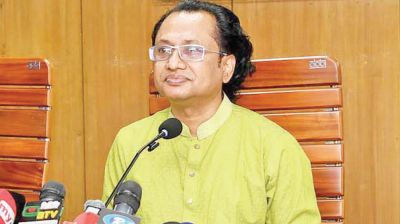
After the meeting, Road Transport and Bridges, Railways and Shipping Minister Shaikh Rabiul Alam warned bus operators against charging more than the government-fixed fares. He said route permits could be cancelled for operators who overcharge, while fines could also be imposed and future permits withheld.
Rabiul said there had been isolated instances of operators demanding higher fares following the latest fuel price increase, but the government would not allow fares to exceed the revised rates.
He said the established practice was to consider a one-paisa-per-kilometre fare increase for every Tk1 rise in fuel prices per litre. When fuel prices last rose by Tk15 a litre, transport owners sought a 15-paisa-per-kilometre increase, along with an adjustment for higher maintenance costs.
“Through discussions, we were able to raise the fare by 11 paisa per kilometre,” Rabiul said.
According to BRTA sources, transport owners this time sought a 20-paisa-per-kilometre increase following the Tk20 fuel price hike, as well as an adjustment for higher maintenance costs. After negotiations, the government settled on 17 paisa.
Rabiul acknowledged that any fare increase puts additional pressure on the public, but said the government had kept the rise below the rate demanded by operators.
Launch owners raise Dhaka-Barishal fares by up to 20%
Launch owners have raised passenger fares on the Dhaka-Barishal waterway by 17%-20%, citing the Tk20-per-litre increase in refined petroleum oil prices and rising operating costs.
Effective Tuesday, deck fares rose to Tk350 from Tk300, while single-cabin fares increased to Tk1,200 from Tk1,000 and double-cabin fares to Tk2,400 from Tk2,000, according to launch owners.
They cited higher fuel and operating costs, workers’ wages, taxes, vessel survey and registration fees, and Bangladesh Inland Water Transport Authority (BIWTA) charges as reasons for the increase.
Md Soleman, an assistant director at the BIWTA’s Barishal office, said owners had raised the fares to offset what they described as losses.
He warned, however, that action would be taken if fares were raised further or exceeded the permissible limit.
Separately, the Bangladesh Inland Water Transport (Passenger) Association has demanded a 51%-60% increase in passenger fares on inland waterways following the latest diesel price hike.
The association has sought a Tk1.50-per-kilometre increase, proposing that fares for journeys of up to 100km rise from Tk2.95 to Tk4.45 per kilometre, and those beyond 100km from Tk2.52 to Tk4.02.
In a letter to Road Transport, Railways and Bridges Minister Shaikh Rabiul Alam and the Bangladesh Inland Water Transport Authority (BIWTA), association president Golam Nabi Alamgir cited the Tk20-per-litre diesel price increase, along with higher regulatory and operating costs.
The association said BIWTA conservancy charges had risen 30%, route permit fees 50% and berthing charges 114%.
It also pointed to higher wages, repair and maintenance costs, and increased prices of spare parts and other materials.
BIWTA Director (Marine Safety and Traffic Management) Md Alamgir Kabir said officials would meet the owners before submitting a fare proposal to the ministry.
Jatri Kalyan Samity seeks smaller hike
Meanwhile, Jatri Kalyan Samity has proposed a lower increase of 8 paisa per kilometre on intercity bus routes and 10 paisa on city services.
It also proposed a 5-paisa-per-nautical-mile increase in launch fares.
In a statement, the passenger rights group alleged that government agencies were holding closed-door meetings with bus and launch owners without adequately consulting passengers.
It called for greater transparency, arguing that the fare-setting process should establish how much operators’ costs had actually increased and what fare adjustment was justified to cover additional operating expenses.
The association said passengers, the country’s largest stakeholder in public transport, should be represented in the fare revision process.
IPD demands fuel price rollback
The Institute for Planning and Development (IPD) has strongly protested the Tk20-per-litre fuel price increase, calling for its immediate withdrawal.
In a statement signed by its Executive Director Adil Mohammed Khan, the institute described the decision as “against public interest” and short-sighted, arguing that it was made without a public hearing, stakeholder consultation or an open assessment of its socio-economic impact.
The IPD warned that the increase would worsen inflation and place further pressure on low- and middle-income households.
Nearly two-thirds of fuel consumed in Bangladesh is diesel, it noted, making the price of the fuel particularly important for transport, agriculture and supply chains.
The institute said fuel prices had already risen by Tk15-20 a litre for different petroleum products in April. Another increase would mean fuel prices had risen three times within five months, potentially disrupting economic and social development plans.
It urged the government to consult farmers, transport operators, industrialists, consumer representatives and experts and conduct a comprehensive impact assessment before making further adjustments.