


 For all latest news, follow the Daily Sun's Google News channel.


On first day, new foreign minister harks back to late President Zia’s foreign policy
UNB, Dhaka
Published: 18 Feb 2026, 10:18 PM
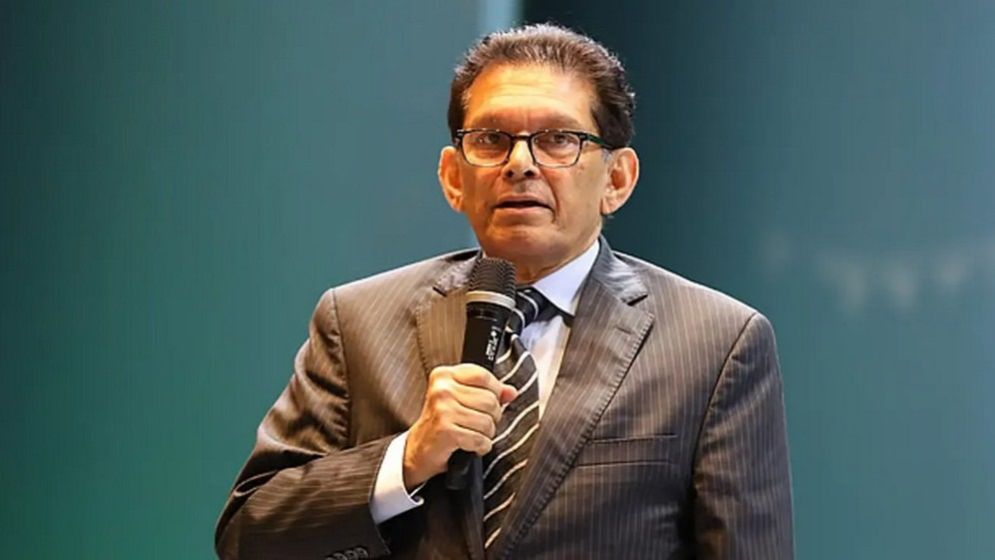
Newly-appointed Foreign Minister Dr Khalilur Rahman on
Wednesday said his office wants to get back to the foreign policy of late President Ziaur Rahman, which he said was very positive and expansive.
He stressed that the government wants to maintain a good
relationship with each country while at the same time protecting the country’s
interests.
“Foreign policy is a very serious matter,” he told reporters
at the state guest house Padma in the evening, seeking objectivity from the
media while reporting on foreign affairs.
The Foreign Minister said an imprudent or misleading
statement can affect international relations and urged journalists to maintain
objectivity and avoid rumors.
He urged the media to keep eyes on them, noting that they
want to demonstrate accountability.
Dr Khalilur said it is very important to communicate and
they will continue to remain engaged with the media as their activities will be
people-centric.
Dr Rahman announced that “Bangladesh First” would serve as
the central organizing principle of the country’s foreign policy.
Under this framework, he said, Dhaka will seek respectful,
mutually beneficial relations with all nations, particularly its neighbors,
grounded in sovereign equality and shared interests.
“Bangladesh First will be the core philosophy of our foreign
policy,” he said. “We aim to maintain good relations with all countries,
especially our neighbors, based on respect and mutual benefit.”
On his first day in office, the minister described a
comprehensive reassessment of Bangladesh’s external engagement, anchored in
sovereign equality, non-interference in internal affairs, national dignity and
honor, and reciprocity.
He underscored that these five principles would guide
diplomatic conduct going forward. “We will protect our national interest to the
fullest extent.”
Responding to a question on regional stability, Dr Rahman
said Bangladesh seeks to reclaim a confident and proactive diplomatic posture,
recalling the foundations laid in the country’s early years.
He referenced Bangladesh’s successful bid for a seat on the
UN Security Council soon after gaining membership in the United Nations, as
well as its role in establishing the South Asian Association for Regional
Cooperation to strengthen regional connectivity.
“We seek to restore that confident, expanded and
forward-looking diplomatic posture,” he said.
“Our foreign policy will be firmly centered on national
interest. By carefully safeguarding our priorities, we will conduct responsible
and courageous diplomacy.”
Acknowledging the complexity of the task ahead, the Minister
described the responsibility as both challenging and meaningful.
“Our goal is to build a foreign policy that reflects the
will and aspirations of the people of Bangladesh,” he said, pledging a strategy
rooted in national interest and constructive global engagement.
On relations with neighboring countries, Dr Rahman
reiterated the government’s commitment to balanced and pragmatic engagement.
Where complexities or stagnation exist, he said, efforts will continue to
resolve obstacles and normalize ties.
“Our foreign policy will be guided exclusively by national
interest,” he added. “It will not be shaped by personal or partisan
considerations.”
Regarding potential bilateral visits, the minister said it
was premature to announce specific destinations. Invitations have been received
from various countries, and decisions will be communicated in due course.
Addressing the Rohingya crisis, Dr Rahman affirmed that the
government’s focus would intensify.
He said during the interim period Bangladesh maintained
communication with both the Myanmar government and the Arakan Army, and that
such engagement would continue.
“Our focus on the Rohingya issue will not diminish, in fact,
it will be strengthened,” he said. “We seek a swift, realistic, and sustainable
resolution.”
He concluded by assuring that the ministry would provide
regular updates and uphold accountability in its conduct.
Earlier, Indian External Affairs Minister Dr S. Jaishankar
and China's Foreign Minister Wang Yi extended congratulations to newly
appointed Foreign Minister Dr Khalilur.
Wang Yi, who is also Member of the Political Bureau of the
Communist Party of China, expressed his intent to work with Foreign Minister
Rahman to jointly implement the important understandings reached by the leaders
of the two countries and advance the Bangladesh-China Comprehensive Strategic
Partnership to new heights.
Dr Jaishanker said he looks forward to working together with
Foreign Minister Rahman to advance cooperation between Bangladesh and India for
mutual progress and prosperity, said the Ministry of Foreign Affairs.
The Foreign Minister served as Chief Adviser's High
Representative for the Rohingya Issue and Priority Affairs and National
Security Adviser during the interim government’s period.
He joined BCS (Foreign Affairs) in 1979 after securing the
first position in the first regular civil service examination after
independence held in 1977.
Dr Khalilur served in various capacities in the Ministry of
Foreign Affairs and the Permanent Mission of Bangladesh to the United Nations
in New York.
In 1991, he joined the United Nations secretariat as a
Special Adviser and served in different senior UN positions during the next 25
years.
In November 2024, he was appointed as the High
Representative with the status and privileges of an Adviser.
Dr Khalilur stood first class first in MA examinations in
Economics at Dhaka University in 1977. During 1980-83, he attended the Fletcher
School of Law and Diplomacy, Tufts University and the Kennedy School of
Government, Harvard University and earned the degrees of MA in Law and Diplomacy
and PhD in Economics.